
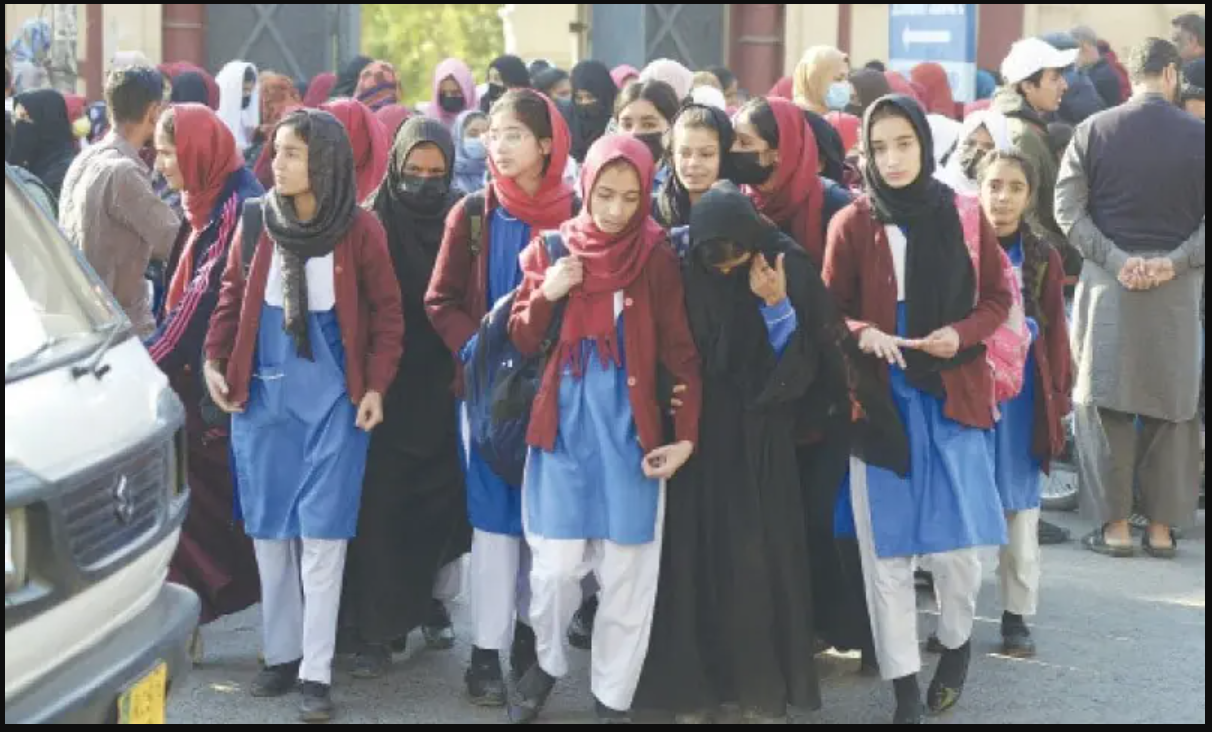

A recent national survey highlights a troubling reality for Pakistan’s education system. Nearly 28% of children aged between five and sixteen remain out of school. Girls continue to face greater barriers than boys in accessing education.
The analysis draws on national household survey data, offering a detailed picture of educational participation across the country. While access to education has improved over time, inequalities remain deeply rooted.
Gender Gap in School Attendance Persists
The survey shows a clear gender disparity in school participation. About 34% of girls are out of school compared to 22% of boys. This difference reflects long-standing social and structural challenges affecting female education.
Experts believe the gap highlights broader issues beyond enrollment numbers. Although schools exist in many areas, equal participation has not yet been achieved.
As a result, girls continue to face disadvantages that limit consistent access to learning opportunities.
Rural Areas Show Higher Education Exclusion
Geography plays a significant role in educational outcomes. Around 34% of children in rural regions are out of school. In contrast, urban areas report a lower figure of 18%.
Rural girls remain among the most affected groups. Analysts note that gender inequality and location-based disadvantages often overlap. Consequently, children living in remote communities face multiple barriers at once.
Despite these challenges, overall school exposure has gradually increased nationwide.
Attendance Trends Reveal Unequal Opportunities
National data shows that 67% of individuals aged ten and above have attended school at some point. However, participation differs sharply across demographics.
Attendance reaches 78% among men but falls to 56% among women. Similarly, urban attendance stands at 81%, while rural attendance drops to 61%.
These figures indicate persistent inequality in educational access across both gender and geography.
Literacy Rates Mirror Education Divide
Literacy statistics reflect similar disparities. Pakistan’s national literacy rate stands at 63%. However, the rate rises to 73% for men and declines to 52% for women.
Urban literacy reaches 77%, whereas rural literacy remains at 56%. Provincial differences also remain notable, with literacy recorded at 66% in Punjab and 43% in Balochistan.
Such variations highlight uneven educational development across regions.
Student Retention Remains a Major Challenge
The survey also reveals declining student retention at higher education levels. Primary school enrollment stands at 68% among children aged six to ten.
However, participation falls significantly afterward. Middle school enrollment drops to 40%, while matric-level attendance declines further to 30%.
These numbers suggest many students discontinue education before completing secondary schooling.
Experts Point to Structural Barriers
Education specialists emphasize that expanding access alone cannot solve the problem. Structural challenges continue to affect participation and long-term attendance.
Economic pressures, regional disparities, and gender inequality collectively shape educational outcomes. Therefore, progress in enrollment has not yet translated into equal opportunities for all children.
Experts stress that targeted policies are necessary to support girls and underserved communities.
A System Facing Uneven Progress
The findings present a mixed picture of Pakistan’s education landscape. While more individuals have experienced schooling than before, significant gaps persist.
Girls and rural populations remain particularly vulnerable to exclusion. Addressing these disparities will require sustained efforts focused on equity rather than access alone.
The survey ultimately underscores a key question: improving education access is important, but ensuring equal participation remains the real challenge.

