

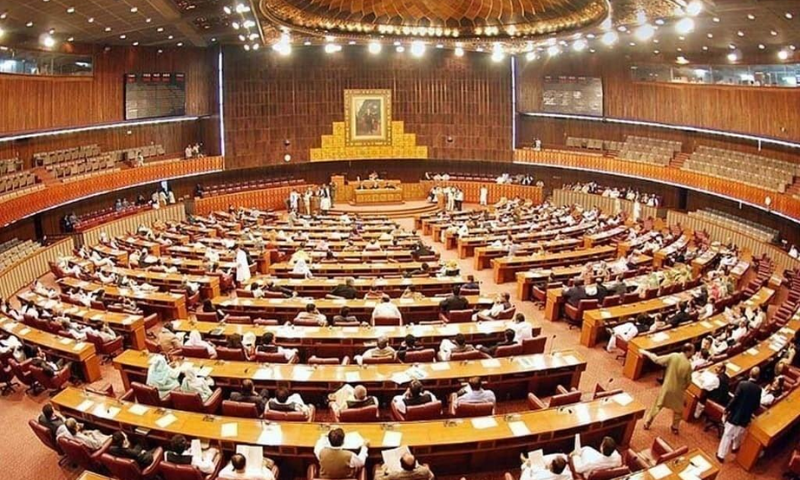

The Senate of Pakistan has passed a new bill proposing significant amendments to the country’s accountability laws. The legislation seeks to reform several legal procedures under the National Accountability Ordinance 1999 and expand the appeal process in corruption cases.
The National Accountability (Amendment) Bill 2026 was introduced by Senator Mohammad Abdul Qadir as a private member’s bill. The proposal aims to strengthen legal safeguards and remove procedural ambiguities in accountability proceedings.
Lawmakers approved the bill during a Senate session on Thursday. The proposed changes include creating a second appellate forum, clarifying bail procedures, and adjusting financial thresholds for corruption cases.
The bill will now be sent to the National Assembly of Pakistan for further debate and approval before it can become law.
New Appellate Forum Proposed for Accountability Cases
One of the key provisions in the bill introduces a second appeal mechanism in accountability cases. Under the amendment, decisions made by High Courts of Pakistan in corruption cases could be challenged before the Federal Constitutional Court.
According to the proposed legislation, litigants would have 30 days to file an appeal after a High Court decision. Supporters of the bill say this change will expand legal recourse and strengthen due process protections.
Federal Law Minister Azam Nazir Tarar told the Senate that the government does not oppose the amendments. He described the proposals as constructive improvements to the existing accountability framework.
During the debate, Tarar said the amendments aim to clarify several procedural aspects of the accountability law. These include the authority of courts to grant bail and the handling of trial and appellate proceedings.
“In my opinion these are good suggestions,” Tarar told lawmakers while addressing the chamber.
Changes Proposed for Bail Powers and NAB Leadership
The amendment bill also proposes clearer legal authority for courts to grant bail in accountability cases. Under the proposed changes, accountability courts and relevant High Courts would have explicit powers to release accused persons under provisions of the Code of Criminal Procedure.
Supporters argue that the clarification will remove confusion that has existed in some cases regarding bail powers under the accountability framework.
The legislation also proposes a change to the tenure of the head of the National Accountability Bureau. Under the current law, the NAB chairman cannot receive an extension after completing the initial term.
The new proposal would allow the chairman to serve a three-year term with the possibility of one additional three-year extension.
Another key provision relates to the financial threshold used to determine accountability cases. The bill suggests adjusting the monetary limit each year based on the inflation index published by the Pakistan Bureau of Statistics.
Supporters say this step will ensure the law remains realistic and aligned with changing economic conditions.
Lawmakers Debate Impact on Accountability Process
Leader of the House Ishaq Dar supported the bill during the Senate debate. He said the proposal introduces positive legal improvements and should not become a political issue.
Dar explained that the Constitution allows the Federal Constitutional Court to hear appeals from High Court decisions if parliament creates such jurisdiction through legislation.
He said the amendment follows this constitutional principle and provides additional legal safeguards for citizens.
Dar also noted that the legislation was introduced as a private member’s bill, a common parliamentary practice. He said lawmakers have the right to propose amendments and improve existing laws through debate and legislative procedures.
“If anyone believes more changes are needed, another amendment bill can always be introduced,” he told the Senate.
Law Minister Azam Nazir Tarar also pointed out that under the current system, only one appeal is available as of right in accountability cases. The proposed law would expand this process by adding another appellate stage.
Supporters argue that this change may address longstanding criticism that the accountability law is too strict and does not provide enough legal protections.
Despite some objections from opposition lawmakers, the Senate approved the motion through a voice vote. The bill has now moved to the next stage of the legislative process.
If passed by the National Assembly of Pakistan, the amendments could introduce major procedural reforms to Pakistan’s accountability system.
