

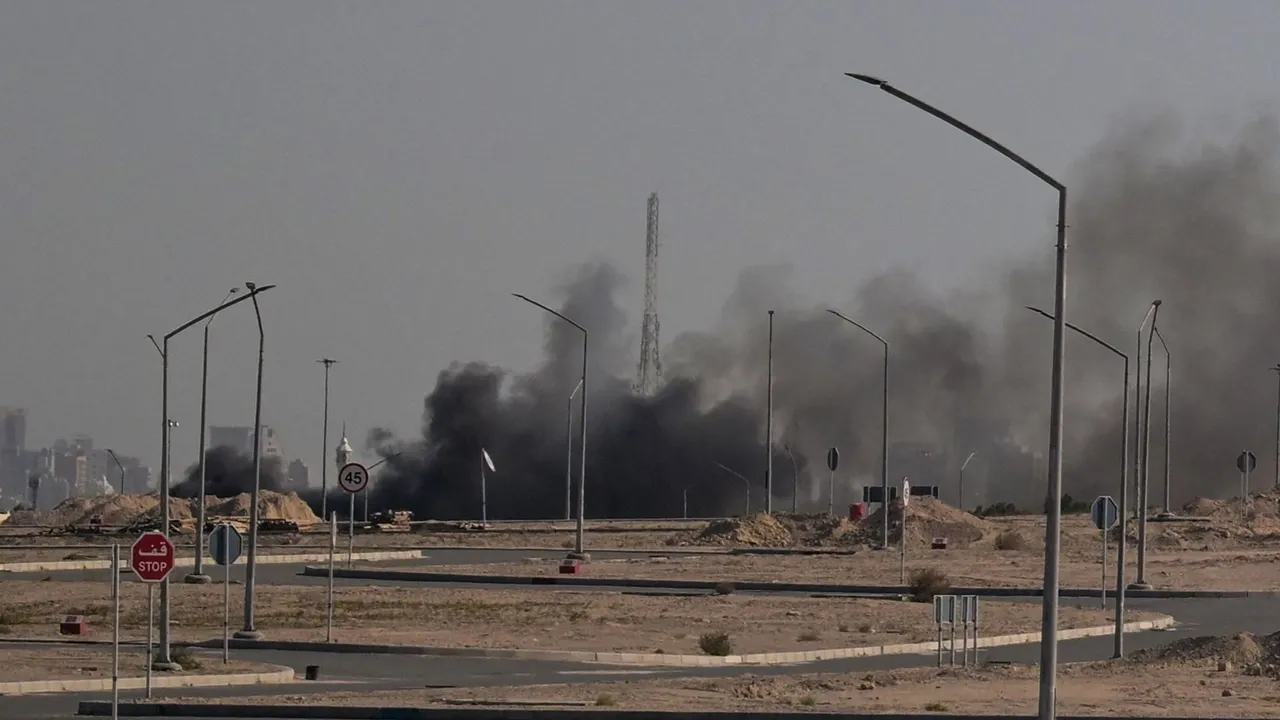

The United States Embassy in Kuwait announced its closure amidst heightened regional tensions. This decision follows reports of smoke rising from the embassy compound a day earlier, after Iranian retaliatory strikes targeted the country.
Closure Follows Apparent Strike and Security Threats
An AFP correspondent noticed thick smoke swirling from the US diplomatic mission in Kuwait City on Monday. Moreover, witnesses reported fire trucks and ambulances rushing to the scene amid fears of drone or missile impacts The embassy immediately issued urgent security alerts to American citizens, warning them to avoid the compound. People were urged to stay in their homes and on the lowest floor, avoiding windows, and to avoid going outside.
Moreover, the embassy canceled all regular and emergency consular appointments immediately. Staff suspended visa processing and American citizen services without a set reopening date. In its statement posted on X, the embassy explained the indefinite closure stems directly from ongoing regional instability. It promised to share updates once normal operations resume safely.
This move comes as the broader US-Iran conflict intensifies. Iran launches missiles and drones at several Gulf nations, including Kuwait, in response to US and Israeli airstrikes. Kuwait’s defense forces intercepted numerous incoming threats over recent days. Tragically, incidents like friendly-fire downings of US jets and attacks on nearby facilities add to the chaos.
Wider Impact on US Diplomats and Citizens in the Region
The Kuwait closure aligns with similar precautions across the Middle East. The US State Department urges non-essential personnel and families to leave countries like Bahrain, Iraq, and Jordan. Embassies in other Gulf states heighten alerts and restrict access. Americans in the region receive repeated advice to depart via commercial means if possible.
Furthermore, the situation impacts the daily lives of US citizens who need help from the consular staff. Currently, they experience a delay in the renewal of passports or other issues with visas. The diplomats are aware of the need for safety while observing the unstable situation.
With no signs of the situation resolving anytime soon, the shutdown is a reflection of the gravity of the situation and the risks involved for the diplomats and the residents.
