

Iran’s political leadership moved quickly to preserve stability following the assassination of Supreme Leader Ayatollah Ali Khamenei. However, uncertainty continues to shape the country’s future.
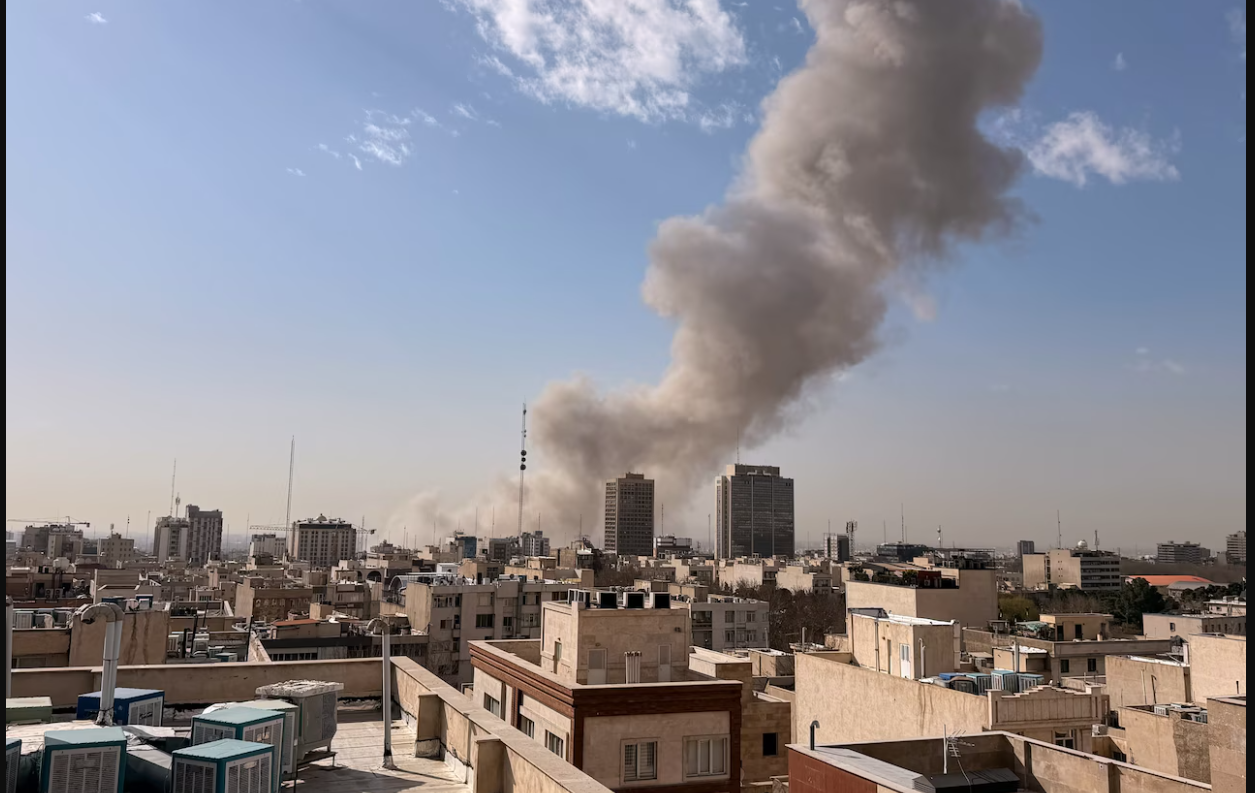
Heavy air strikes by the United States and Israel struck Tehran and several other cities. Meanwhile, Iranian authorities worked urgently to maintain institutional continuity.
Successive waves of attacks hit multiple neighbourhoods in the capital. Military sites were reportedly among the main targets during the operations.
Officials released limited information about damage and casualties. At the same time, nationwide internet disruptions entered a second consecutive day, restricting communication.
Khamenei and several senior commanders were killed at the start of the conflict on Saturday. As a result, Iran’s leadership structure faced its most serious test in decades.
Constitutional Process Activated for New Supreme Leader
Iran’s governing system immediately activated succession procedures established after the 1979 Islamic Revolution. According to constitutional rules, the Assembly of Experts must select the next supreme leader.
President Masoud Pezeshkian confirmed that a leadership council had already begun functioning. He stressed that governance would continue without interruption.
Foreign Minister Abbas Araghchi stated that authorities could finalize a successor within days. Until then, a temporary three-member council will oversee national leadership.
The interim body includes President Pezeshkian, judiciary chief Gholam-Hossein Mohseni-Ejei, and senior cleric Alireza Arafi. The arrangement aims to ensure political continuity during the transition.
Officials repeatedly emphasized stability to calm public concerns. Consequently, state institutions continued operating despite the leadership shock.
Military Losses Reshape Iran’s Security Command
The conflict also caused significant losses within Iran’s military hierarchy. Several top commanders died alongside Khamenei during initial strikes.
Among those reported killed were IRGC commander-in-chief Mohammad Pakpour and armed forces chief Abdolrahim Mousavi. Defence Council head Ali Shamkhani and police intelligence chief Gholam-Reza Rezaeian also died.
These deaths created sudden gaps in strategic command. Nevertheless, military officials insisted operational readiness remained intact.
The Islamic Revolutionary Guard Corps vowed strong retaliation. It announced plans for what it described as the heaviest offensive operations in Iran’s history.
Army chief Amir Hatami said forces would continue defending national sovereignty. However, officials provided no verified evidence regarding claimed counter-attacks.
Security Forces Focus on Domestic Stability
Inside the country, authorities prioritized maintaining public order. Police chief Ahmad-Reza Radan said security agencies stood ready to prevent unrest.
Meanwhile, foreign leaders publicly encouraged Iranian citizens to protest against the government. Iranian officials condemned those statements, calling them external interference.
Senior adviser Ali Larijani reassured neighbouring countries about incoming missiles and drones. He stated Iran did not intend to target regional states directly.
However, he warned that American military bases would be treated as legitimate targets during escalation.
Another senior official confirmed that the Supreme Defence Council would continue functioning despite leadership losses. Therefore, decision-making structures remain active.
Political and Religious Figures Rally Around the System
Prominent political and religious personalities expressed support for the constitutional transition. Their statements aimed to project unity during a sensitive moment.
Hassan Khomeini praised Khamenei’s leadership and urged national solidarity. Former presidents Hassan Rouhani and Mohammad Khatami also backed the interim leadership.
Confusion briefly emerged regarding former president Mahmoud Ahmadinejad. Some reports claimed he died in an air strike, yet informed sources later denied the allegation.
Footage circulating online showed damage in Tehran’s Narmak district. Local authorities reported casualties, including children, after nearby structures were struck.
Separately, officials said a school in southern Iran suffered a devastating attack that killed more than 150 people, many of them children.
Air Campaign Continues as Regional Risks Grow
United States and Israeli officials indicated that air operations may continue for weeks. The strikes reportedly target military and state infrastructure across Iran.
Consequently, fears of wider regional escalation continue to grow. Energy markets and neighbouring countries remain on high alert.
Inside Iran, mourning ceremonies and public gatherings have begun nationwide. Authorities declared seven days of public holidays and forty days of national mourning.
Large crowds gathered to commemorate Khamenei, who ruled the country for thirty-six years. His death marks the end of a defining political era.
An Uncertain Future for Iran
Iran now enters a decisive transitional period. While institutions appear functional, the balance of power remains unclear.
The coming days will determine how smoothly leadership transfers occur. At the same time, ongoing military pressure continues to test national resilience.
For many Iranians, stability remains the immediate concern. Yet the broader region watches closely as Iran reshapes its leadership amid conflict and uncertainty.

