

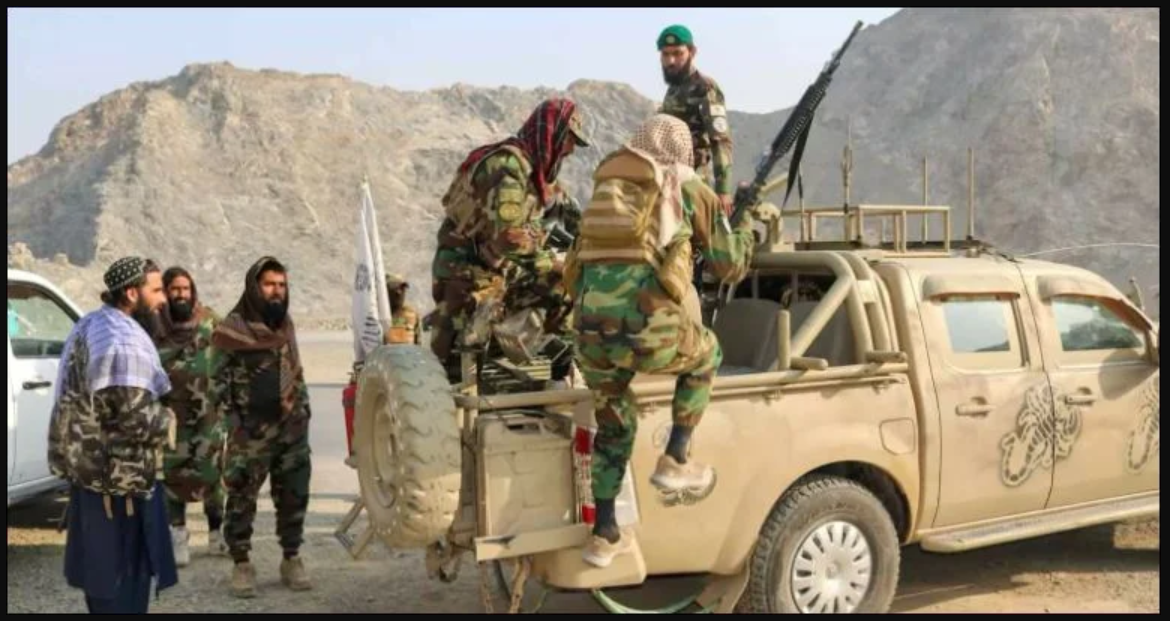

Tensions between Pakistan and Afghanistan have sharply escalated, with Islamabad ruling out any immediate dialogue. Cross-border fighting has continued for a third consecutive day, marking one of the most serious flare-ups in recent months.
Pakistani officials insist that talks cannot proceed while attacks persist. The government has repeatedly demanded that Afghanistan end what it calls cross-border terrorism. However, Kabul has denied providing sanctuary to any militant group targeting Pakistan.
Drone Strikes and Mosque Attack in Bannu
Fresh violence erupted near the disputed border regions. Afghan media reported that Taliban forces launched drone strikes targeting Pakistani military camps in Miranshah and Spinwam. In response, Pakistani forces carried out retaliatory attacks against several Afghan Taliban positions.
Meanwhile, a drone strike reportedly hit a mosque in Bannu, a city near the border. At least five people were injured in the incident. Authorities have not released further details about casualties or the extent of the damage.
These developments followed earlier air raids conducted by Pakistan inside Afghan territory last weekend. Those strikes triggered retaliatory Afghan attacks across six Pakistani districts. Consequently, Pakistan launched widespread aerial operations early Friday, targeting Kabul, Kandahar, and Paktia. Notably, this marked Pakistan’s first airstrike on Kandahar since the Taliban returned to power in 2021.
Conflicting Casualty Claims
Both sides have reported heavy losses, although the figures differ significantly. Pakistan claims that 12 of its soldiers were killed, along with 274 Taliban fighters. On the other hand, the Taliban state that 13 of their fighters died, while 55 Pakistani soldiers were killed. Independent verification of these figures remains unavailable.
As tensions rise, international voices have called for restraint. Several countries and global leaders have urged both sides to de-escalate and pursue mediation. Nevertheless, Pakistan has maintained that national security remains its top priority. Officials argue that protecting citizens and territorial integrity cannot be compromised.
Growing Regional Concerns
Pakistan has witnessed a surge in militant violence in recent years. Suicide bombings and coordinated attacks have frequently targeted security forces. Islamabad blames the Tehreek-e-Taliban Pakistan (TTP) for many incidents and accuses Afghanistan of sheltering the group. Kabul, however, rejects these allegations and insists that Afghan soil is not used against neighboring states.
Although Pakistan possesses superior military capability and nuclear status, the Taliban remain battle-hardened after decades of conflict. Therefore, continued escalation raises concerns about prolonged instability along the border.
For now, both countries remain on high alert. While diplomatic calls for mediation continue, the immediate outlook suggests further tension unless meaningful steps toward de-escalation are taken.
