

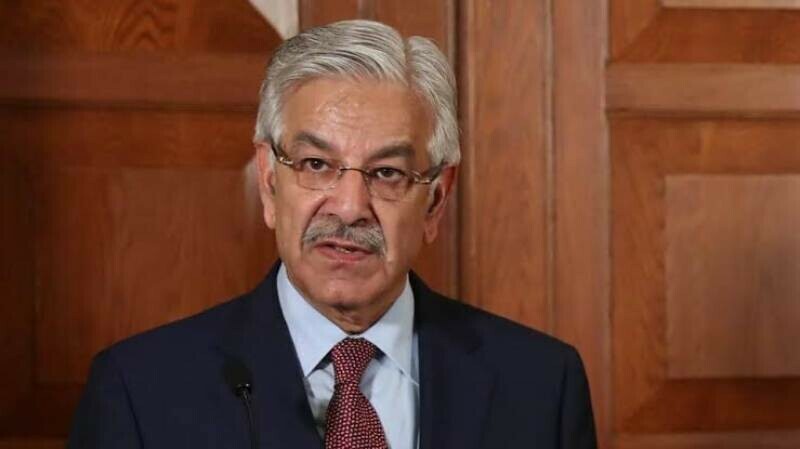

Defence Minister Khawaja Muhammad Asif has issued a strong warning to the Afghan Taliban, declaring that Pakistan’s patience has ended and the situation has escalated into “open war.” His remarks came amid rising tensions along the Pakistan-Afghanistan border.
In a public statement, Asif accused the Afghan Taliban of acting as a proxy for India. He said that after the withdrawal of NATO forces, many hoped Afghanistan would move toward peace and regional stability. However, he claimed that events unfolded differently.
Allegations and Diplomatic Breakdown
Asif stated that instead of ensuring stability, Afghanistan became a hub for hostile elements. He alleged that militants from various regions gathered there and exported terrorism. He further claimed that Afghan citizens were deprived of basic rights, including women’s rights guaranteed under Islam.
Moreover, the defence minister said Pakistan had pursued diplomatic engagement for years. According to him, Islamabad made repeated efforts through direct dialogue and friendly countries. Despite those attempts, he asserted that tensions continued to rise.
He emphasized that Pakistan had hosted nearly five million Afghan refugees over five decades. Even today, hundreds of thousands of Afghans live and work in Pakistan. Therefore, he said, Pakistan understands the realities on the ground better than most.
Operation ‘Ghazab Lil Haq’ Launched
Meanwhile, Pakistan launched an operation named ‘Ghazab Lil Haq’ following what officials described as unprovoked firing by Afghan Taliban forces. The firing reportedly occurred across multiple locations along the Khyber Pakhtunkhwa border on February 26, 2026.
Subsequently, Information Minister Attaullah Tarar stated that 133 members of the Afghan Taliban were killed and more than 200 injured in retaliatory strikes. He said Pakistani forces targeted defensive positions linked to the Taliban in Kabul, Paktia, and Kandahar. Furthermore, he indicated that casualties could rise as operations continue.
Asif maintained that Pakistan’s armed forces are delivering a decisive response. “Our patience has run out,” he warned. “Now it is open war between you and us. There will be decisive action.”
The escalating rhetoric signals a serious downturn in bilateral relations. While both nations share deep historical ties, current developments reflect mounting distrust and security concerns. Observers now watch closely to see whether tensions de-escalate or intensify further.
