


For over a year, Elon Musk has consistently assured investors and the public that Tesla is on the cusp of launching a driverless robotaxi service in California, pending only final regulatory approval. However, newly released state records paint a starkly different picture, revealing that the electric vehicle giant has done virtually nothing to secure that approval.
According to previously unreported documents from the California Department of Motor Vehicles (DMV) and a state spokesperson, Tesla logged zero miles of autonomous test driving on California roads in 2025. This marks the sixth consecutive year the company has failed to document any autonomous testing miles with state regulators. Since 2016, Tesla has reported a mere 562 miles of testing in total, with its last reported miles coming in 2019.
This lack of activity is significant because documenting test miles is the foundational step in California’s carefully regulated pathway to operating a commercial robotaxi service. Companies like Alphabet’s Waymo have progressed through this multi-tiered permit system, which requires extensive data submission and safety validation before being allowed to pick up passengers without a human driver behind the wheel.
The disconnect between Musk’s public timeline and the company’s regulatory inaction raises serious questions about the viability of Tesla’s ambitious robotaxi goals. A significant portion of Tesla’s approximately $1.5 trillion market valuation is predicated on the belief that it will soon deploy a vast fleet of autonomous vehicles and generate substantial revenue from self-driving software subscriptions. Operating in California, the largest auto market in the United States, is considered a linchpin of that strategy.
“The company is essentially implying that they are ready and regulators are holding them back,” said Bryant Walker Smith, a University of South Carolina law professor and autonomous-driving expert who has consulted for the California DMV. “But the reality from a regulatory perspective is that the framework is ready, and Tesla simply hasn’t engaged with it. They haven’t shown they are ready to meet the bar.”
Tesla did not respond to requests for comment for this report. However, during an earnings call in October, Musk addressed the topic, telling analysts that the company is “paranoid about safety” and takes a “cautious approach” when entering new markets. “We probably could just let it loose in these cities,” he said, “but we just don’t want to take a chance.”
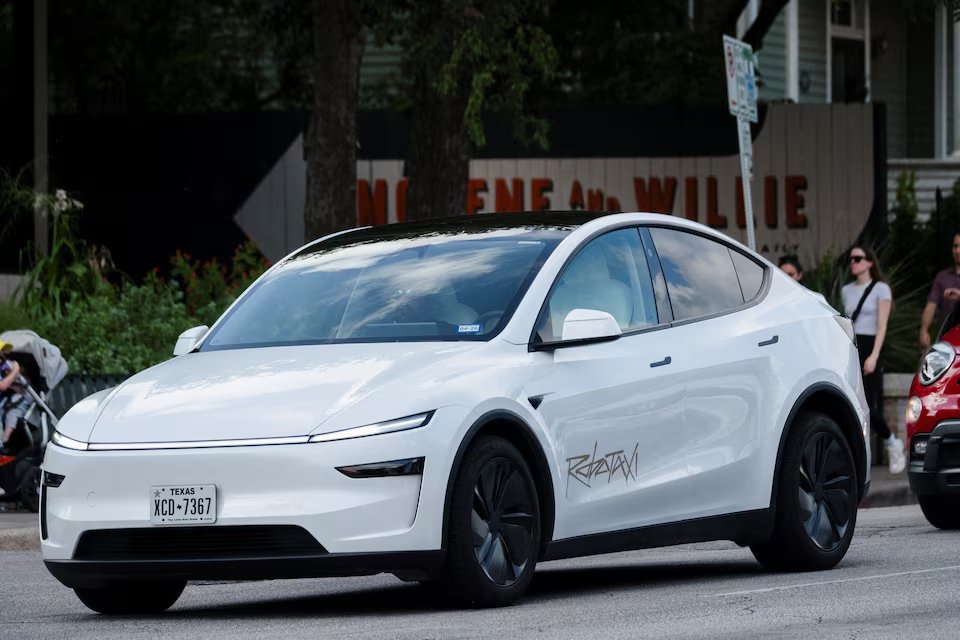
Currently, Tesla operates only a small-scale pilot program in Austin, Texas. Texas has far fewer regulatory hurdles for autonomous vehicles compared to California, allowing for a more rapid, less supervised deployment.
In the San Francisco Bay Area, Tesla last July launched what it marketed as a “robotaxi” service. However, this service is not autonomous by California’s legal definition. According to the state regulator authorizing the operation and Tesla’s own disclosures to customers, it is a conventional chauffeur service. The vehicles are operated by human safety drivers who utilize Tesla’s “Full Self-Driving” (FSD) software, which is a driver-assistance system that requires constant human supervision and is not certified as fully autonomous.
To operate a true driverless ride-hailing service in California—competing directly with Waymo—Tesla would need to navigate a two-step process. First, it must obtain a permit from the DMV to test driverless vehicles. This requires companies to first log significant autonomous miles with a safety driver. Proposed DMV regulations, expected to be finalized later this year, would formalize a requirement for at least 50,000 miles (80,467 km) of autonomous driving on public roads in California with a safety driver before a company can even apply for a permit to test without one.
Currently, Tesla holds only the most basic, entry-level DMV permit. This permit allows for testing of autonomous technology, but strictly requires a human safety driver to be present and ready to take control at all times. A DMV spokesperson confirmed that Tesla has not applied for any of the more advanced permits necessary to test without a driver or to operate a commercial ride-hailing service. Tesla has not logged any autonomous miles under this basic permit since 2019.
For now, the company’s vision of a California roadways filled with driverless Teslas remains just that—a vision—with no regulatory paperwork to suggest it will become a reality anytime soon.
