

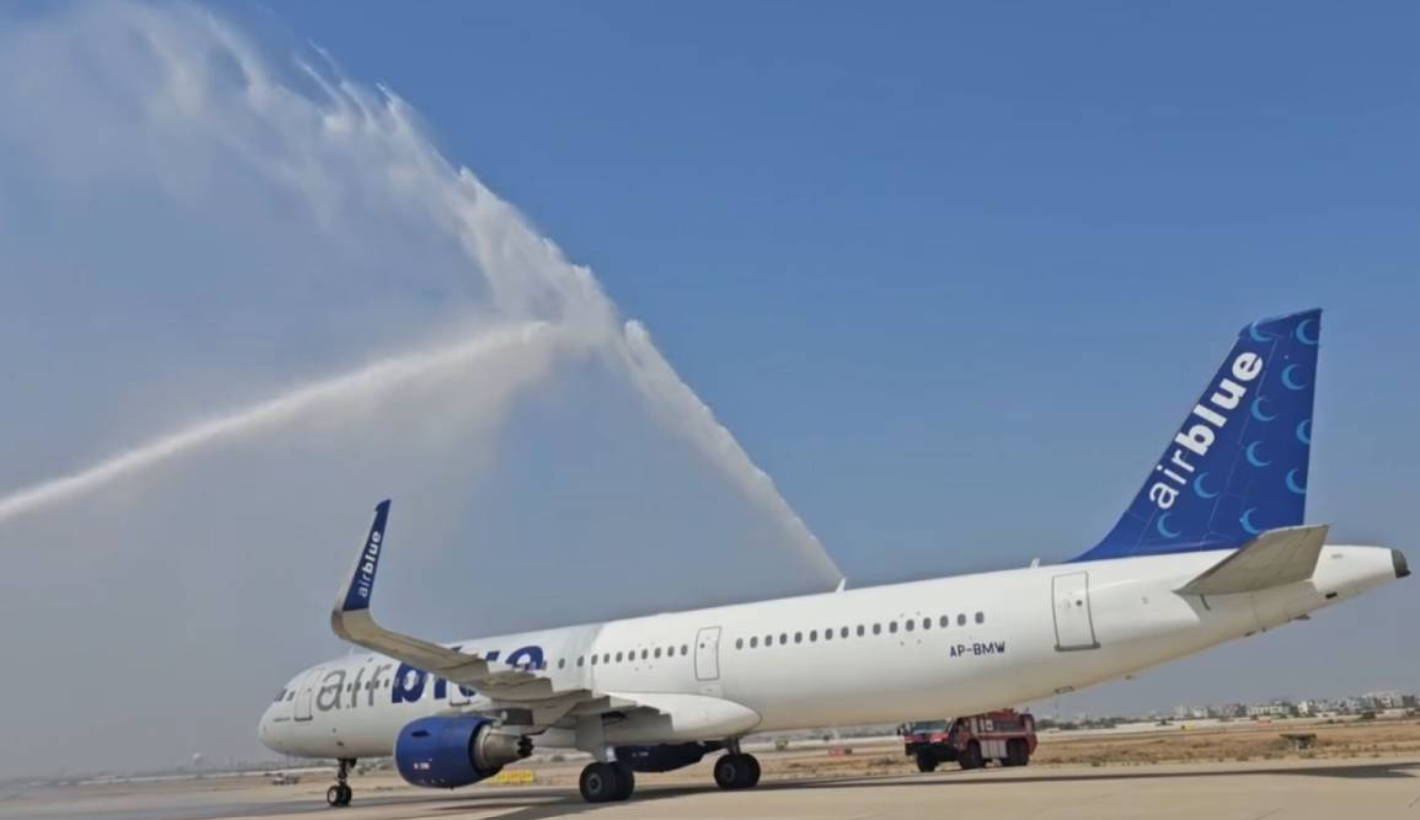

Pakistan achieved a major aviation milestone as the first commercial aircraft landed on the upgraded Runway 07L/25R. The runway is located at Jinnah International Airport in Karachi.
The historic landing was completed by Airblue flight PA-171 arriving from Jeddah. The aircraft departed at 6:48 a.m. and landed at 12:20 p.m.
With this touchdown, authorities officially commenced regular flight operations on the reconstructed main runway. As a result, Pakistan entered a new phase of aviation infrastructure development.
Upon arrival, the aircraft received a traditional water cannon salute. Therefore, the ceremony symbolized both operational readiness and national pride.
Built to International Standards
The Pakistan Airports Authority confirmed that the upgraded runway meets international standards. The Code 4F runway complies fully with International Civil Aviation Organisation requirements.
Moreover, the runway can accommodate the world’s largest commercial aircraft. These include wide-body jets such as the Airbus A380.
This capability significantly enhances Karachi’s international aviation profile. Consequently, airlines can operate larger aircraft with improved safety and efficiency.
Project Delivered on Time and Within Budget
Authorities completed the project at a total cost of Rs8,305 million. Importantly, the reconstruction was finalized within 18 months.
Airport operations continued throughout the construction phase. Therefore, passengers experienced minimal disruption.
Officials confirmed zero schedule overruns and zero cost overruns. In addition, the project recorded no contractual claims and no harm incidents.
Such performance sets a strong example for future public infrastructure projects. Furthermore, it reflects effective planning and disciplined execution.
Key Enhancements and Long-Term Benefits
The reconstruction included runway extension and strengthened pavement structure. Additionally, teams upgraded taxiways and overruns.
Engineers also installed energy-efficient lighting systems to improve visibility and sustainability. As a result, operational safety has significantly improved.
Authorities expect the runway to serve reliably for the next 25 to 30 years. Moreover, the upgrade will increase capacity and enhance overall airport efficiency.
Strengthening Karachi’s Strategic Role
Karachi remains Pakistan’s busiest aviation hub. Therefore, the upgraded runway strengthens its operational capability.
Air Vice Marshal Zeeshan Saeed, Director General of the Pakistan Airports Authority, emphasized national commitment to modern aviation standards. He noted that the timely completion sets a new benchmark for infrastructure delivery.
With enhanced safety and expanded capacity, Karachi’s airport gains greater regional importance. Consequently, the development supports Pakistan’s long-term aviation growth strategy.
In conclusion, the successful landing on Runway 07L/25R represents more than a technical upgrade. It signals Pakistan’s readiness to compete in global aviation with modern, reliable infrastructure.
