

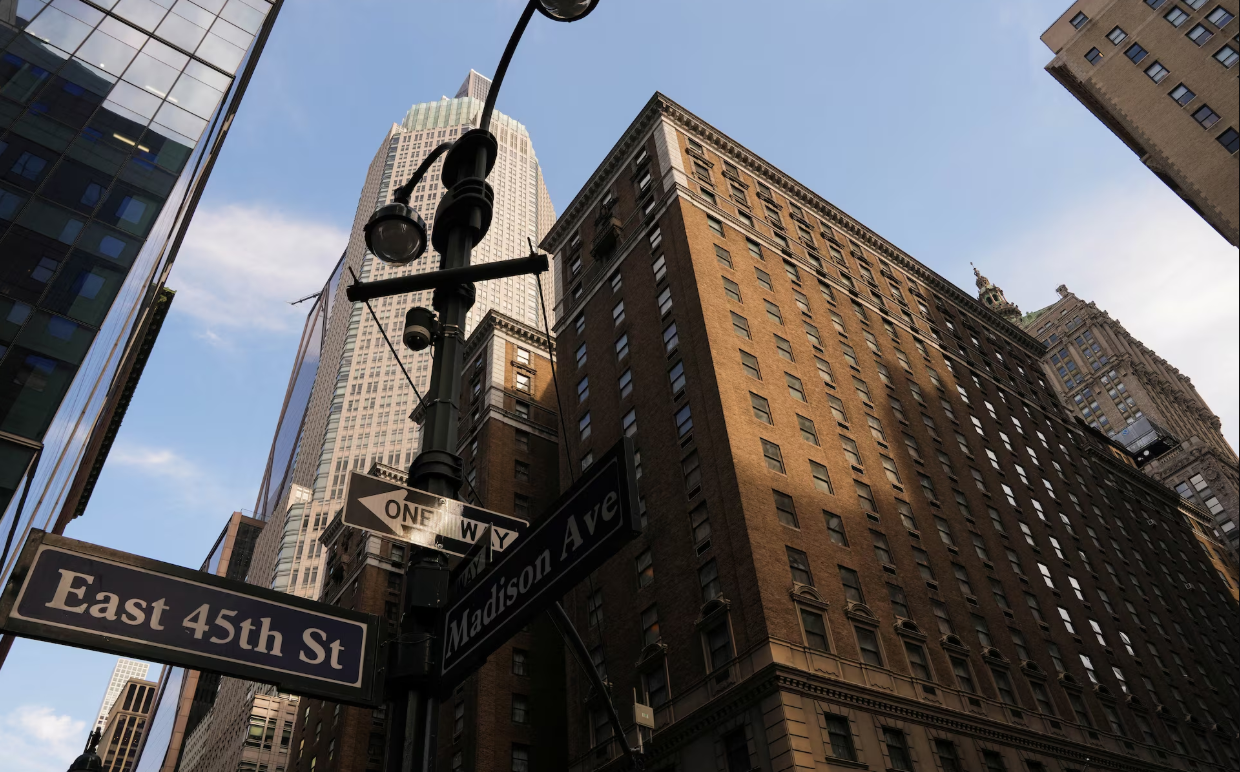

The governments of Pakistan and the United States have launched a strategic economic initiative. The partnership focuses on the operation, maintenance, renovation, and potential redevelopment of the Roosevelt Hotel in New York.
Both sides signed a Memorandum of Understanding to formalize cooperation. Consequently, the agreement establishes a structured and time-bound framework for the project.
Leadership and Oversight of the Initiative
The engagement involved collaboration with the US General Services Administration. Moreover, negotiations were overseen by Steve Witkoff under the leadership of Donald J. Trump.
The MoU was executed by Edward C. Forst on behalf of the United States. Meanwhile, Muhammad Aurangzeb signed on behalf of Pakistan.
The signing ceremony was witnessed by Shehbaz Sharif and Steve Witkoff. Therefore, the event highlighted strong political backing for the initiative.
Joint Assessment and Structured Framework
Under the MoU, both governments will conduct a joint assessment of technical and commercial aspects. In addition, they will review economic feasibility before advancing redevelopment plans.
This structured approach promotes transparency and financial discipline. Furthermore, it aims to ensure mutually beneficial outcomes for both countries.
Officials emphasized that institutional coordination will reduce execution risks. As a result, regulatory clarity is expected to improve significantly.
Strategic Importance of Roosevelt Hotel
The Roosevelt Hotel holds a prime location in Manhattan. However, redevelopment in New York requires compliance with complex zoning laws and municipal regulations.
Therefore, close coordination between institutions becomes essential. Enhanced cooperation can streamline approvals and maximize transaction value.
Such facilitative arrangements follow international best practices in cross-border real estate projects. Consequently, the framework strengthens investor confidence and operational efficiency.
Alignment with Pakistan’s Privatization Strategy
The initiative aims to unlock maximum value from the Roosevelt Hotel asset. At the same time, it aligns with Pakistan’s broader privatization strategy.
By advancing this project, Pakistan seeks to optimize returns on international assets. Moreover, the agreement supports deeper economic engagement with the United States.
Strengthened bilateral cooperation may also encourage future joint ventures. Therefore, the MoU represents both an economic and strategic milestone.
In conclusion, the Pakistan-US Roosevelt Hotel MoU establishes a structured path toward redevelopment. It also signals renewed commitment to economic collaboration between the two nations.
