


Young Entrepreneur Defies Job Ban on Women
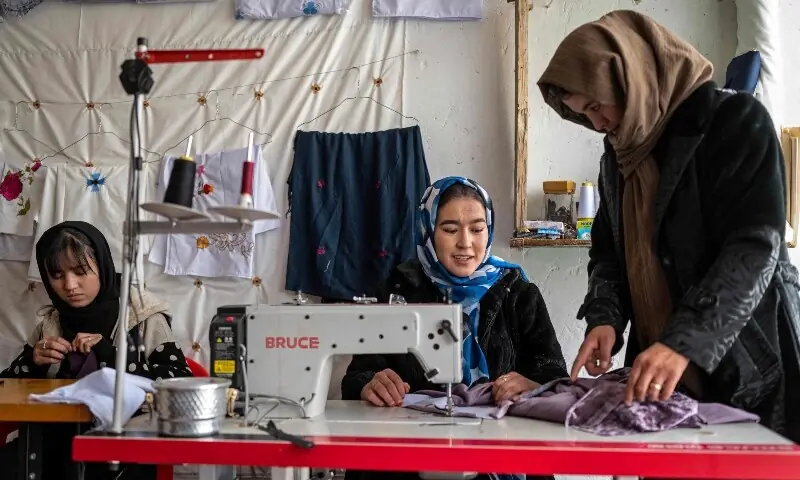
A small embroidery boutique is drawing attention in Bamiyan. It is run by 22-year-old Rahima Alavi. Her shop stands out in a country where women face strict job bans.
A simple sign reads, “Spring flowers, tailoring and embroidery.” The boutique opened in January after months of searching for work. For many locals, it is more than a shop. It is a symbol of resilience.
Alavi says she feels proud. She now supports her parents and three sisters. She pays the rent. She contributes to daily expenses. In Afghanistan’s struggling economy, this is rare for women.
Inside the store, she works carefully at her sewing machine. She guides soft fabric under the needle. Silk leaves and colorful flowers take shape. Threads in bright shades cover scarves and dresses.
Women in Afghanistan are banned from most professions under Taliban rule. However, handicrafts like embroidery are still allowed. This has created a small window of opportunity for skilled women.
Return from Iran and Struggle for Survival
Alavi is one of more than five million Afghans who returned home since 2023. Many were pushed back from neighboring countries. Large numbers came from Pakistan and Iran.
Her family once lived in rural Bamiyan province. They worked on farms while she attended school. In 2021, they moved to Iran for better opportunities.
In Iran, she says, men and women could both work. The family picked cabbages near Isfahan to earn money. Life was hard but stable.
They returned to Afghanistan in 2024. Jobs were scarce. Her father could not find work. Neither could Alavi or her sisters. She felt hopeless.
According to the International Organization for Migration, only one percent of returning women have full-time jobs. Just two percent run businesses. The numbers show how limited opportunities are for women.
UN Training Program Sparks New Hope
Alavi’s life changed when she joined a training program supported by the UNHCR. She was selected with 25 other women to learn embroidery skills.
She says the training restored her hope. Each day she learned new techniques. Her teacher praised her dedication and talent. She never missed a lesson.
The program provided essential tools. Alavi received a sewing machine, fabric, and money for a solar panel. Power cuts are common in Afghanistan. The solar panel keeps her work going.
Sadly, the program ended in December due to aid cuts. Many support initiatives across Afghanistan are shrinking. Alavi is the only woman from her group to open a business so far.
UNHCR says it needs $216 million this year to help displaced families and returnees. So far, the appeal is only eight percent funded. Aid shortages are affecting thousands.
Despite challenges, Alavi encourages other women to seek opportunities. She tells them not to stay home. She believes small businesses can create change.
Her boutique is filled with embroidered scarves, dresses, and tablecloths. One scarf features purple butterflies in flight. It reflects her own journey. In a place with few opportunities for women, her work shines with color and hope.
