

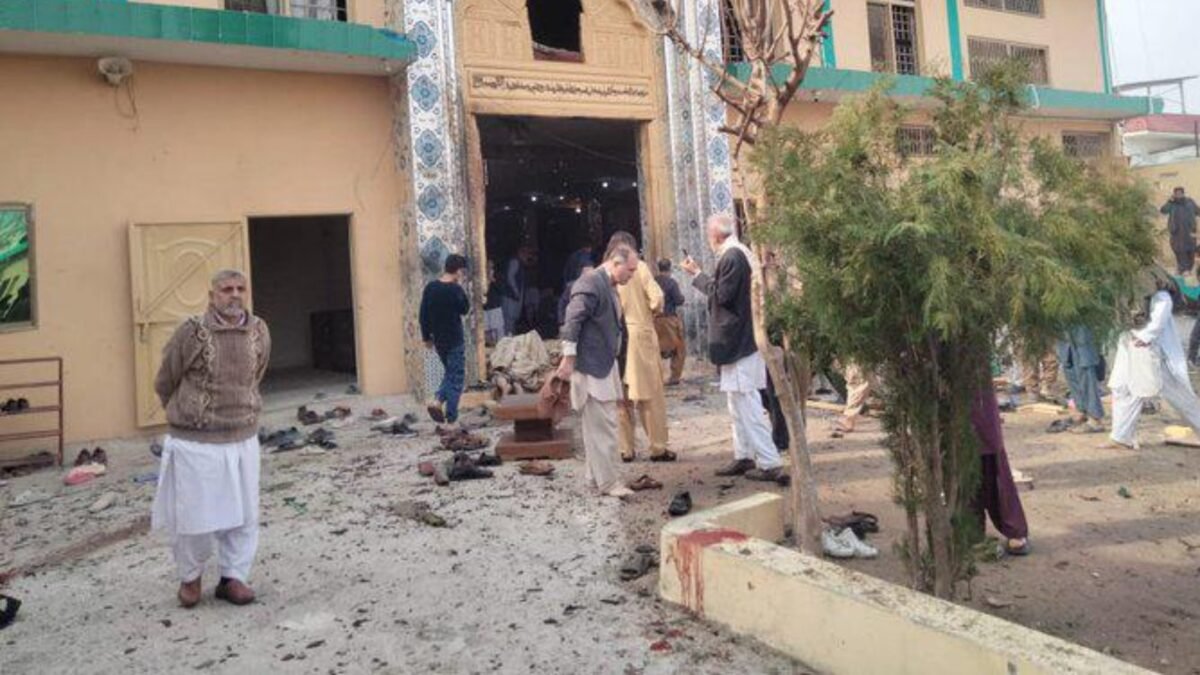

Security agencies have identified the suicide bomber behind the deadly mosque attack in Islamabad’s Tarlai area. Government sources confirmed the identification and said key evidence has been secured. Investigators have recovered CCTV footage that captured the moment of the blast and the attacker’s movements.
The bombing took place during Friday prayers at an imambargah in Tarlai. At least 31 worshippers were killed and more than 169 were injured. The injured were rushed to hospitals, with many taken to the Pakistan Institute of Medical Sciences (PIMS). Officials said several patients remain in critical condition. The attack has caused widespread shock and grief across the capital.
Bomber Trained in Afghanistan, CCTV Evidence Shows Route
Government sources said the attacker had received terrorist training in Afghanistan. They added that he had travelled to Afghanistan multiple times. He returned to Pakistan some time before carrying out the attack. The sources claimed militant groups under the Taliban regime pose a regional security threat.
Investigators have obtained CCTV footage from inside and around the imambargah. The footage shows the attacker entering the mosque premises and the route he took. It also captures the explosion at 1:38 p.m. The recordings show worshippers fleeing in panic and a stampede-like situation after the blast.
Officials said the CCTV evidence will help in identifying any accomplices. They added that the footage will support ongoing investigations into the attack. Security agencies are examining all angles, including cross-border support networks.
Sources alleged that terrorist attacks in Pakistan are carried out with backing from networks based in Afghanistan. They also claimed collusion with India. The sources said such “cowardly attacks” will not weaken Pakistan’s resolve. They stressed that the nation remains united against terrorism.
Attack Linked to Banned Militant Group, Immediate Response Launched
Police earlier said the attacker was affiliated with the banned militant group Fitna al-Khwarij. Investigators said he tried to enter the mosque during prayers. Worshippers and security personnel stopped him at the entrance gate. He then detonated the explosive device, causing massive casualties.
Eyewitnesses reported hearing gunfire shortly after the first unit of prayer. A powerful explosion followed while worshippers were in prostration. The blast triggered chaos and panic inside the mosque.
Police, rescue teams, law enforcement agencies, and bomb disposal squads rushed to the site. The area was sealed off and nearby roads were closed. Security was tightened across Islamabad under the orders of the inspector general.
Residents played a key role in early rescue efforts. They shifted the injured to hospitals before ambulances arrived. A forensic team collected body parts and other evidence from the scene. This evidence is being used to support the investigation.
Government Leaders Condemn Attack, Orders Full Investigation
Interior Minister Mohsin Naqvi directed Minister of State Talal Chaudhry to visit PIMS. Talal Chaudhry met the injured and asked hospital authorities to provide special medical facilities. Officials said relatives of senior police officers were among those affected.
Prime Minister Shehbaz Sharif strongly condemned the attack. He expressed deep sorrow over the loss of lives and offered condolences to the families. He later met Interior Minister Naqvi to review the security situation. He ordered a full and transparent investigation to arrest those responsible.
President Asif Ali Zardari also condemned the bombing. He called the attack a crime against humanity and urged authorities to provide full medical support to the injured.
Foreign diplomats also condemned the attack. British and Iranian envoys expressed solidarity with Pakistan. The international community reiterated support for Pakistan’s fight against terrorism.
