

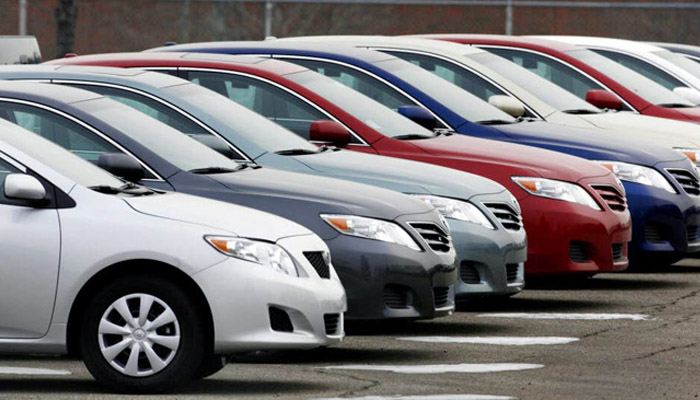

Car ownership in Pakistan has dropped sharply, even as several new automobile brands entered the market. This decline highlights deep structural weaknesses in the country’s auto industry.
According to industry data, car ownership per 1,000 people has fallen from 18 to just 11. This represents a decline of nearly 39 percent. The drop reflects worsening affordability, weak income growth, and unstable government policies.
Although the economy appears calm on the surface, underlying challenges continue to suppress demand. As a result, Pakistan remains among the lowest car-ownership countries in the region.
Policy Instability Undermines Investor Confidence
Policy inconsistency remains the biggest hurdle for the auto sector. Frequent policy changes discourage long-term investment planning. Consequently, investors hesitate in an industry requiring decades-long commitments.
Automobile manufacturing depends on predictable regulations. Without stability, businesses struggle to forecast costs, pricing, and expansion plans. Therefore, uncertainty keeps investment activity limited.
Industry leaders stress that certainty matters more than the type of policy. Businesses need clarity to plan production, localisation, and capacity expansion.
Production Outlook Shows Cautious Optimism
Despite challenges, some optimism exists. Vehicle production is expected to cross 275,000 units this year. Over time, output could approach the 2021 peak of 350,000 units.
This outlook depends on improving macroeconomic indicators. Rising remittances and stabilising inflation could support gradual recovery. However, sustained growth remains uncertain without reforms.
New Models Planned but Risks Remain
Manufacturers plan to introduce two to three new models soon. In parallel, discussions continue with investors to secure funding for localisation.
Localisation reduces costs and strengthens supply chains. Still, without income growth and stable policies, market expansion will remain limited.
Income Levels Drive Car Ownership, Not Population
Per capita income remains the most critical factor behind car ownership. Pakistan’s per capita income stands near $1,700. This level remains far below the affordability threshold.
Global trends show auto markets expand meaningfully above $3,000 per capita income. Below that level, car ownership remains restricted.
Large population size alone does not create demand. Without purchasing power, mass markets cannot sustain auto industries.
India Comparison Highlights Structural Gap
India’s experience highlights the income-driven growth model. With per capita income near $2,700, India sells over four million cars annually.
Once India crosses the $3,000 threshold, growth will accelerate further. That expansion will remain income-led, not currency-driven.
Pakistan, however, suffers from low volumes. Limited scale increases per-unit costs and weakens competitiveness.
Scale Determines Cost Efficiency
Auto manufacturing requires heavy capital investment. Costs decline only when spread across large production volumes.
When investments are divided over small output, unit costs rise sharply. In contrast, large markets dilute fixed costs efficiently.
India also benefits from easy access to raw materials and a mature vendor ecosystem. Pakistan lacks both advantages.
Why Car Prices Feel Higher in Pakistan
Direct price comparisons between markets often mislead consumers. Once taxes are removed, price gaps narrow significantly.
In many cases, higher taxes inflate retail prices rather than production costs. Meanwhile, affordability in India comes from high-volume manufacturers.
Sharp Divide in Buyer Behaviour
Pakistan’s car market remains highly segmented. Below Rs5 million, buyers show extreme price sensitivity. Even small price changes shift demand quickly.
Between Rs5 million and Rs10 million, sensitivity declines gradually. Above Rs20 million, price matters far less.
Therefore, many new entrants target premium segments. However, premium volumes remain small and unsustainable.
Lower Segment Is the Industry’s Foundation
No auto industry survives on luxury vehicles alone. The lower segment forms the foundation of sustainable growth.
Without affordable mass-market options, overall volumes remain weak. Consequently, the industry fails to achieve scale efficiency.
Role of Local Assemblers Explained
Local assemblers do not design core technologies. Global principals handle research and development using massive budgets.
Instead, local firms focus on localisation, vendor development, and job creation. These contributions build industrial capacity and skills.
Pakistani auto professionals increasingly find opportunities abroad. This reflects strong human capital development despite domestic challenges.
The Bottom Line
Without income growth and consistent policies, Pakistan’s auto sector will continue to underperform. New brands alone cannot fix structural weaknesses.
Long-term stability remains the key to restoring affordability, scale, and investor confidence.
