

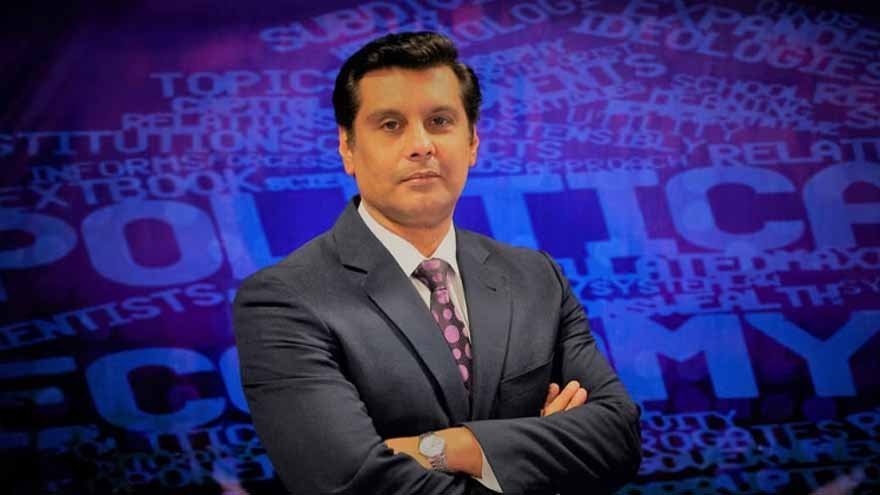

Somiya Arshad, one of the widows of slain journalist Arshad Sharif, has formally urged the Federal Constitutional Court (FCC) not to close the suo motu proceedings initiated to ensure an independent, transparent and credible investigation into her husband’s killing.
In a detailed three-page statement submitted to the FCC on Wednesday, Somiya Arshad requested the court to order the constitution of a comprehensive judicial commission, independent of executive influence and inclusive of international observers, to investigate all dimensions of the case. She stressed that the probe must cover pre-murder threats, multiple coordinated FIRs registered against the journalist, nominated accused individuals, possible institutional involvement and any transnational links.
The plea follows observations made by the FCC on January 14, when the court hinted that the suo motu proceedings might be closed, noting that its intervention had already facilitated the signing of a Mutual Legal Assistance (MLA) agreement between Pakistan and Kenya in September 2025.
Arshad Sharif, a prominent investigative journalist, was fatally shot in the head by Kenyan police on October 23, 2022, on the outskirts of Nairobi. He had left Pakistan in August 2022 after several sedition cases were lodged against him in multiple cities.
In her application, Somiya Arshad also sought immediate directions for the government to share the complete report of the Special Joint Investigation Team (SJIT), along with all supporting documents, with the bereaved family. She further requested the FCC to summon and question nine individuals nominated by the journalist’s late mother, as well as officials named in a fact-finding report prepared by a two-member inquiry team.
The statement additionally called for the sealing and confiscation of properties linked to the prime accused and urged expedited implementation of the MLA agreement with Kenya.
Warning against premature closure of the proceedings, Somiya Arshad said such a move would deny justice, weaken public trust in the rule of law and leave critical questions unanswered amid slow investigative progress and limited transparency.
