

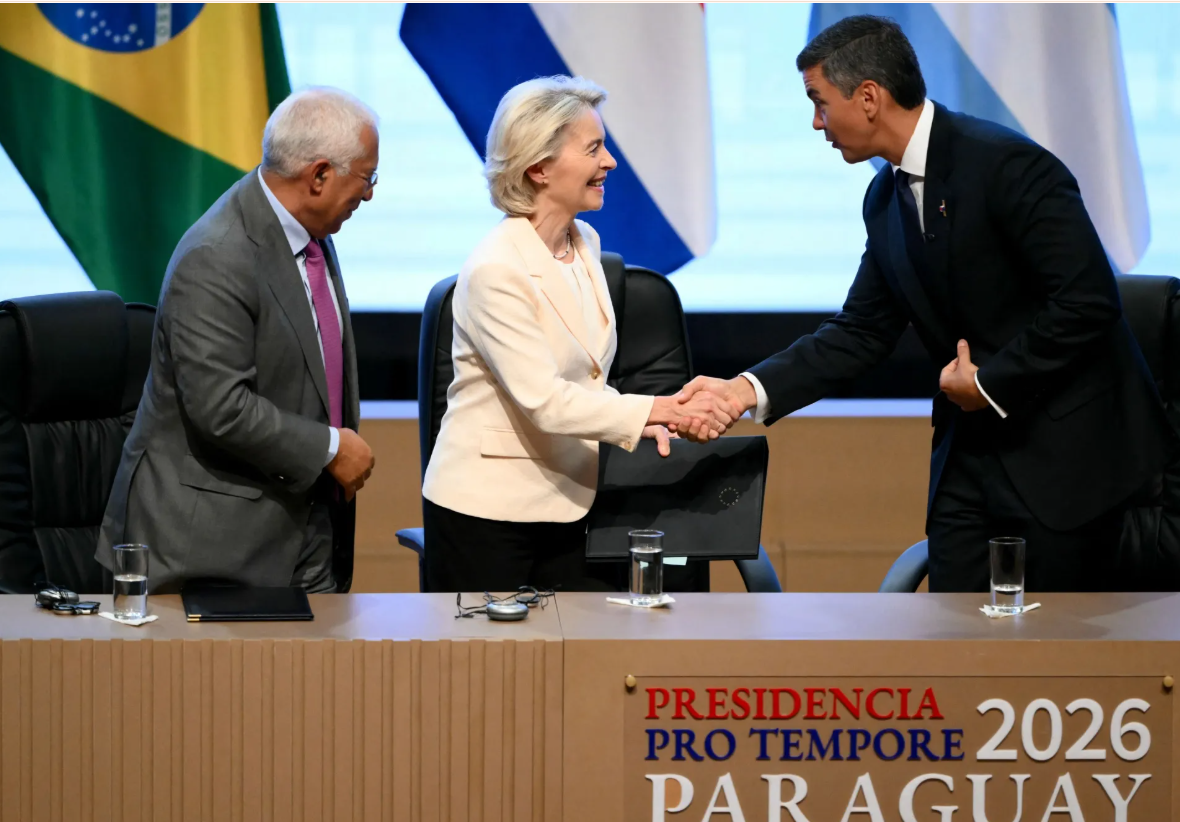

The European Union and the South American bloc Mercosur have signed a long-awaited free trade agreement after 25 years of negotiations. The signing marks a major breakthrough in global trade cooperation and sets the stage for the EU’s largest trade pact to date.
Senior leaders from both regions attended the signing ceremony in Paraguay. The agreement now enters a crucial phase, as it requires approval from multiple legislative bodies. Lawmakers in the European Parliament must give consent. Parliaments in Argentina, Brazil, Paraguay, and Uruguay must also ratify the deal.
Once approved, the agreement will create a massive trade area covering nearly 700 million people. The deal aims to reduce tariffs and expand trade flows between Europe and South America. As a result, businesses across both regions could gain broader market access.
European Commission President Ursula von der Leyen described the agreement as a strategic choice for long-term cooperation. She said the deal favors partnership over protectionism. Moreover, she emphasized that it supports fair trade instead of rising tariff barriers.
European leaders cleared the path for the signing earlier this month. However, the deal has faced resistance from some groups. Farmers and environmental activists have voiced concerns. They fear increased competition from low-cost South American imports. They also warn about potential environmental impacts.
Despite criticism, EU officials argue the agreement includes safeguards. They say sustainability commitments remain part of the framework. Therefore, supporters believe economic growth and environmental responsibility can coexist.
Trade between the two blocs already plays a significant role in global commerce. In 2024, total trade reached 111 billion euros. European exports largely include machinery, chemical products, and transport equipment. Meanwhile, Mercosur exports focus on agricultural goods, minerals, wood pulp, and paper.
The agreement could strengthen supply chains on both sides. It may also reduce dependency on volatile global markets. Consequently, officials view the pact as economically and politically significant.
Still, ratification remains uncertain. Political debates are expected in several countries. Therefore, the deal’s final implementation timeline remains unclear.
Even so, the signing itself represents a historic milestone. After decades of stalled talks, both sides have chosen cooperation. The coming months will determine whether this ambitious trade vision becomes reality.
