

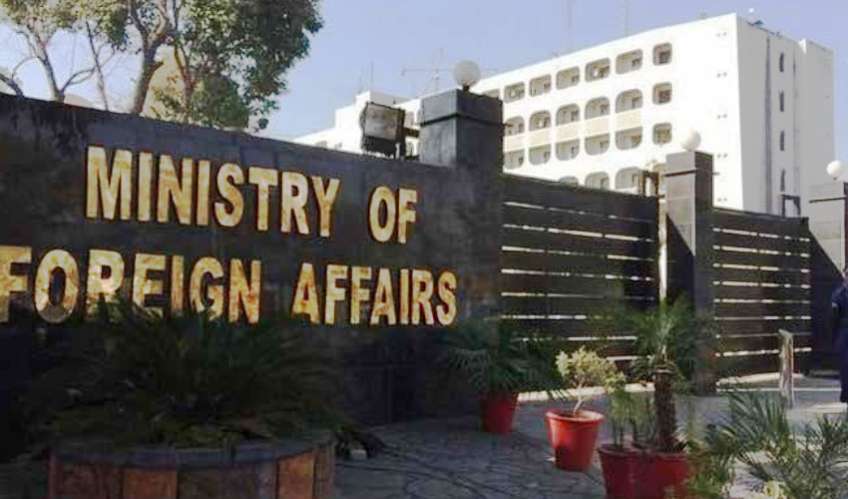

Foreign Office Emphasises Peaceful Regional Approach
Pakistan has firmly reiterated that it will not allow its land or airspace to be used against Iran under any circumstances. The stance was reaffirmed by Foreign Office spokesperson Tahir Hussain Andrabi during his weekly press briefing in Islamabad.
He said Pakistan’s position is clear and consistent. Islamabad remains committed to regional peace, stability, and non-interference. He stressed that Pakistan is closely watching the evolving situation in Iran and regularly reviewing developments in the wider Middle East.
Andrabi described Iran as a neighbouring, friendly, and brotherly country. He said Pakistan strongly believes that all challenges should be resolved through dialogue and diplomacy. He added that Islamabad wants a peaceful outcome to the current situation in Iran.
The spokesperson expressed confidence in the Iranian nation. He said Iran has the wisdom and resilience to overcome internal and external pressures. Pakistan, he noted, does not support escalation or conflict in the region.
Pakistan’s Diplomatic Role and Travel Advisory
The Foreign Office spokesperson highlighted Pakistan’s past diplomatic engagement on Iran-related matters. He recalled that Pakistan had previously played a constructive role in facilitating dialogue during Iran’s nuclear negotiations.
He said Islamabad continues to encourage talks and peaceful solutions. Pakistan believes diplomacy is the only sustainable path forward for regional stability.
Andrabi also confirmed that a travel advisory has been issued for Pakistanis. The advisory was released due to the deteriorating situation inside Iran. He said the worsening economic crisis has added to instability in the country.
Pakistani authorities are closely coordinating with relevant departments. The aim is to ensure the safety of Pakistani citizens currently residing in or travelling to Iran. The Foreign Office has urged citizens to remain cautious and follow official guidance.
Regional Tensions and International Developments
The spokesperson also shared diplomatic developments involving Pakistan’s leadership. Prime Minister Muhammad Shehbaz Sharif recently received a telephone call from the Amir of Qatar, Sheikh Tamim bin Hamad Al Thani.
During the call, both leaders discussed the rapidly changing situation in the Middle East. Andrabi said the prime minister appreciated Qatar’s proactive and constructive role in promoting peace and mediation across the region.
He acknowledged Doha’s efforts to reduce tensions through diplomatic channels. Both leaders agreed to remain in close contact as the situation evolves.
Meanwhile, tensions continue to rise around Iran. Tehran has reportedly warned neighbouring countries hosting U.S. troops of retaliation. The warning applies if Washington follows through on threats to intervene in Iran’s internal unrest.
According to diplomatic sources, some U.S. personnel were advised to leave a major regional airbase. However, there were no signs of a full evacuation like the one seen before last year’s Iranian missile strike.
U.S. President Donald Trump has publicly threatened to intervene in support of protesters in Iran. Rights groups claim thousands have been killed during the recent crackdown on anti-government demonstrations.
An Israeli official has claimed that Washington may have already decided to intervene. However, details about the timing and scale of any action remain unclear.
Pakistan, in response, has once again stressed neutrality. Islamabad has made it clear that it will not be drawn into any conflict and will not allow its airspace to be used for hostile actions against Iran.
