

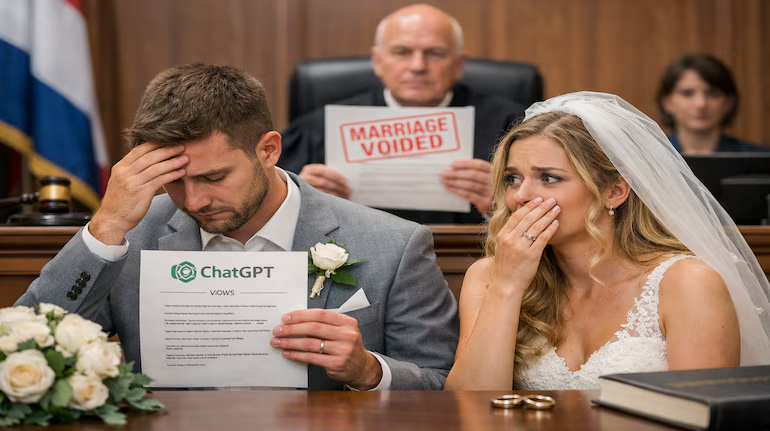

A Dutch couple’s marriage was annulled after a court ruled that the vows used during their ceremony failed to meet legal requirements. The wedding, held last April 19 in Zwolle, had involved a playful, ChatGPT-generated speech by the officiant, who asked the couple if they would “continue supporting each other, teasing each other and embracing each other, even when life gets difficult.”
The couple responded “I do,” and the officiant declared them “not only husband and wife, but above all a team, a crazy couple, each other’s love and home base.”
Despite the couple’s assertion that they intended to marry regardless of the wording, the judge found that the vows did not constitute a legally binding promise to fulfill marital duties, which is mandatory under Dutch law.
The court acknowledged the importance of the marriage date to the couple but emphasized that it could not disregard statutory requirements. As a result, the marriage was ordered to be removed from the Zwolle city registry.
The ruling has highlighted the legal limitations of using AI-generated content in official ceremonies, even when intended for humor or personalization. Legal experts note that while technology can assist with drafting speeches and scripts, marriage vows must still comply with specific statutory language to be recognized under Dutch law.
The couple’s experience serves as a cautionary tale for those considering using AI tools like ChatGPT in official or legally binding contexts.
While AI can provide creative or personalized content, it cannot replace formal legal requirements that ensure ceremonies and agreements are recognized by authorities. The incident has sparked discussion about the intersection of technology, law, and personal expression, and how AI-generated content should be treated in official and legal settings.
The annulment also underlines the importance of consulting legal professionals when planning ceremonies to ensure that all legal prerequisites are properly addressed. Authorities in the Netherlands reaffirm that marriage vows must include explicit promises to undertake marital responsibilities, regardless of the creative or humorous nature of the speech used.
