

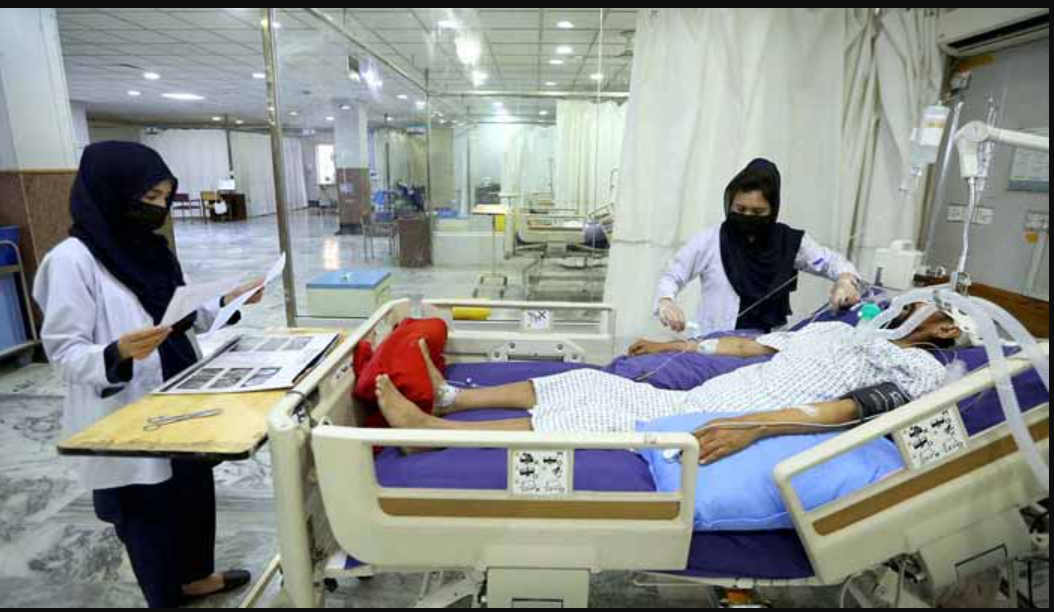

The Punjab government has announced major reforms in public hospitals, introducing body cameras for hospital staff and banning mobile phone use during duty hours. These measures aim to enhance security, accountability, and patient care across the province.
The decision was finalized in a high-level meeting chaired by Chief Minister Maryam Nawaz, focusing on the progress of ongoing health sector projects and addressing public complaints against hospital staff and security personnel.
Body Cameras and Mobile Phone Ban
As part of the reforms, body cameras will be worn by security guards, ward boys, nurses, and pharmacy staff to ensure accountability and transparency in hospitals. Simultaneously, doctors and nurses will be prohibited from using mobile phones during duty hours to minimize distractions and improve patient care.
The chief minister expressed concern over reported inefficiencies by private security personnel and instructed strict action against negligent staff. She emphasized that public money and time will no longer be wasted on underperforming employees.
Hygiene and Medicine Supply Overhaul
Maryam Nawaz directed all government hospitals to complete thorough cleaning by 9 am daily to maintain hygiene standards. Additionally, she ordered the preparation of a modern medicines list and formation of a dedicated committee to ensure uninterrupted availability of drugs.
The government has allocated Rs80 billion for medicines, and the chief minister described any shortages as “incomprehensible.” Hospitals may also be permitted to procure modern Chinese medical equipment to upgrade facilities and improve healthcare delivery.
Performance-Based Reforms
To strengthen leadership, a Medical Superintendent (MS) pool will be established across Punjab, with salaries linked strictly to performance. Community health inspectors will conduct hospital surveys to monitor service quality. Furthermore, a Data Analysis Centre will be created to evaluate the effectiveness of public welfare initiatives in the health sector.
Officials reported significant progress under the reforms: over 2,500 doctors have secured jobs in Punjab in less than two years, 585,000 patients have been registered for home delivery of cardiac medicines, and 6,000 hepatitis and tuberculosis patients receive medicines at home.
Chief Minister’s Vision
CM Maryam Nawaz reiterated that the government is committed to streamlining hospital services, improving accountability, and safeguarding public resources. She warned that any staff failing to meet expectations or showing negligence will face strict consequences, including termination.
These reforms mark a comprehensive step forward in enhancing healthcare delivery, security, and operational efficiency across Punjab’s public hospitals.
