

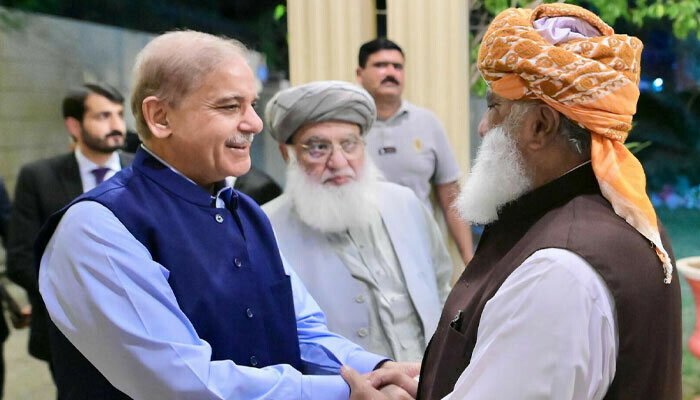

Jamiat Ulema-e-Islam-Fazl (JUI-F) chief Maulana Fazlur Rehman has warned against any attempt to take control of religious madrasas, saying matters of faith cannot be governed by worldly authorities. He also strongly criticised the privatisation of Pakistan International Airlines (PIA), calling it against national interest.
Addressing a turban-tying ceremony at Madrasa Taalim-ul-Quran in Raja Bazar, Islamabad, Fazlur Rehman said that while global powers may dominate political and economic affairs, they have no authority over belief and religion. “America may control the world today, but it does not hold the power of faith,” he remarked, adding that religion cannot be regulated through force or pressure.
He cautioned that targeting religious institutions or their students could have serious consequences. Any attempt to challenge madrasas, he warned, would ultimately turn into a challenge for those behind such efforts.
Emphasising unity among religious scholars, he said clerics from all schools of thought stand together in defence of madrasas and their independence.
Highlighting the historical role of madrasas, Fazlur Rehman said these institutions have safeguarded Quranic and Hadith sciences for generations. He recalled how Allama Shabbir Usmani was once labelled illiterate by the British, noting that similar mindsets persist today where religious knowledge is undervalued and marginalised.
The JUI-F chief said his party believes in dialogue and consultation, and will respect laws formed through mutual consensus. However, he made it clear that deception or coercion would not be accepted under any circumstances.
Addressing madrasa students, Fazlur Rehman urged them to combine dedication and discipline with religious learning. He remarked that greater focus on constructive work, rather than slogans alone, could have translated into stronger political success, particularly in Punjab.
The address underscored JUI-F’s continued resistance to state interference in religious education, while reaffirming its stance on dialogue, lawful processes, and the protection of faith-based institutions.
