

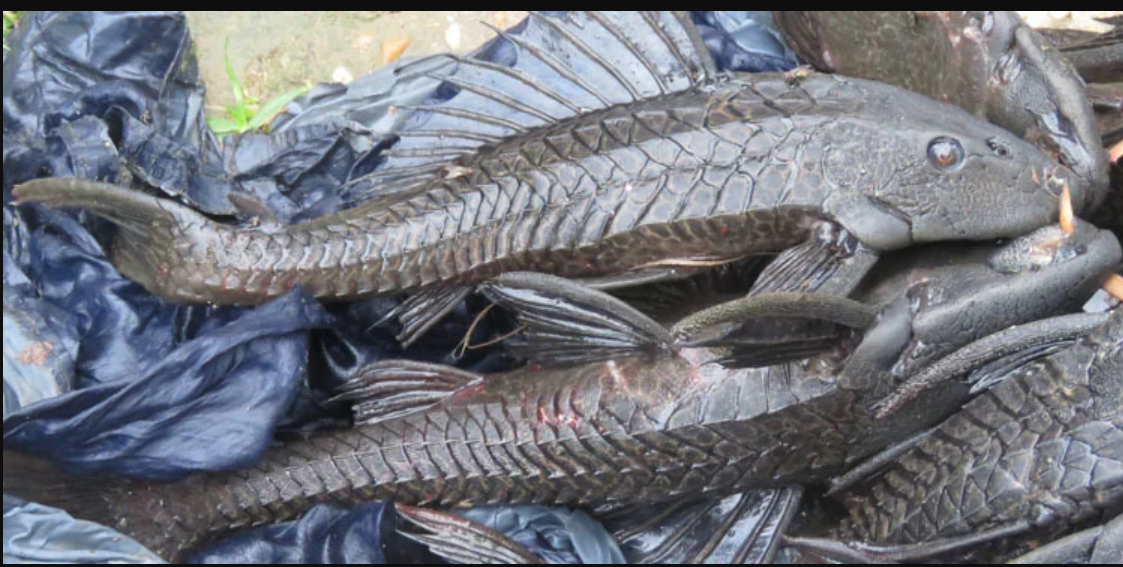

An invasive Amazon sailfin catfish has emerged as a serious threat to Pakistan’s native fish species, raising alarms among environmental experts. Conservation organisations warn that the species is spreading rapidly across natural water bodies. As a result, concerns about biodiversity loss and ecosystem imbalance are growing. Pakistan’s freshwater systems already face environmental pressure, and invasive species now add further risk.
Environmental experts report that at least 26 non-native fish species have entered Pakistan’s aquatic ecosystems so far. Among these, the Amazon sailfin catfish is considered the most dangerous. The species displays aggressive feeding behaviour, which disrupts natural food chains. Consequently, indigenous fish populations struggle to survive in shared habitats.
The Amazon sailfin catfish is predatory by nature and feeds on smaller fish and aquatic organisms. This behaviour directly threatens local species that lack natural defenses. Moreover, the catfish competes aggressively for food and breeding space. Its ability to reproduce quickly allows it to dominate rivers and lakes within a short period.
Experts caution that such dominance can permanently alter aquatic ecosystems. When native fish populations decline, the ecological balance weakens. This imbalance affects other aquatic species and birds that depend on fish for survival. Therefore, the impact extends beyond water bodies and affects surrounding environments.
Uncontrolled spread of invasive species can also harm fisheries. Local communities rely on native fish for food and income. However, declining fish stocks may reduce catches and affect livelihoods. For this reason, environmental protection is closely linked to economic stability.
Conservation groups have urged environmental and fisheries authorities to act without delay. They recommend continuous monitoring of the sailfin catfish population. Timely control measures could help limit further spread. Early action remains essential to prevent long-term ecological damage.
Authorities are also encouraged to improve coordination between departments. Awareness among fishermen and local communities can help prevent accidental transfers. Preventive strategies remain more effective than later intervention. Strong monitoring systems can still protect native aquatic life.
The presence of the Amazon sailfin catfish highlights the growing challenge of invasive species management in Pakistan. Experts stress that consistent policy enforcement is required. Protecting indigenous fish species is vital for ecological balance. Safeguarding aquatic ecosystems today will help secure Pakistan’s environmental future.
