

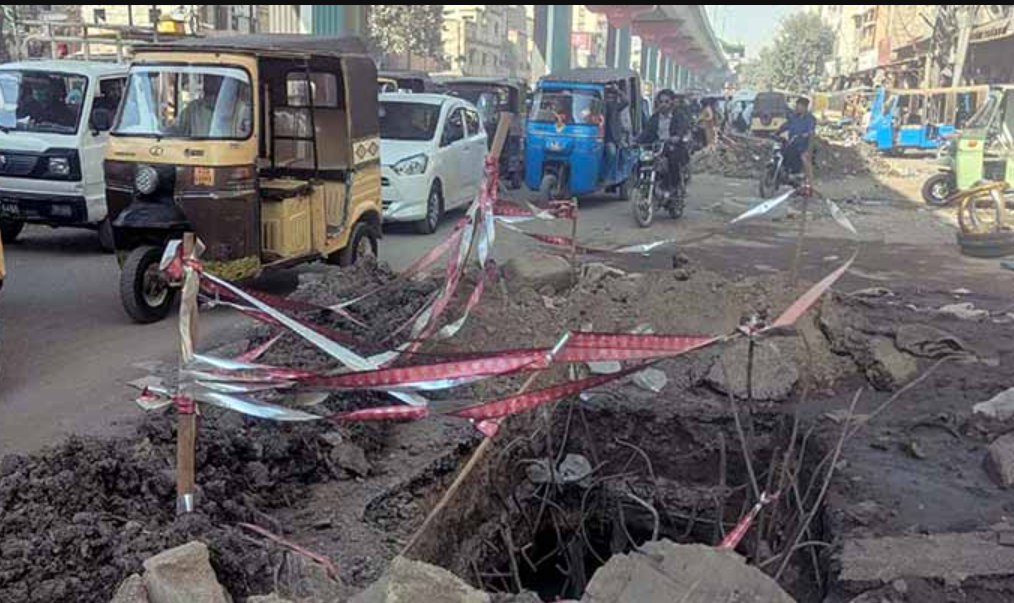

Karachi continues to struggle with broken and dug-up roads across multiple districts. The situation has persisted for nearly a year without lasting solutions. As a result, residents face daily travel disruptions, rising pollution, and growing health concerns. Despite repeated complaints, authorities have failed to restore normal conditions.
Citywide Road Damage Disrupts Daily Life
Several districts, including East, West, South, Central, Keamari, Malir, and Korangi, remain affected. Roads in these areas show prolonged excavation and incomplete repair work. Consequently, commuters face traffic congestion, vehicle damage, and longer travel times. Dust from damaged roads has also worsened air quality citywide.
Moreover, overflowing sewage and water shortages have added to residents’ frustrations. In many neighborhoods, sewerage water floods streets, making movement unsafe. Therefore, daily routines have become increasingly difficult for thousands of people.
Residents Voice Anger Over Prolonged Neglect
Citizens have openly expressed anger over unresolved civic failures. Many believe years of governance should have ensured basic infrastructure. One resident pointed to missing manhole covers as a symbol of neglect. Others blamed political infighting for stalled development work.
Meanwhile, residents say multiple political parties operate in the city without coordination. As a result, essential projects remain unfinished. Public trust continues to erode with each passing month.
Fragmented Authority Hampers Accountability
Karachi’s governance structure further complicates the crisis. Administrative control is divided among 23 different institutions. These include the Karachi Metropolitan Corporation, towns, cantonment boards, port authorities, and railways. However, the KMC controls only 32 percent of city land.
Because of this fragmentation, accountability remains unclear. Decision-making lacks coordination and continuity. Consequently, repair work often stops midway and never resumes.
Once-Developed Areas Now in Decline
Areas like North Nazimabad once featured wide, well-maintained roads. Today, residents report broken streets, dust clouds, and failing sewerage systems. They say town administrations, elected representatives, and provincial authorities have all failed to respond effectively.
Gas pipeline excavation by utility companies has worsened road conditions. Although funds were reportedly allocated for repairs, visible improvement remains absent. Post-rain repairs covered only limited stretches, leaving most roads untouched.
Political Leaders Criticise Ongoing Failures
Political figures have also criticised the situation. City leaders acknowledge the lack of coordination in infrastructure planning. Opposition voices describe the condition of roads as unacceptable. According to them, citizens continue to suffer due to incomplete projects and poor execution.
Despite announcements of major infrastructure packages and development funds, residents see little change. Therefore, Karachi continues to wait for meaningful and visible improvement.
