

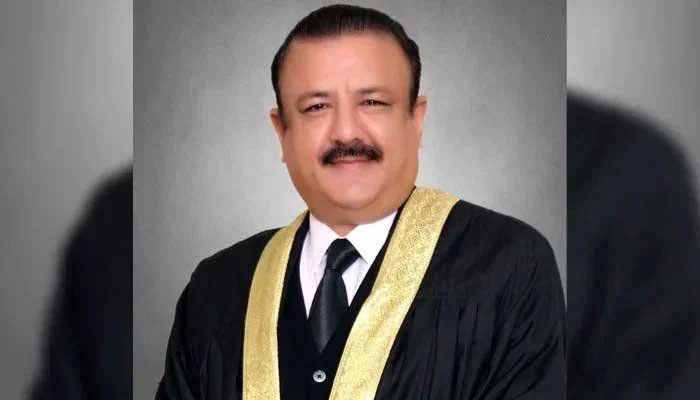

The Islamabad High Court (IHC) has dismissed objections raised by Justice Tariq Mehmood Jahangiri against the constitution of a division bench and the inclusion of IHC Chief Justice Sarfraz Dogar in it, holding that the objections lacked legal merit.
In its written order issued on Tuesday, the court stated that given the sensitive nature of allegations concerning an invalid or fake degree against a sitting judge, it was appropriate and in the interest of justice to constitute a division bench rather than a single bench.
The order emphasized that forming benches is the sole prerogative of the chief justice and that such arrangements have been made in the past depending on the nature of a case.
The court categorically rejected Justice Jahangiri’s objection to the bench’s composition, stating that it carried no force. The ruling followed arguments raised a day earlier when Justice Jahangiri opposed the division bench during proceedings on a petition filed by Advocate Mian Dawood. He had argued that a writ of quo warranto is traditionally heard by a single bench, not a division bench.
The case revolves around controversy over Justice Jahangiri’s LLB degree, which the University of Karachi canceled. According to a notification dated September 25, the university syndicate, in its meeting held on August 31, 2024, approved Resolution No 6, endorsing the recommendation of the Unfair Means Committee and upholding the decision taken by the competent authority.
Justice Jahangiri had also objected to Chief Justice Dogar’s presence on the bench, alleging a conflict of interest due to a petition he had previously filed against him. He expressed a lack of confidence in the bench and requested that the matter be assigned elsewhere.
The IHC dismissed these concerns, noting that the petition filed against Chief Justice Dogar had already been rejected by the Federal Constitutional Court.
Citing the Supreme Court’s judgment in Asif Ali Zardari vs The State, the court reiterated that a judge is the keeper of his own conscience and decides whether to hear a case. The court also granted the right of audience to key bar associations due to the exceptional nature of the case.
