

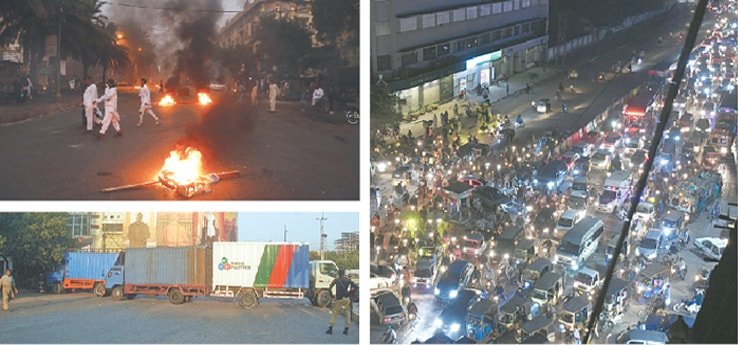

Several people were detained after a Sindh Culture Day rally turned violent on Sharae Faisal in Karachi on Sunday, according to police officials. The unrest occurred when participants of the rally reportedly pelted police vehicles with stones, breaking the glass of patrol vans and a water tanker.
The clash began after police requested the demonstrators to move the rally route from Kala Pul towards Saddar. The participants resisted, resorting to stone-pelting and causing damage to public property. In response, police employed shelling to disperse the crowd and arrested two individuals for attacking police vehicles.
Traffic authorities confirmed that Sharea Faisal remained closed at the FTC, with vehicles redirected from Kala Pul towards Saddar. The road was later cleared for traffic after police regained control of the area.
Sindh Home Minister Zia Lanjar took notice of the violence and contacted the Additional IG Karachi, requesting a detailed report on the incident. He directed law enforcement to take immediate action against those responsible for damaging police vehicles and public property, ordering the arrest of all individuals involved without delay.
Sindh Culture Day is celebrated annually on the first Sunday of December to honor the province’s centuries-old traditions and heritage. The day is marked with various cultural events and gatherings to highlight Sindh’s unique identity and contributions to the nation.
Earlier, President Asif Ali Zardari remarked that Sindh’s culture embodies tolerance, peace, and national unity, emphasizing the collective responsibility to pass these values to future generations.
He noted that Sindh achieved a distinct constitutional and cultural identity after separating from the Bombay Presidency in 1936 and highlighted the province’s historical role, with its assembly passing the resolution that ultimately led to the creation of Pakistan.
The incident underscores the need for careful management of public rallies to ensure celebrations proceed peacefully while preserving public safety and property, balancing cultural expression with law enforcement responsibilities.
