

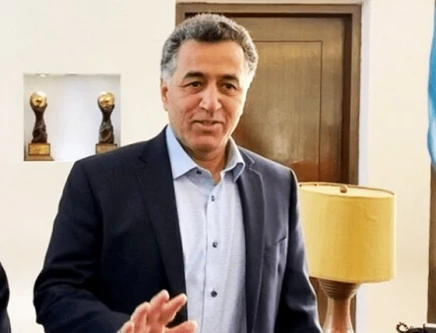

Prime Minister’s Adviser on Political Affairs, Rana Sanaullah, stated on Thursday that the verdict in the case of Faiz Hamid, former chief of Pakistan’s Inter-Services Intelligence (ISI), is expected this December.
Speaking to Geo News, Sanaullah emphasized that no forecasts should be made regarding Hamid’s punishment and that the legal process must be allowed to run its course.
Hamid is facing a court-martial for allegedly engaging in political activities and abusing authority during his tenure, including his time heading the counter-intelligence wing of the ISI, particularly during the Faizabad sit-in in 2017.
The former spy chief was taken into custody in August 2024 on charges of abuse of power and violations of the Army Act. Multiple offences, including violations of the Official Secrets Act and other provisions under the Pakistan Army Act, were formally charged against him in December 2024.
The court-martial process followed a detailed inquiry conducted by the Pakistan Army, based on complaints filed by the Top City housing society’s CEO regarding land grabbing and the theft of valuables.
Several retired officers were also taken into custody in connection with the same case. The ISPR stressed that the trial is a legal matter, and the final outcome will be announced immediately upon conclusion.
Sanaullah also commented on other national security matters, highlighting the importance of the Chief of Defence Forces (CDF) and noting that rules and regulations for the post are still under development. He dismissed speculation about delays in the CDF notification as baseless.
Regarding propaganda and security, the adviser said the government plans to expand the list of individuals abroad spreading anti-Pakistan content on social media, emphasizing that such propaganda affecting national security will not be tolerated.
He also addressed political figures, including Khyber Pakhtunkhwa CM Sohail Afridi and PTI founder Imran Khan, underlining that national security takes precedence over political actions and that legal protocols will be observed for former leaders.
Overall, Sanaullah stressed the importance of allowing legal and procedural processes to take place while ensuring national security and protocol are maintained in political and security-related matters.
