

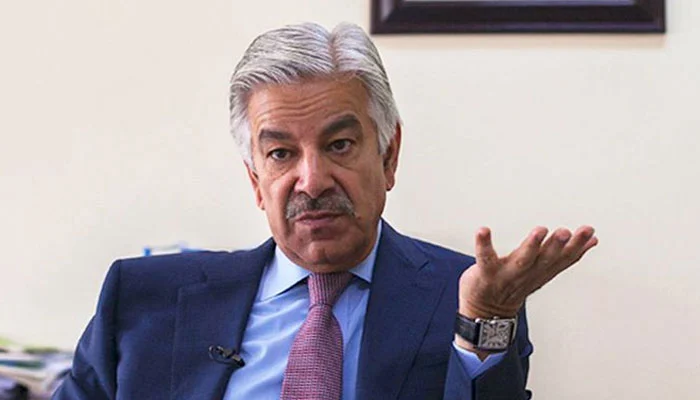

Federal Defence Minister Khawaja Muhammad Asif has addressed growing speculation about the appointment of Pakistan’s first Chief of Defence Forces (CDF). Because rumours intensified in recent days, his clarification arrived at a critical time. According to him, the notification process has already started, and there is no cause for alarm.
His remarks came after widespread discussions about procedural delays. However, he asserted that the matter is moving forward as required under the latest constitutional changes.
Minister Calls Rumours “Unnecessary and Irresponsible”
Khawaja Asif stated that speculation surrounding the appointment was unnecessary. He stressed that assumptions were creating confusion without any factual basis. Therefore, he urged the public to avoid spreading uncertainty.
He explained that the process has begun according to established rules. Because the Prime Minister is expected to return soon, he added that the notification will follow in due course.
Despite rising commentary, he made it clear that there is no room for conjecture. His message was firm, direct and intended to end the ongoing debate.
Prime Minister’s Return Linked With Final Notification
The minister noted that Prime Minister Shehbaz Sharif will return shortly. Because the appointment requires his final approval, the notification will be issued after his arrival.
Officials believe that the timeline remains intact. However, the public discussion over the matter intensified due to the absence of visible administrative steps. Asif reiterated that the procedure is moving as planned, even if some details are not yet public.
Understanding the 27th Constitutional Amendment
The recent 27th Constitutional Amendment significantly transformed the structure of Pakistan’s armed forces. Consequently, the position of Chief of Defence Forces was introduced as the highest military office.
The amendment revised Article 243. Under this change, the President will appoint the Chief of Army Staff. Yet, the appointed COAS will also hold the newly created title of Chief of Defence Forces. This dual role centralises authority under a single command position.
Because this shift reshapes the military hierarchy, public interest in the inaugural appointment has naturally increased.
Chairman Joint Chiefs Office Abolished
One of the most notable elements of the amendment is the abolition of the Chairman Joint Chiefs of Staff Committee. This role previously represented the senior-most office in the joint services structure. However, the new framework now places overarching command in the hands of the CDF.
Therefore, the military’s organisational model has become more centralised. Supporters argue that this change improves coordination. Critics, however, suggest that the consolidation needs strong oversight. Despite differing opinions, the amendment remains a major structural reform.
Lifetime Rank Protections Introduced
The amendment also provides legal protection for the ranks of Field Marshal, Marshal of the Air Force, and Admiral of the Fleet. Officers promoted to these lifetime ranks will now retain their uniforms, privileges and titles for life.
Additionally, Article 248, previously applicable only to the President, will now extend to these high-ranking officers. Because this safeguard prevents legal proceedings against them during their tenure, it formalises their elevated status.
These privileges reflect the ceremonial and historical significance attached to these ranks. However, they also mark a significant legal shift in how senior military honours are managed.
CDF Given Expanded Authority Over Key Appointments
The amendment empowers the CDF to recommend key military appointments. Under the revised Army Act, the Federal Government will appoint the Vice-Chief of Army Staff and Deputy Chief of Army Staff based on the CDF’s advice.
This change strengthens the CDF’s influence across the military leadership chain. Consequently, the command structure will function more cohesively under a single strategic authority.
The Vice-Chief of Army Staff will operate under the guidance of the CDF. Because of this, operational responsibilities will align more closely with strategic directives.
Federal Government to Define Roles and Entitlements
The amendment also clarifies that the Federal Government will determine the exact roles and entitlements of the officers covered under these rules. This includes defining privileges, responsibilities and any additional authority deemed necessary in the national interest.
The government’s power to outline these details ensures administrative flexibility. Because military needs evolve over time, this framework allows future adjustments without further constitutional amendments.
Why the CDF Notification Holds National Importance
The appointment of the first Chief of Defence Forces marks a historic transition. Because the role combines strategic and operational oversight, the notification carries major institutional significance.
It affects all three branches of the military and shapes future command dynamics. Therefore, any delay or perceived confusion naturally draws public attention.
Khawaja Asif’s intervention aims to reassure the nation that the process remains on track. He emphasised that speculation should end, and the constitutional procedure should be allowed to unfold without distractions.
Public Interest Remains High
Because this is the first appointment under the new constitutional order, interest remains exceptionally high. Analysts are watching the process closely, while citizens expect clarity due to the sensitive nature of the post.
The government’s statements are designed to maintain stability during the transition. Moreover, officials hope that consistent communication will counter misinformation and unnecessary debate.
A Critical Moment for Pakistan’s Defence Structure
Pakistan stands at the beginning of a landmark shift in its military command system. The creation of the CDF position represents a new model of authority, coordination and strategic leadership.
Although rumours circulated widely, the Defence Minister’s firm clarification aims to bring calm and focus back to the official process.
As the Prime Minister returns and the notification proceeds, the country prepares for the next phase of this important institutional change. The coming days will shape how Pakistan navigates this new defence era.
