

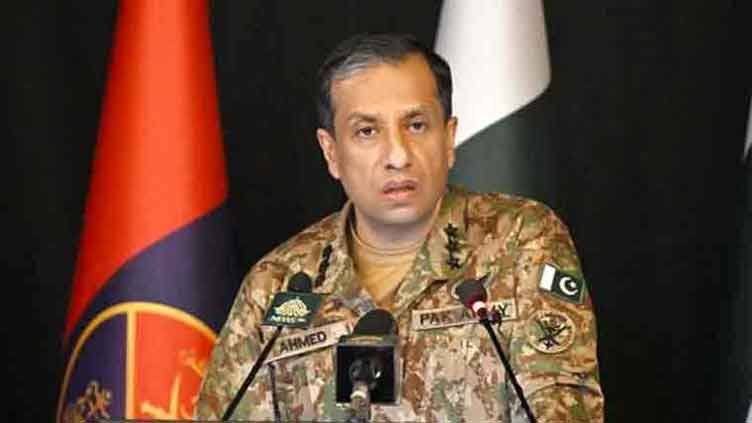

Pakistan’s security leadership has raised serious concerns about rising cross-border threats, claiming that Afghan forces are firing at Pakistani checkposts to support terrorist infiltration. During a detailed briefing, the Director General of Inter-Services Public Relations, Lt Gen Ahmed Sharif Chaudhry, explained how this pattern has intensified regional instability. His remarks highlighted complex border dynamics, governance gaps, tribal divisions, and a deepening terror-crime nexus that is challenging Pakistan’s internal security.
Afghan Forces Accused of Facilitating Terrorist Movement
Lt Gen Chaudhry stated that Afghan posts often fire at Pakistani positions. According to him, this engagement creates deliberate diversions. Terrorist groups then use small gaps between posts to enter Pakistan. He stressed that borders are always mutually guarded. However, he noted that the other side fails to act like a responsible state partner.
He pointed out that governance remains missing across most Afghan border regions. Only small sections show any administrative structure. Vast stretches have no functional courts or law-enforcement departments. These ungoverned spaces allow militant networks to move freely.
Border Populations and Tribal Divisions Add Complexity
The DG ISPR said the border area hosts 29 tribes split between both countries. These communities live directly on the dividing line. Such social structures make border control difficult. He explained that these families maintain constant movement for daily life. Therefore, strict checks become challenging without disrupting centuries-old tribal patterns.
He also noted that this type of cross-border population link does not exist on Pakistan’s borders with Sindh or Punjab. Consequently, enforcing tight surveillance along the Pak-Afghan boundary requires far more resources.
Why Fences Alone Cannot Stop Terrorist Movement
During the briefing, Lt Gen Chaudhry described the limitations of border fencing. Even a strong fence does not hold military value without continuous observation. He said hostile groups can cut through obstacles if no guard covers that stretch. He showed images of fenced areas, including snow-covered regions, to illustrate Pakistan’s efforts.
However, he stressed that military posts sit 15 to 25 kilometres apart due to terrain and cost. He added that sealing every two to five kilometres with security posts and drones would require massive investment. According to him, even powerful nations struggle to hermetically secure their borders, so Pakistan faces a daunting challenge.
Illegal Trade and the Terror-Crime Nexus
The DG ISPR highlighted a growing terror-crime nexus aiding militant networks. He said certain cells of the banned Tehreek-i-Taliban Pakistan assist illegal trade. They also bring items linked to criminal activity. These groups attack posts to enable smugglers’ vehicles to pass unhindered.
He questioned why hundreds of thousands of non-custom-paid vehicles operate freely. He emphasised that these vehicles often carry improvised explosive devices. Many are also used for terrorist transport. He asked why local authorities ignore this movement, and argued that security responsibility inside the country must be shared.
Pakistan Presented Evidence That Afghanistan Could Not Refute
Lt Gen Chaudhry discussed a recent Pak-Afghan dialogue that collapsed. He said Pakistan presented clear evidence of TTP presence, financing and operations inside Afghanistan. He stressed that Afghan authorities could not deny any of the facts shared.
He added that Pakistan was ready for a third-party agreement with verifiable mechanisms. He urged Afghan officials to repatriate Pakistani militants hiding there. Pakistan, he noted, has already repatriated Afghan migrants on its side.
The DG ISPR questioned how armed militants carrying modern weapons arrive in Pakistan. He said these individuals come equipped with M4s, M16s and other advanced rifles. He argued that such “guests” cannot be considered civilians.
Militant Groups Expanding Inside Afghanistan
He said Afghanistan now hosts several regional and global militant organisations. These include the East Turkestan Islamic Movement, the Islamic Movement of Uzbekistan, Al Qaeda and Daesh, among others. He stressed that these networks threaten wider international security.
He argued that the Afghan Taliban failed to transform into a functioning state after 2021. Instead, they are patronising multiple non-state actors. He reminded that the Afghan side had promised that their soil would never be used for terrorism.
Pakistan’s Problem Is Not With Afghans, but With the Taliban Regime
Lt Gen Chaudhry clarified that Pakistan has no dispute with Afghan citizens. However, he said the Afghan Taliban administration remains unrepresentative and uncooperative. He recalled that Pakistan engaged with them since 2021, yet cross-border violence continues.
He also said trade has been halted because “blood and business cannot go together”. Security concerns must come before economic activity.
Rebuttal of Allegations Regarding Airstrikes
Addressing recent allegations by the Afghan Taliban, Lt Gen Chaudhry rejected claims of overnight Pakistani strikes inside Afghanistan. He reiterated that Pakistan makes no distinction between terrorist groups. He highlighted that in Pakistan’s view, the only acceptable terrorist is a dead one.
Repatriation of Illegal Migrants Intensifies
He reported a sharp rise in migrant repatriation this year. More than 971,000 individuals returned in 2025. Nearly 240,000 were repatriated in November alone. He compared this with about 366,000 sent back in 2024.
Counter-Terrorism Operations at Record Pace
Lt Gen Chaudhry provided detailed figures on the ongoing security campaign. He said over 4,900 intelligence-based operations occurred since November 4. This equals about 233 operations per day. These actions resulted in the elimination of 206 terrorists.
From January until now, Pakistan conducted more than 67,000 operations. Balochistan recorded more than 53,000 of these. Khyber Pakhtunkhwa followed with more than 12,800. Other regions reported around 850 operations.
He also said Pakistan faced 4,729 terrorist incidents this year. Khyber Pakhtunkhwa saw 3,357 attacks. Balochistan witnessed 1,346. Other areas reported 26 incidents.
