

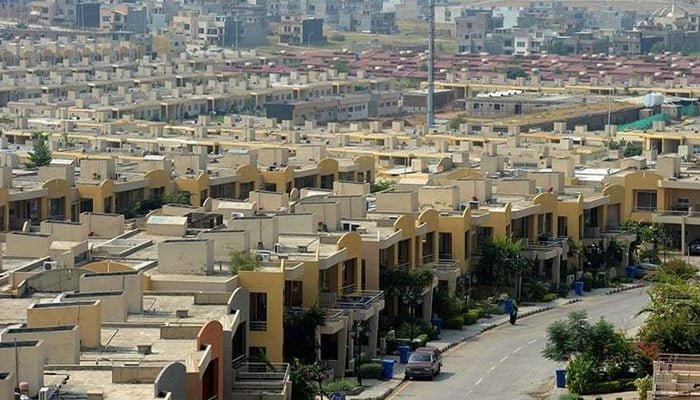

A massive land scam in Islamabad and Rawalpindi has exposed widespread fraud by private and cooperative housing schemes, with citizens allegedly defrauded of hundreds of billions of rupees.
According to sources, the National Accountability Bureau (NAB) Rawalpindi conducted a detailed investigation, revealing extensive irregularities including overselling of plots, fabricated memberships, and deceptive land marketing over several years.
The probe found that approximately 91,000 plots and files were sold beyond the available land or approved Layout Plans (LoPs). Nearly 20,000 memberships were allotted without any corresponding land, while around 80,000 kanals were marketed and sold despite not being part of approved records.
In one striking case, a private scheme applied for LoP approval for just 4,000 kanals but publicly advertised 75,000 to 100,000 kanals, selling 30,000–40,000 plots and generating Rs50–60 billion, though it acquired only 34,000 scattered kanals without regulatory approval.
This pattern was not limited to private schemes. Cooperative housing societies, traditionally viewed as more regulated, also oversold plots and allotted memberships without available land.
Data from four such societies showed thousands of members still awaiting possession, with one selling 35,000 plots beyond approved land, another issuing 6,000–7,000 excess plots, and another failing to deliver nearly 9,000 plots. Overall, roughly 65,000 plots were sold in projects where possession could not be delivered due to incomplete development or insufficient land.
The scam has caused severe financial losses for government employees, professionals, retirees, and ordinary citizens, many of whom invested life savings in the hope of acquiring homes. DG NAB Pindi Waqar Chouhan confirmed the findings and said that NAB coordinated with the Cooperative Department and relevant regulators to ensure evidence-based conclusions.
Authorities are now preparing a reform package for the housing sector to prevent future fraud. Observers say the crisis highlights systemic regulatory weaknesses, administrative negligence, and deliberate exploitation by developers who misled buyers with false promises, leaving thousands of families without land, possession, or development even after years of waiting.
