

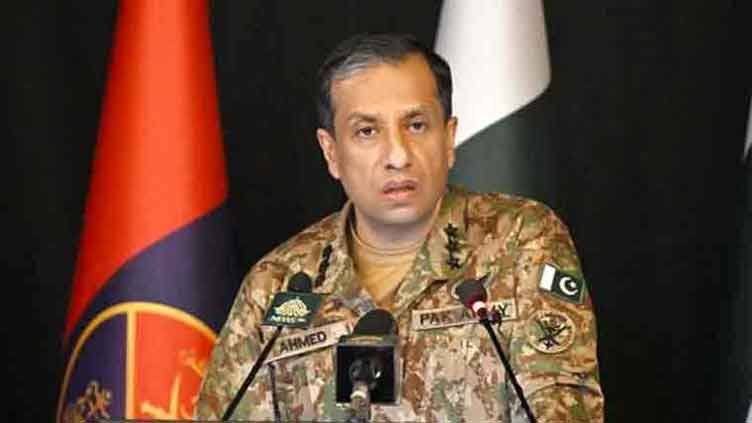

Pakistan has firmly denied allegations by the Afghan Taliban accusing Islamabad of carrying out strikes inside Afghanistan. The response came through the Inter-Services Public Relations (ISPR) Director General Lieutenant General Ahmed Sharif Chaudhry, who dismissed the claims as baseless. His remarks have escalated the ongoing debate over cross-border security, regional stability and the responsibilities of both governments in tackling militant threats.
A Strong Rejection From Pakistan’s Military Spokesperson
According to the ISPR DG, Pakistan did not conduct any attack inside Afghanistan. He said the accusations from the Taliban government were completely false. Moreover, he emphasised that Pakistan has always acted as a responsible state. Because of this, he stressed that the country never carries out covert attacks, nor does it target civilians under any circumstances.
He stated that all actions taken by Pakistan follow clear principles. Therefore, when Pakistan responds, it responds transparently and only as a state entity.
Taliban Claims Trigger Regional Concern
Earlier, the Afghan Taliban accused Pakistan of conducting strikes in the provinces of Khost, Kunar and Paktika. Their spokesperson claimed that ten people had died in the alleged attack. Afghan provincial officials later asserted that drones and aircraft carried out the strikes. These allegations quickly raised diplomatic tension since cross-border accusations often fuel mistrust between the two neighbours.
However, Pakistan strongly rejected the claims. The ISPR DG insisted that Pakistan respects Afghan sovereignty while also expecting similar behaviour from the Afghan authorities.
ISPR DG Reminds Taliban to Behave as a State
During his remarks, Lieutenant General Chaudhry expressed concerns about the conduct of the Taliban administration. He said the Afghan leadership must act responsibly and take decisions like a sovereign state. Consequently, he questioned how long the Afghan government intended to operate as an interim authority.
He added that Pakistan’s stance against terrorism remains firm. He stressed that Pakistan is against terrorists and not the Afghan people. His statement also underlined that Pakistan sees no categories among terrorists. Therefore, terms like “good Taliban” or “bad Taliban” hold no meaning for Pakistan’s security institutions.
A Call for Action Against Terror Networks
The ISPR DG highlighted the urgent need for the Afghan government to prevent militant groups from using Afghan soil. He said Pakistan continues to face attacks from terrorists based across the border. Because of this, the Taliban must adopt a responsible counter-terrorism strategy consistent with state obligations.
Furthermore, he emphasised that the Afghan administration must demonstrate constructive intent. He said clear and decisive action from the Taliban government could significantly improve regional peace.
Concerns Over Non-Custom-Paid Vehicles
Lieutenant General Chaudhry also pointed out a critical domestic security concern. He urged the need for an immediate ban on non-custom-paid vehicles. These vehicles, he said, frequently appear in incidents linked to terrorism. Because of this, removing them from use can improve internal security and limit mobility for hostile elements.
His remarks suggest that Pakistan views both internal and external factors as interconnected challenges. Therefore, cooperation between state institutions and neighbouring governments remains essential.
Pakistan’s Position on Civilian Safety
During his briefing, the ISPR DG stressed that Pakistan never targets civilians. He said Pakistan’s military operations follow strict rules of engagement and prioritise human life. This claim stands in direct contradiction to allegations from Afghan officials, who accused Pakistan of causing civilian casualties.
He stated that Pakistan rejects such accusations because they undermine Pakistan’s record of responsible military conduct. He added that Pakistan expects fair and accurate assessments from neighbouring authorities.
Growing Cross-Border Tensions
Although relations between Pakistan and the Afghan Taliban have remained complex, recent allegations have heightened regional concern. Cross-border attacks, militant movement and unverified claims often intensify mistrust. Therefore, Pakistan’s latest rejection of Afghan allegations may influence future engagement between the two sides.
Despite rising tension, the ISPR DG encouraged constructive dialogue. He said both countries must adopt responsible policies to prevent further instability. His tone suggested that Pakistan wants cooperation but also expects action from the Afghan leadership.
Pakistan’s Transparent Approach to Military Operations
Lieutenant General Chaudhry said Pakistan conducts all military operations openly. Therefore, allegations of secret strikes do not align with Pakistan’s established procedures. He added that Pakistan follows its own legal and strategic frameworks, which guide every operation.
His remarks aimed to reassure the public and the international community that Pakistan remains transparent and accountable in its military actions.
An Emphasis on Regional Stability
The ISPR DG highlighted that Pakistan values stability in the region. Because of this, he said both countries must take decisions that support peace rather than escalate tensions. He also said cross-border terrorist networks pose a threat to both nations, which makes cooperation essential.
His statement implied that Afghanistan must shoulder its share of responsibility. Therefore, Pakistan expects the Taliban government to enforce its authority across its territory and prevent militant activity.
A Call for Responsible Governance in Kabul
One of the strongest parts of his message centred on governance. Lieutenant General Chaudhry said the Taliban must behave like a functioning state. He added that continued reliance on interim status will not help Afghanistan address security challenges. Moreover, delays in forming a stable governance structure could weaken regional trust.
Pakistan’s military spokesperson said the Afghan leadership must focus on state-building rather than issuing unverified accusations. He suggested that responsible governance could strengthen bilateral relations.
Pakistan’s rejection of the Afghan Taliban’s claims marks another chapter in an already tense relationship. However, Pakistan’s message remains consistent: terrorism must be tackled through coordinated state action, not through accusations or emotional responses.
As regional dynamics continue to shift, both countries face pressure to enhance cooperation. Therefore, future responses and decisions may determine whether tensions ease or escalate further.
For now, Pakistan maintains that it acted with transparency, while urging the Afghan leadership to adopt policies that support peace and stability on both sides of the border.
