

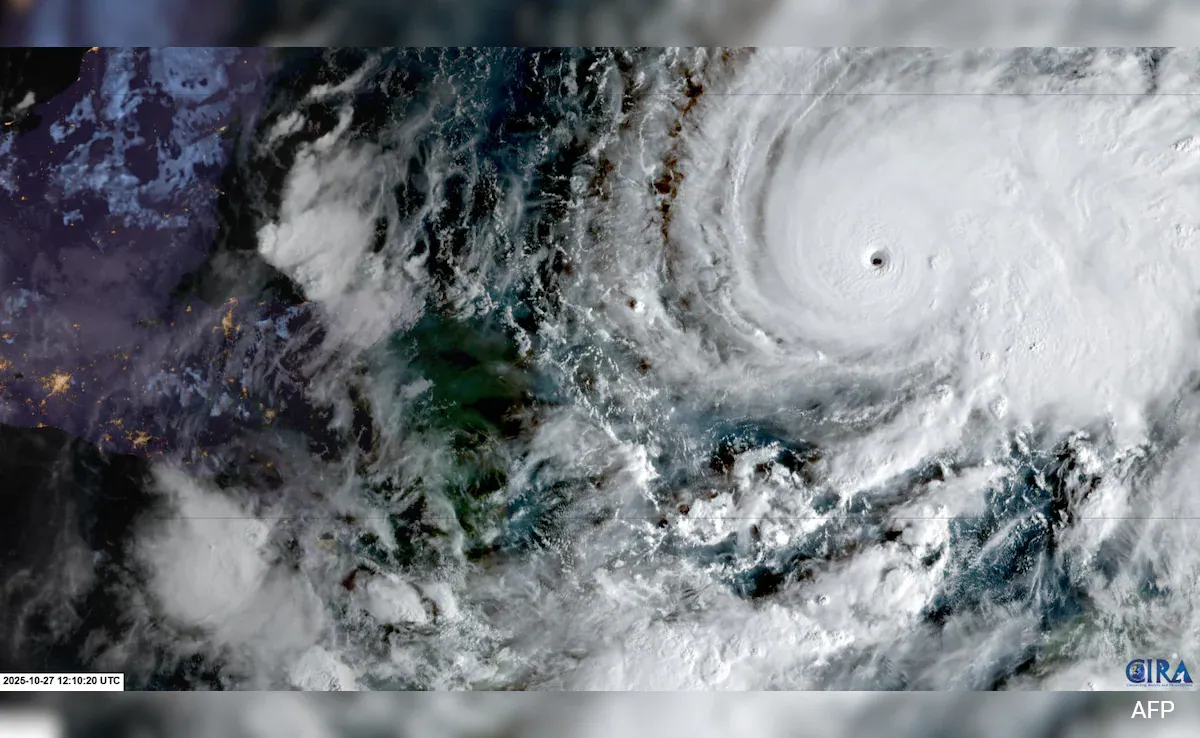

Hurricane Melissa, the most powerful storm ever recorded in Jamaica’s history, barreled toward Cuba on Tuesday after unleashing catastrophic destruction across the Caribbean island. The storm made landfall near New Hope in southwestern Jamaica as a Category 4 hurricane, with winds reaching an unprecedented 185 mph (295 kph) — stronger than the minimum threshold for a Category 5 cyclone, according to the U.S. National Hurricane Center (NHC).
Entire regions of St. Elizabeth Parish were left underwater, and more than 500,000 residents lost electricity as hospitals, homes, and key infrastructure sustained severe damage. “The reports we have include damage to hospitals, residential and commercial properties, and major road networks,” said Prime Minister Andrew Holness, noting that while no official deaths had been confirmed, the government expects casualties once full assessments are complete.
As Melissa moved past Jamaica’s mountainous interior, its winds weakened slightly to 145 mph (233 kph) but continued to lash communities with torrential rain and landslides. Meteorologists warned that the storm’s slow pace could lead to prolonged flooding and widespread devastation.
Cuba Orders Half a Million Evacuations as “Storm of the Century” Nears
Cuban authorities have ordered the evacuation of 500,000 people from low-lying areas as Hurricane Melissa curves northeast toward Santiago de Cuba, the nation’s second-largest city. “We should already be feeling its main influence this afternoon and evening,” said President Miguel Díaz-Canel in a message published in Granma, urging citizens to comply with emergency directives. “We know this cyclone will cause significant damage.”
The Bahamas also began mandatory evacuations in southern islands as Melissa’s projected path shifted toward the archipelago. Meanwhile, in Haiti and the Dominican Republic, days of heavy rainfall linked to the hurricane caused at least four deaths, officials confirmed.
Local media in Jamaica reported three storm-related deaths during preparations and one emergency coordinator suffering a stroke at the onset of the storm. Many communities remain isolated due to impassable roads and collapsed bridges.
The World Meteorological Organization (WMO) described Melissa as “catastrophic,” ranking it among the three most intense hurricanes ever observed in the Caribbean—after Hurricane Wilma (2005) and Hurricane Gilbert (1988), the latter being the last major storm to strike Jamaica directly. “For Jamaica, this will be the storm of the century,” said Anne-Claire Fontan, a WMO tropical cyclone expert.
Widespread Destruction and Calls for Global Climate Action
Eyewitnesses described terrifying scenes as Melissa tore through Jamaica. “It’s like a roaring lion. It’s mad — really mad,” said Collin Henry McDonald, a 64-year-old retiree from Portland Cottage, recalling how his home trembled under the relentless winds.
By late Tuesday, 15,000 people were sheltering in emergency facilities, while evacuation orders covered 28,000 residents, though many resisted leaving their homes. Relief agencies, including the Red Cross, estimate that 1.5 million Jamaicans could be directly affected by the hurricane’s impact.
The storm also wiped out large sections of Jamaica’s agricultural belt, threatening food security in the weeks ahead. Aid organizations have emphasized the urgent need for food supplies, farming tools, and rebuilding materials.
Prime Minister Holness said the government had allocated an emergency budget of $33 million, in addition to insurance and credit reserves slightly exceeding last year’s Hurricane Beryl relief fund.
Scientists have reiterated that climate change is intensifying hurricanes, causing them to strengthen faster and reach higher peak intensities due to warmer ocean waters. Caribbean leaders once again called on major industrialized nations to provide climate reparations, aid, and debt relief, arguing that small island states are bearing the brunt of a global crisis they did little to create.
As Cuba braces for impact, meteorologists warn that Melissa’s massive size and slow trajectory could result in catastrophic flooding, storm surges, and long-term humanitarian challenges across the northern Caribbean.
