

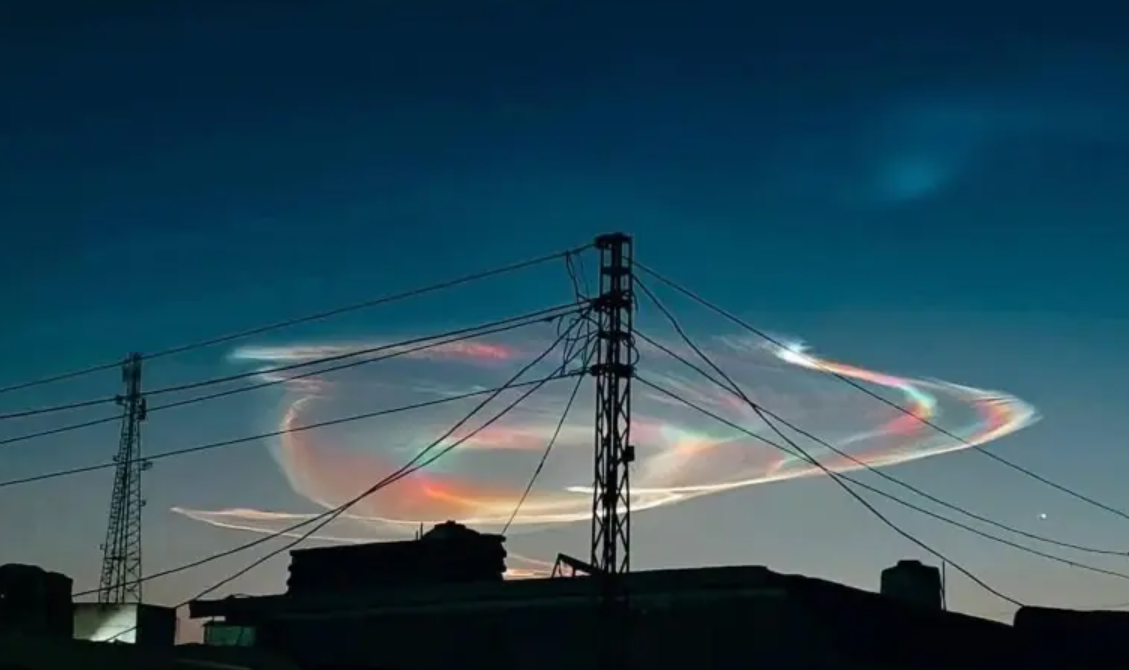

Residents of Quetta were left awestruck early Tuesday morning when a rare lenticular cloud formation appeared in the sky, creating widespread curiosity and speculation across the region. The unusual sight, visible from various parts of Balochistan, quickly became a trending topic online as locals shared photos and debated its origins.
The cloud’s smooth, saucer-like shape led many to wonder whether it was a man-made occurrence or a natural atmospheric event. Some even speculated that it could have been the result of a missile test or an experimental technology demonstration.
However, meteorological experts later clarified that the phenomenon was purely natural — a result of specific airflow and temperature conditions above the mountains surrounding Quetta.
Meteorological Explanation: Nature’s Optical Illusion
According to experts, the formation observed over the Koh-i-Murdar region was a textbook example of a lenticular cloud, known for its distinct, lens-shaped appearance. These clouds typically form when moist, stable air flows over hills or mountains, creating standing waves in the atmosphere. When the temperature at the crest of these waves drops to the dew point, moisture condenses, producing the striking, layered cloud shapes often mistaken for UFOs.
The Pakistan Meteorological Department (PMD) confirmed that the lenticular cloud appeared before sunrise and lasted for approximately 20 minutes before dissipating. Such formations are uncommon in Pakistan’s southwestern region, which made the occurrence even more captivating for locals.
Meteorologists describe lenticular clouds as orographic wave clouds that form at high altitudes. When winds consistently blow from the same direction over a mountainous landscape, they produce the stable air conditions necessary for this rare phenomenon.
The UFO Connection: A Global Phenomenon
The Quetta event reignited global fascination with the UFO-like appearance of lenticular clouds. Around the world, these cloud shapes have often been mistaken for flying saucers due to their smooth, disk-like outlines and stillness in the sky.
Experts explain that the resemblance to spacecraft is purely coincidental. Because lenticular clouds can remain stationary while the air continues to flow through them, they give the illusion of hovering objects — a feature that has fueled unidentified flying object sightings for decades.
Public Reactions and Social Media Buzz
As images of the Quetta cloud spread rapidly online, thousands of users reacted with wonder and humor. Many described the sight as “otherworldly,” while others joked about possible extraterrestrial connections. Despite the scientific explanation, fascination with the mysterious display persisted, highlighting how nature can still surprise even in an age of instant information.
Residents who witnessed the phenomenon reported that the cloud emitted a faint glow as it caught the early morning light, enhancing its mystical appearance. Within minutes, videos and photographs flooded social media platforms, capturing the stunning display that lasted just long enough to become an unforgettable moment for Quetta’s sky watchers.
Understanding Lenticular Clouds: A Rare Natural Beauty
While lenticular clouds are relatively common near mountain ranges such as the Rocky Mountains or the Andes, they are rare in Pakistan’s climate. Their brief appearance in Quetta serves as a reminder of the planet’s atmospheric diversity and beauty.
Experts emphasize that such clouds pose no threat and are simply a visual byproduct of natural weather dynamics. They also play a role in identifying airflow patterns that help meteorologists understand local climate behavior.
A Glimpse of Nature’s Wonders
The rare lenticular cloud over Quetta has once again demonstrated nature’s ability to surprise and captivate. Though initially misunderstood, the event ultimately highlighted the beauty of meteorological science and its power to explain the mysteries of the skies.
As the cloud faded with the sunrise, it left behind a lasting impression — a reminder that not all mysteries come from beyond the stars; some simply float above our mountains.
