

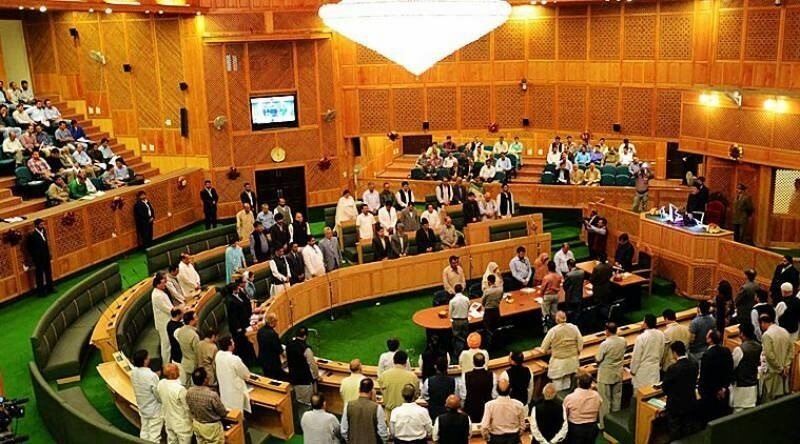

The Pakistan Peoples Party (PPP) is poised to engineer a significant shift in the leadership of the Azad Jammu and Kashmir (AJK) Assembly, having reportedly completed the necessary preparations to secure a majority in the legislative body.
According to well-placed sources, the PPP has successfully gathered enough support to move a no-confidence motion against the incumbent Prime Minister Chaudhry Anwar-ul-Haq, signalling an imminent change in the AJK leadership.
Insiders revealed that the required number of signatures for the no-confidence motion has already been obtained, allowing it to be presented in the assembly at any time. The PPP has also finalised its candidate for the new prime minister, with the official announcement expected from PPP Chairman Bilawal Bhutto-Zardari later today.
The Pakistan Muslim League-Nawaz (PML-N) has decided to back the motion, though it will not participate in the incoming government. Federal Minister Rana Sanaullah confirmed that while the PML-N would support the no-confidence motion, it intends to remain outside the executive structure.
PPP leader Qamar Zaman Kaira emphasised that the move aims to strengthen governance and democratic processes in Azad Kashmir rather than pursue any personal agenda. He added that the change is intended to ensure political stability and improve administrative efficiency in the region.
The current composition of the AJK Legislative Assembly shows 17 PPP members and 9 PML-N representatives. With the PML-N’s backing, the PPP’s effective strength rises to 26 votes, giving it a clear advantage to pass the motion. The Pakistan Tehreek-e-Insaf (PTI) holds four seats, while the Muslim Conference and the Jammu and Kashmir Peoples Party each have one seat.
Additionally, 20 members of the forward bloc are expected to play a decisive role in the proceedings, potentially influencing the outcome of the leadership transition.
This development marks a critical moment in Azad Kashmir’s political landscape, as the PPP moves to consolidate its position and ensure a stable governing framework ahead of the next phase of legislative activity.
