

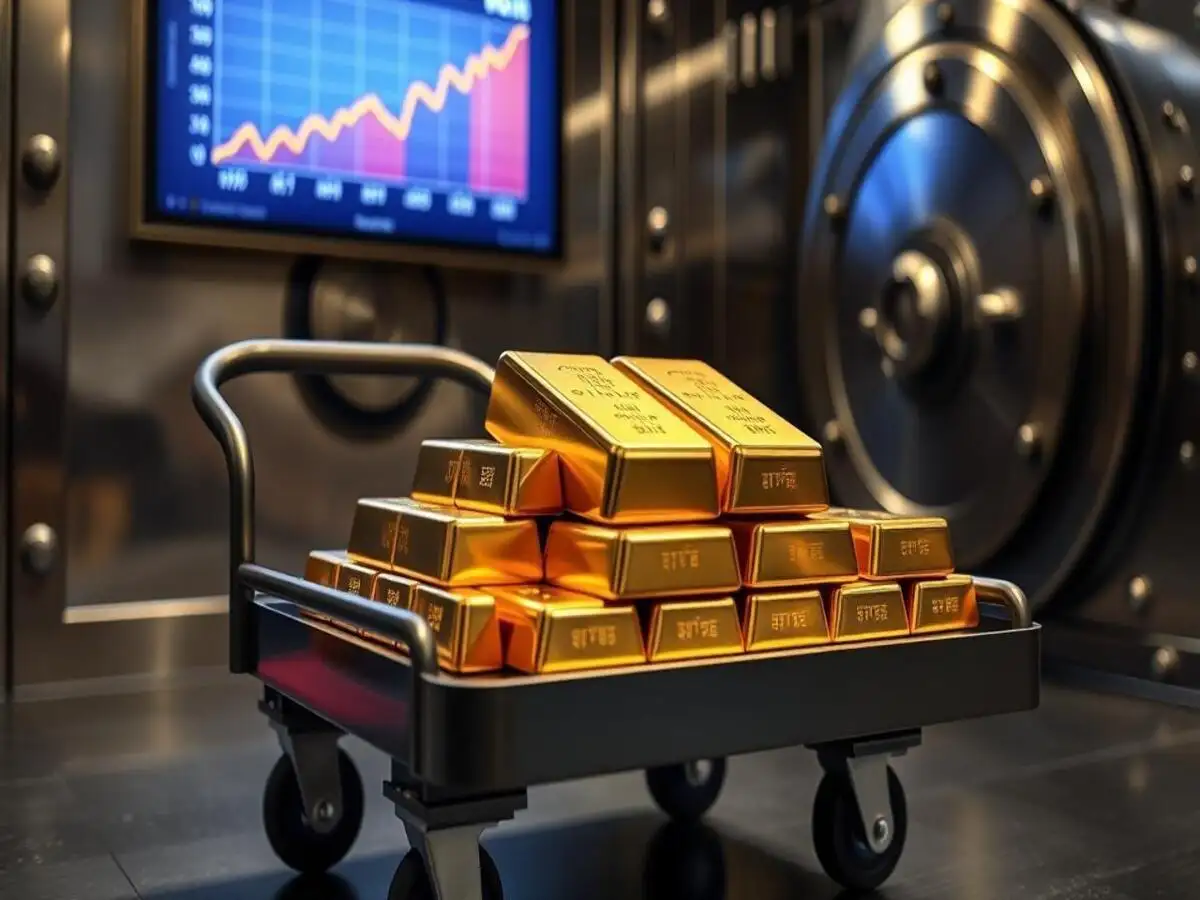

Gold prices surged to an all-time high this week, with spot gold reaching a record $4,379.93 per ounce, as investors turned to the precious metal amid escalating geopolitical tensions and global economic uncertainty.
The rally has been further fueled by expectations of a U.S. Federal Reserve interest rate cut and a declining dollar, both of which have bolstered demand for safe-haven assets.
According to ANZ analysts, the upward momentum in gold is likely to continue through next year, with prices projected to hit $4,400 per ounce by the end of 2025 and nearly $4,600 by mid-2026.
However, the bank cautioned that this bullish trend may reverse in the second half of 2026, as monetary conditions and global stability begin to normalize.
ANZ’s long-term forecast attributes the anticipated decline to the expected end of the Fed’s interest rate easing cycle and greater clarity in U.S. growth and trade policies. These developments could reduce gold’s appeal as a hedge against uncertainty and inflation.
The forecast highlights gold’s fragile position in the global economy—thriving in low-rate, high-risk environments but potentially vulnerable once stability returns. Despite its current strength, analysts warn that gold’s status as a non-yielding asset could limit gains if economic confidence improves and risk appetite rises.
Meanwhile, UBS (Union Bank of Switzerland) remains more optimistic, suggesting gold could climb even higher—to $4,700 per ounce—if real interest rates continue to fall and central banks maintain accommodative policies.
While the bullion market’s 60% year-to-date surge underscores strong investor sentiment, experts believe the rally could taper off once monetary tightening eases and trade relations stabilize.
For now, gold’s momentum remains strong, but its long-term outlook hinges on the trajectory of global economic recovery and central bank decisions.
