

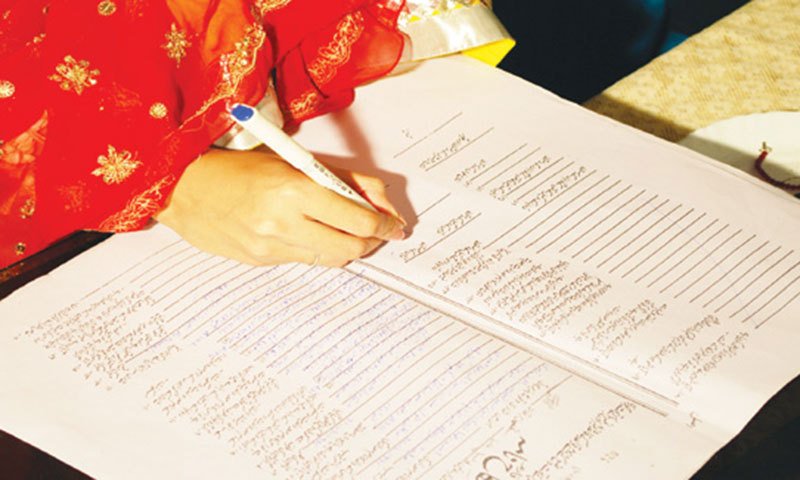

Marriage in Pakistan is governed by Islamic law and the Family Laws Ordinance, 1961. While Islam allows a man to have up to four wives, the law in Pakistan sets certain legal conditions for second marriages. Understanding the 2nd marriage law in Pakistan is essential to avoid legal trouble and ensure fairness to all parties involved.
What Does the Law Say About Second Marriage?
According to the Muslim Family Laws Ordinance (MFLO) 1961, any Muslim man who wishes to contract a second marriage must obtain written permission from the Arbitration Council. This council operates under the local Union Council of the man’s residence.
The man must submit an application stating the reasons for his desire to remarry and whether his first wife has consented.
If the Union Council grants permission, the second marriage is considered legal. However, marrying without permission is a violation of the law, even if the marriage is religiously valid under Islamic principles.
Penalty for Second Marriage Without Permission
If a man marries again without the required approval from the Arbitration Council:
-
He can be imprisoned for up to one year.
-
He may also face a fine of up to Rs. 500,000 (or as determined by the court).
-
The first wife has the right to file a criminal complaint and claim her legal rights, including maintenance and dower (haq mehr).
These penalties are designed to protect the rights of the first wife and maintain transparency in marital relations.
Rights of the First Wife
Under the 2nd marriage law in Pakistan, the first wife’s consent plays a vital role. If her consent is not obtained, she has the right to:
-
Seek divorce (khula) on grounds of cruelty or breach of trust.
-
Demand her full dower (haq mehr) immediately.
-
File a complaint with the local authorities for violating the Family Laws Ordinance.
The law aims to ensure that the first wife’s emotional and financial rights are not ignored.
Conditions for Legal Second Marriage
A second marriage becomes legally valid only if the following steps are fulfilled:
-
Written application to the Union Council.
-
Consent or justification for the marriage provided by the applicant.
-
Permission granted by the Arbitration Council after reviewing the case.
-
Registration of the marriage under the Nikah Registrar as per law.
Without these steps, the second marriage, though valid under Islamic belief, is illegal under Pakistani civil law.
Women’s Rights in Case of Second Marriage
Women in Pakistan have certain rights that protect them in cases of second marriage:
-
They can set conditions in the Nikahnama preventing the husband from marrying again.
-
If these conditions are violated, the wife can demand divorce and financial compensation.
-
The wife can also claim her maintenance and children’s support through the family court.
FAQs About 2nd Marriage Law in Pakistan
Q1: Is second marriage allowed in Pakistan?
Yes, it is allowed under Islamic law, but legal permission from the Union Council is mandatory under Pakistani law.
Q2: Can a man marry again without informing his first wife?
No. He must obtain written consent or permission from the Arbitration Council. Failure to do so can result in imprisonment or fines.
Q3: What if the first wife refuses permission?
The man can still apply to the Union Council, which may grant permission if valid reasons are provided.
Q4: Is a second marriage without permission valid in Islam?
Religiously, it may be valid, but it remains illegal under Pakistani law, leading to legal consequences.
Q5: Can the first wife file a case if her husband remarries secretly?
Yes. She can approach the Union Council or file a complaint in court for violation of the law and seek her rights.
The 2nd marriage law in Pakistan strikes a balance between Islamic principles and legal safeguards for women. While Islam allows polygamy, Pakistani law ensures that such marriages occur with transparency, fairness, and respect for the rights of all spouses.
Therefore, obtaining proper permission before entering into a second marriage is not only a legal requirement but also a moral responsibility.
