

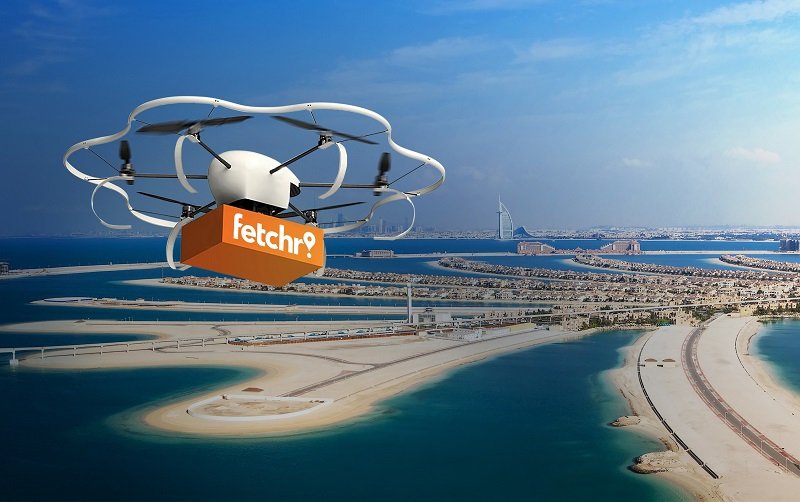

Dubai is fast-tracking its vision of drone-powered delivery, setting a bold target: cover 70 per cent of the emirate within five years. The plan also sets the stage for air taxi services slated for launch in 2026.
Expanding Drone Coverage & Phase Two Rollout
Phase One of Dubai’s drone delivery initiative began in December 2024 in Dubai Silicon Oasis (DSO) using Keeta Drone technology. That phase included mapping low‑altitude airspace routes, identifying landing zones, and extensive safety evaluations for delivering food, medicine and essential goods.
Now, as Phase Two looms, the Dubai Civil Aviation Authority (DCAA) is ready. Director General Mohammed Abdullah Lengawi announced that Phase Two will begin before the 2025 Dubai Airshow, although precise details are being kept under wraps. He affirmed that regulatory frameworks are fully established and that tests and experiments are underway.
By 2026, the city aims to reach at least 30 per cent coverage with drone delivery. In the longer span, the target climbs to 70 per cent of Dubai. Currently, six drones cover four routes in DSO, including deliveries between RIT‑Dubai and Dubai Digital Park.
Safety, eVTOLs, and the Future of Urban Flight
Safety is central to Dubai’s rollout. Lengawi highlighted that one and a half years of testing preceded operations. He stated that all parameters — from backup systems to infrastructure integrity — were put under rigorous trial. Keeta Drone, the licensed operator, works closely with DCAA on data security and infrastructure compliance.
Meanwhile, Dubai is preparing for air taxi service by 2026 using eVTOL aircraft. Joby Aviation, in partnership with local authorities, has secured agreements and begun test flights in the emirate. The city has also approved its first vertiport, DXV, near Dubai International Airport, with plans for more at Palm Jumeirah, Downtown, and Marina.
Testing corridors for air taxis and cargo drones are already being mapped across the UAE. Lengawi acknowledged that integrating eVTOLs, drone delivery, and traditional commercial flights is complex — but Dubai is pushing forward with trials.
City planners believe these systems will transform urban mobility: reducing congestion, speeding deliveries, and enabling futuristic transit. But success hinges on regulatory rigor, safety oversight, and infrastructure rollout.
As Dubai races toward this aerial future, the next few years will test whether drones and flying taxis become daily reality — or remain visionary concepts.
