

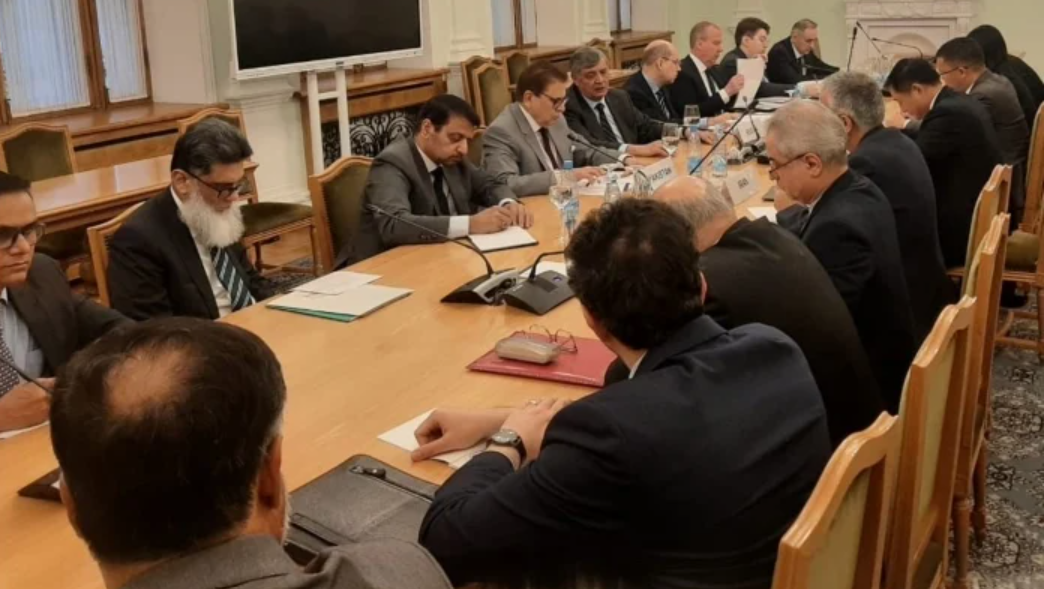

Moscow Conference Calls for Stability and Joint Action in Afghanistan
Pakistan, China, Russia, and Iran have reaffirmed their united commitment to ensuring a stable and peaceful Afghanistan. The Quadrilateral Meeting of Special Representatives for Afghanistan took place in Moscow, where the four nations discussed strategies for promoting regional peace, countering terrorism, and preventing external interference.
The representatives stressed the importance of Afghanistan’s sovereignty and independence. They emphasized that the nation should remain free from terrorism and foreign influence. The meeting reflected growing regional consensus that stability in Afghanistan is vital for long-term security and development across South and Central Asia.
Joint Efforts Against Terrorism
Pakistan’s Special Representative for Afghanistan, Ambassador Mohammad Sadiq, highlighted the presence of several terrorist organisations operating in the region. These groups include the Tehreek-e-Taliban Pakistan (TTP), Balochistan Liberation Army (BLA), Eastern Turkistan Islamic Movement (ETIM), Jaish al-Adl, Daesh, and al-Qaeda.
He stated that the continued activities of such groups threaten regional peace and stability. Therefore, the participating countries agreed to strengthen coordination and collaborative measures to combat terrorism in all its forms.
The four nations also reaffirmed their shared goal of preventing Afghanistan from becoming a sanctuary for militant groups once again. They agreed that collective and consistent regional cooperation remains crucial for sustainable peace.
Bilateral Meetings to Strengthen Coordination
Before the quadrilateral consultations, Ambassador Sadiq held separate meetings with his counterparts from Iran, China, and Russia.
In his discussion with Iran’s Ambassador Muhammad Reza Bahrami, both sides exchanged views on Afghanistan’s evolving security situation. They emphasized ongoing dialogue and cooperation to tackle shared threats, especially terrorism. The two countries also explored ways to strengthen regional partnerships and advance mutual interests in stability and security.
During his meeting with China’s Special Envoy, Ambassador Yue Xiaoyong, Sadiq discussed regional security, humanitarian concerns, and counterterrorism cooperation. Both representatives agreed on maintaining a coordinated approach to achieve lasting peace and development in Afghanistan.
Ambassador Sadiq also met Russia’s Special Envoy, Zamir Kabulov, to deliberate on steps for promoting joint regional initiatives focused on Afghanistan. Pakistan’s Ambassador to Kabul, Ubaid ur Rahman Nizamani, joined the discussions.
Pakistan’s Continued Call for Action Against Terrorism
The Moscow meeting occurred as Pakistan continued urging the Taliban administration to take decisive action against militant groups operating from Afghan territory. Prime Minister Shehbaz Sharif recently reiterated that Afghanistan must choose between supporting terrorists or cooperating with Pakistan for peace. He reaffirmed Islamabad’s zero-tolerance stance toward militancy and foreign-backed proxies.
Earlier this year, at the sixth Trilateral Foreign Ministers’ Dialogue in Kabul, Pakistan, China, and Afghanistan agreed to expand cooperation against terrorism. The discussions also covered trade, transit, regional connectivity, education, health, and cultural exchange.
Deputy Prime Minister Ishaq Dar called on Afghanistan to adopt concrete and verifiable measures against banned groups, including the TTP, BLA, and Majeed Brigade. He reaffirmed Pakistan’s firm commitment to regional peace and collective security.
Regional Vision for Peaceful Afghanistan
The Moscow quadrilateral meeting highlights a unified regional approach to Afghanistan’s future. Pakistan, China, Russia, and Iran are determined to foster lasting peace through coordination and practical counterterrorism efforts.
By focusing on joint security measures, humanitarian support, and regional engagement, these nations aim to ensure Afghanistan’s stability benefits the broader region. Sustained dialogue and cooperation remain essential to achieving a peaceful, terror-free Afghanistan that contributes positively to global security.
