

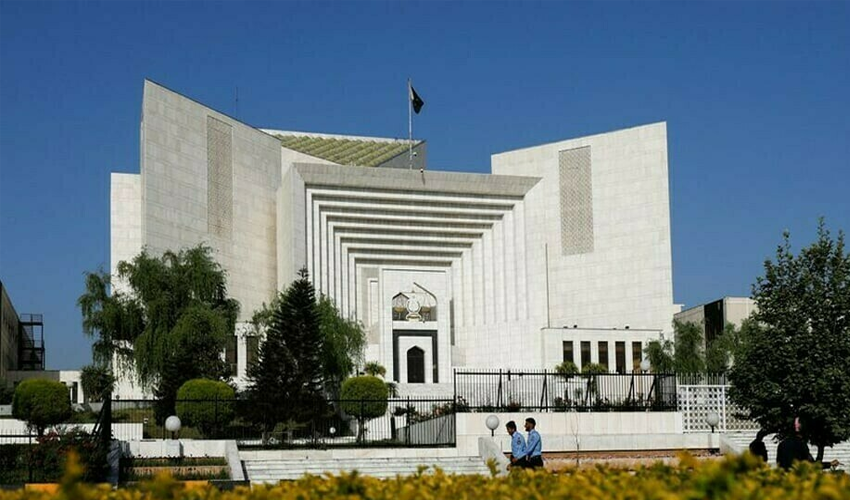

The Supreme Court of Pakistan has ruled that Pakistan Tehreek-e-Insaf (PTI) cannot be granted relief under Article 187 of the Constitution regarding reserved seats. A ten-member bench, led by Justice Aminuddin Khan, issued a detailed 40-page judgment clarifying that the previous ruling, which had awarded PTI reserved seats for women and minorities, was beyond constitutional jurisdiction.
Background of the Reserved Seats Case
On June 27, the apex court had set aside an earlier decision that favored PTI’s entitlement to reserved seats. The court accepted review petitions filed by the Election Commission of Pakistan (ECP), Pakistan Muslim League-Nawaz (PML-N), and Pakistan Peoples Party Parliamentarians (PPPP). By a majority of 7-3, the bench ruled against PTI’s entitlement.
The judgment explained that PTI had not sought reserved seats at any judicial forum. Furthermore, PTI was not a party before the Election Commission or the Peshawar High Court. Its application in the apex court was limited to legal assistance, not a direct claim to seats.
Court’s Observations on Article 187
The ruling emphasized that Article 187 cannot be invoked to grant relief to a party that was not formally before the court. The judgment noted that the authority to interpret the Constitution is significant but limited. It cannot be used to rewrite laws or provide benefits beyond what the Constitution explicitly allows.
The verdict stated: “Relief could not have been granted to PTI by invoking Article 187. The earlier majority judgment exceeded jurisdiction and contradicted constitutional provisions.”
Impact on Sunni Ittehad Council (SIC)
The court also ruled that the Sunni Ittehad Council (SIC) was not entitled to reserved seats. All judges unanimously dismissed SIC’s appeals. The verdict highlighted that independent candidates who joined SIC after elections could not automatically transfer their parliamentary membership to PTI without their consent or legal procedure.
Majority and Dissenting Opinions
The majority opinion, supported by Justices Aminuddin, Hilali, Afghan, Hassan, Kakar, Farooq, and Najafi, overturned the previous decision that had favored PTI. The dissenting judges, including Justice Mansoor Ali Shah, had earlier supported PTI’s claim.
The ruling stressed that judiciary cannot insert personal interpretations into constitutional text. It reaffirmed that the will of the legislature and the framers of the Constitution must be respected.
Broader Implications of the Verdict
The judgment clarified that PTI was never barred from contesting elections. However, none of the 80 independent candidates elected had claimed to represent PTI. The earlier decision that transferred reserved seats to PTI leadership without voter approval or constitutional backing was declared unconstitutional.
The Supreme Court underlined that courts must ensure justice within constitutional boundaries. While Article 187 empowers the court to provide complete justice, it must only be applied when supported by facts and law.
This ruling now settles the debate over PTI’s claim to reserved seats, emphasizing constitutional limits on judicial power and reinforcing electoral processes.
