

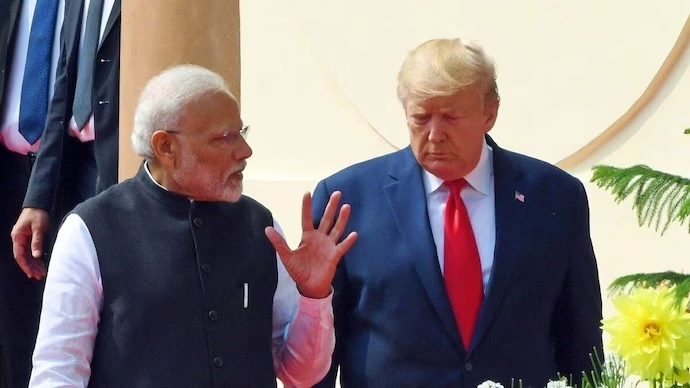

US-India relations have entered a period of heightened tension following President Donald Trump’s unexpected cancellation of his planned visit to New Delhi for the upcoming Quad Summit, according to reporting by The New York Times. The decision reflects growing rifts between Washington and New Delhi over trade policies, tariffs, and broader foreign policy disagreements, signaling a significant strain in bilateral ties.
Earlier assurances from President Trump had indicated his intention to participate in the Quad Summit in November, where leaders from the US, India, Australia, and Japan were expected to discuss regional security, economic collaboration, and Indo-Pacific strategies.
However, officials familiar with the president’s schedule confirmed that Trump “no longer has plans to visit India in the fall,” a move that has sparked widespread speculation about the future of the summit and the stability of the Quad alliance. Neither the White House nor Indian authorities have released formal statements explaining the cancellation, adding to concerns about the deteriorating relationship.
A key source of tension lies in trade and economic policy. The Trump administration has imposed substantial tariffs on Indian exports, impacting industries valued at over $48 billion, including textiles, leather, and agricultural products.
Additionally, a 25% tariff on India’s imports of Russian oil has drawn criticism, as analysts suggest the measure appears to single out India rather than applying sanctions uniformly to all buyers of Russian hydrocarbons. This has raised questions about the strategic motives behind Washington’s trade policies and their effect on bilateral cooperation.
The relationship has also been strained by Trump’s repeated assertions regarding the May 2025 India-Pakistan conflict. The president claimed credit for brokering a ceasefire, a statement that New Delhi explicitly rejected, emphasizing that the resolution was achieved directly between India and Pakistan without US involvement.
Reports indicate that during a June 17 phone call, Trump again touted his alleged mediation efforts and suggested that India should reciprocate with a Nobel Peace Prize nomination, prompting Prime Minister Narendra Modi to rebuff the suggestion and reaffirm India’s independent handling of the ceasefire.
Trump’s withdrawal from the Quad Summit raises uncertainties about the event’s agenda and the future of the Indo-Pacific partnership. While Washington has extended an invitation to Prime Minister Modi to visit the US, he reportedly declined both that offer and a proposed meeting with Trump during the G7 Summit in Canada. These developments underscore a period of cooling ties and emphasize the growing complexities in US-India relations amid disputes over trade, diplomacy, and regional security priorities.
