


“I am scared,” Saima, a 20-year-old university student, texted as she recounted her ordeal. “The bus I was travelling on broke down on the flooded road between Nazimabad and Teen Hatti. We had no choice but to step out and wade through knee-deep water to find our way home.”
For Saima and her friend Sughra, the fear was overwhelming. “In some areas, the water was waist-deep for men. We are barely five feet tall. As women, we couldn’t even ask for help. I still don’t know how we managed to reach home,” she explained. Despite offers of assistance from families passing by in high vehicles, the two young women chose to endure the floodwaters rather than risk their safety by accepting rides from strangers. Hours later, exhausted but safe, they finally made it home.
Their story mirrors the experiences of thousands of women across Karachi on August 19, when relentless monsoon showers — nearly 145 millimetres in a single day — left much of the city submerged. Offices, schools, and markets were cut off, stranding commuters for hours. Among those most vulnerable were women navigating the flooded streets, whether on foot, in cars, or on motorbikes.
Shama, a schoolteacher, described how she had to abandon her car on Sharae Faisal. “People were banging on my window to warn me. I knew they meant well, but I was terrified of the attention,” she recalled. As her vehicle sank deeper into water, an elderly man urged her to step out, insisting it was unsafe to remain inside. Still hesitant, she finally accepted help when a couple intervened — the woman holding Shama’s hand as her husband guided them to safer ground.
Scenes of resilience also emerged. Groups of young schoolgirls formed chains, holding onto each other’s shoulders as they carefully waded through the water together. Their instinctive coordination showed that even in the face of chaos, solidarity can provide strength.
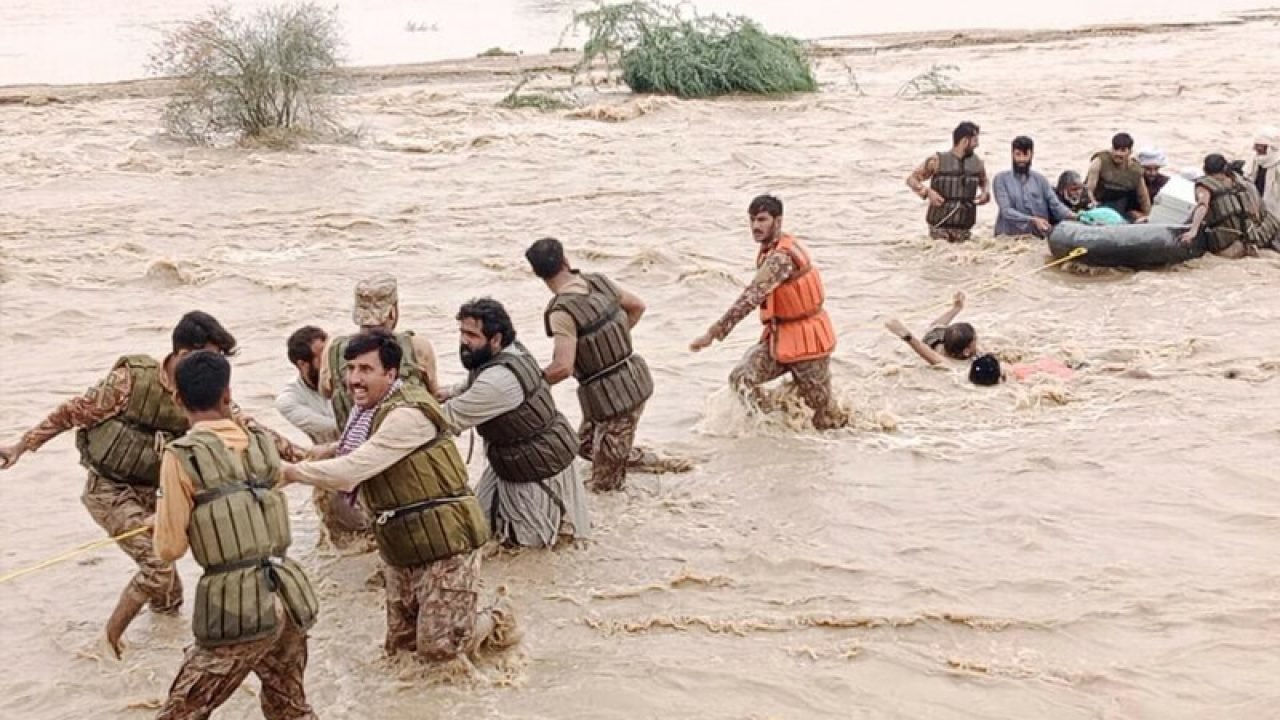
Yet, as Shama pointed out, Pakistan’s rigid cultural and social barriers often discourage women from seeking help from male rescuers. “In times like these, we must normalise the idea of allowing rescue workers to do their jobs, regardless of gender,” she said.
Other women shared fears that went beyond drowning or exhaustion. Fatima, a 25-year-old newlywed, worried more about crime than the rising water. Trapped with her husband in their stalled car, she admitted, “I was afraid of street criminals taking advantage of our helplessness. I didn’t even take out my phone to call my family.” Her sheltered upbringing, she added, left her feeling unprepared to handle crises on the streets. “Women like me don’t even know how to cross a road on our own. In a flooded city, carrying a phone and handbag, I would only become a target.”
These experiences highlight an urgent need for awareness and preparedness. On one hand, women must be educated on how to respond in emergencies — from navigating flooded roads to seeking assistance without fear. On the other, rescue personnel, mostly men, must be sensitised to cultural realities while maintaining strict professionalism. Training on harassment and ethical conduct is vital to ensure that women feel secure while being rescued.
Disasters like Karachi’s floods do not discriminate, but cultural fears and social barriers make women more vulnerable. Preparing both citizens and rescuers to confront these challenges together could mean the difference between survival and tragedy in the storms yet to come.
