

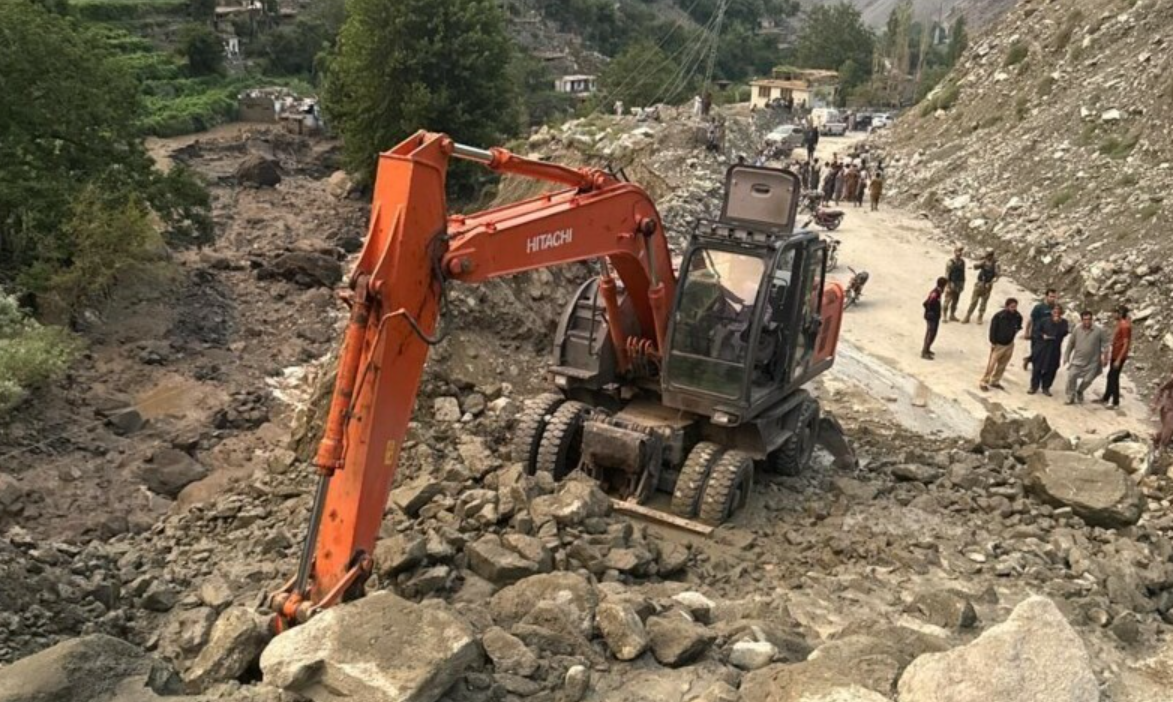

At least six lives have been lost in Gilgit-Baltistan flash floods, with multiple tourists still missing as authorities continue intensive search operations across the Diamer district. Officials confirmed on Thursday that heavy rainfall and a subsequent cloudburst triggered widespread devastation in the region, underscoring the mounting toll of climate change in Pakistan’s northern areas.
The Gilgit-Baltistan flash floods initially claimed four lives on Monday. However, by Tuesday, the toll rose to five as the floods intensified, and on Thursday, GB government spokesperson Faizullah Faraq announced the discovery of another body in Babusar valley, raising the death toll to six. He added that the search was still underway to locate other tourists unaccounted for in the area.
Emergency teams from Rescue 1122 reported severe damage in GB’s Ghanche district. Floodwaters swept through Kandos villages, destroying homes, mosques, a dispensary, agricultural land, and vital crops. Similarly, the Gilgit-Baltistan flash floods battered Sikarkoi, where the Dass Mohallah area saw significant infrastructural damage, with several homes destroyed.
Amid the unfolding catastrophe in Gilgit-Baltistan, a separate but related tragedy was reported from Rawalpindi. Rescue teams recovered the body of Retired Colonel Ishaq Qazi, who, along with his daughter, went missing last week after their car was engulfed by floodwaters and plunged into a rain drain. Colonel Qazi, in his early 60s, and his 25-year-old daughter were travelling in a grey Honda when they encountered rising water levels that rendered the vehicle immobile. According to Islamabad’s Sihala police, while the colonel attempted to restart the car, the floodwaters overwhelmed it, sweeping both passengers away.
Search operations, now entering their third day, have recovered parts of the car, including its bonnet and a door, near the Soan River bridge. District Emergency Officer Sibghatullah confirmed the colonel’s body was recovered from the same area, and efforts to locate his daughter are ongoing. The Gilgit-Baltistan flash floods and related monsoon emergencies highlight the broader impact of Pakistan’s yearly rainfall season, which runs from June to September and frequently causes fatal floods, landslides, and displacement in vulnerable areas.
The monsoon deluge has led to widespread emergencies beyond Gilgit-Baltistan flash floods. Last week, over 60 deaths were recorded across Punjab within 24 hours due to severe rain-induced flooding. A state of emergency and Section 144 were declared in several parts of the province to mitigate further loss of life and property.
Adding to the tragic toll, a 17-year-old boy drowned near Metro City Housing Society in Rawalpindi on Wednesday afternoon while trying to cross a nullah during heavy rainfall. Despite desperate rescue attempts by two relatives, he could not be saved. The incident sparked local outrage as residents of the housing society blocked Grand Trunk Road in protest, blaming Rescue 1122 for failing to recover the boy’s body after several hours. The Gilgit-Baltistan flash floods and simultaneous tragedies in Rawalpindi demonstrate the critical need for disaster preparedness as Pakistan continues to face intensified monsoon impacts driven by climate change.
