

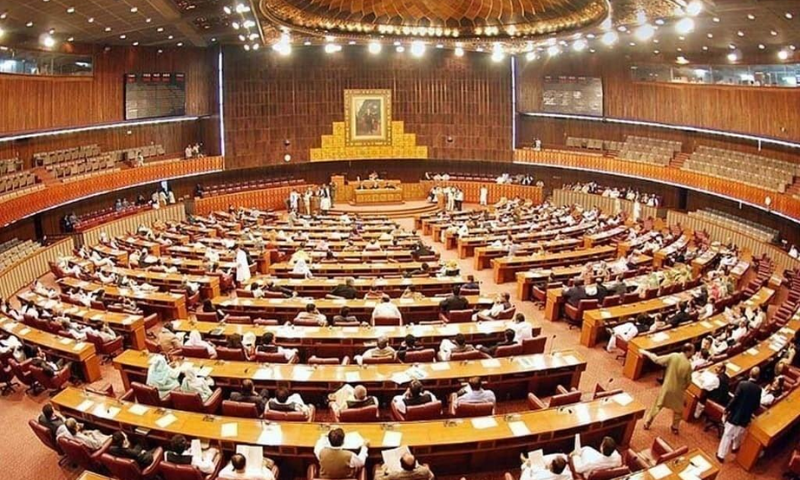

The ruling alliance secures two-thirds majority in Senate, marking a pivotal shift in Pakistan’s legislative landscape. With this dominance, the coalition can now steer constitutional reforms and law-making processes with minimal resistance, setting the stage for smoother governance.
After the latest round of elections, the ruling alliance secures two-thirds majority in Senate by consolidating support from various parties and independents. The Pakistan Peoples Party (PPP) now leads with 26 seats, making it the largest party in the upper house. Close behind, Pakistan Tehreek-e-Insaf (PTI) holds 16 seats, bolstered by the backing of six independent senators. Meanwhile, the Pakistan Muslim League-Nawaz (PML-N) stands third with a notable 20 seats, reinforcing its presence despite not leading the coalition.
This new composition means the ruling alliance secures two-thirds majority in Senate, giving it the power to not only pass legislation but also amend the Constitution if required. The updated tally of the 100-member Senate includes other parties as well: Jamiat Ulema-e-Islam-Fazl (JUI-F) with 7 seats, Balochistan Awami Party (BAP) with 4, and both Muttahida Qaumi Movement (MQM) and Awami National Party (ANP) holding 3 seats each. The presence of six independent senators, some of whom align with coalition goals, could be influential in tight legislative scenarios.
As the ruling alliance secures two-thirds majority in Senate, its legislative agenda now has fewer obstacles, significantly increasing the chances of policy continuity and governance reforms. The dominant position also enables the government to respond more effectively to national challenges, ensuring policy implementation without extended parliamentary deadlock. This development reflects a growing centralization of power in the Senate, which may have a long-term impact on the balance between opposition and government forces.
Given this development, the fact that the ruling alliance secures two-thirds majority in Senate highlights the evolving power dynamics in Pakistan’s upper house. With this numeric advantage, legislative delays may reduce, and crucial national decisions could see faster execution.
