

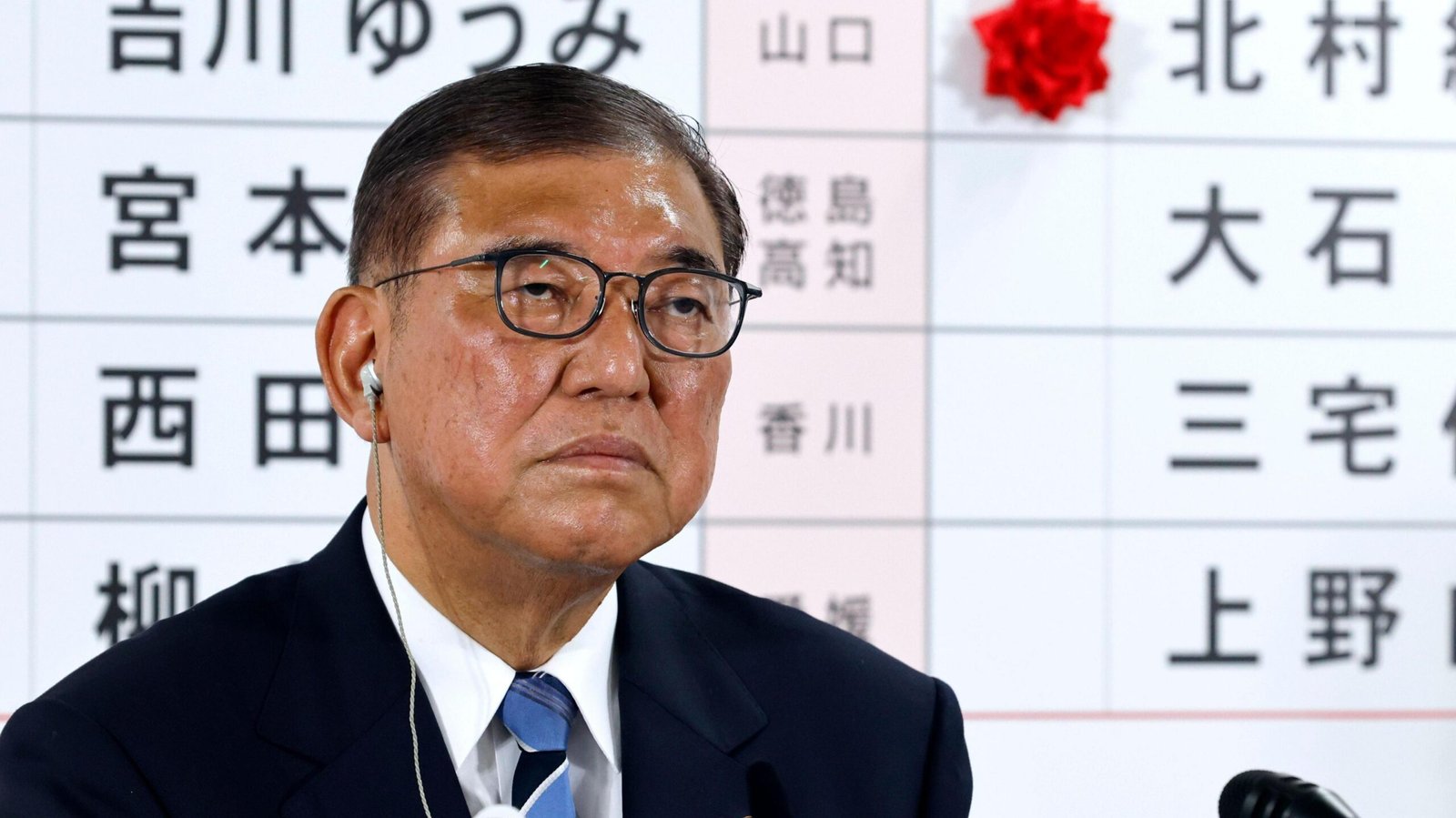

Japan PM
Japanese Prime Minister Shigeru Ishiba is holding firmly onto his position despite a stinging electoral setback that saw his ruling coalition lose its upper house majority, intensifying calls for his resignation amid mounting economic and diplomatic challenges.
In Sunday’s pivotal upper house elections, Ishiba’s long-dominant Liberal Democratic Party (LDP), in coalition with its junior partner Komeito, fell three seats short of securing a majority. The results, which Ishiba described as “extremely regrettable,” reflect deep public discontent over inflation and economic instability.
Many voters, particularly young and working-class citizens, turned to smaller and more hardline alternatives such as the nationalist Sanseito party, which gained ground with its anti-globalist stance and focus on “Japanese first” policies.
The defeat adds to a string of political blows for Ishiba. Earlier this year, his coalition lost its majority in the more influential lower house, marking the LDP’s worst electoral result in 15 years. Yet, when asked late Sunday if he intended to step down, Ishiba responded decisively: “That’s right,” confirming he will remain in office.
Speaking at a press conference on Monday, Ishiba emphasized the importance of political stability during uncertain times. “Changes in the external environment, such as the international situation or natural disasters, cannot wait for politics to catch up,” he said. While acknowledging the coalition’s grave responsibility for the election outcome, Ishiba stressed the need to prevent political stagnation and vowed to listen to public sentiment more attentively.
Despite the electoral defeat, no clear successor has emerged within the LDP, and internal dissent remains muted. Many party members fear that a leadership contest now could further destabilize the government and complicate sensitive ongoing negotiations—especially trade talks with the United States.
New U.S. tariffs, set to take effect on August 1, loom large over Japan’s economic outlook. The 25% levy on Japanese imports, especially on automobiles, threatens to severely impact Japan’s vital manufacturing sector, which already faces a 10% base tariff. The auto industry alone accounts for 8% of national employment, making the stakes particularly high.
Tariffs envoy Ryosei Akazawa has been dispatched to Washington for his eighth round of negotiations in hopes of averting the economic hit. Ishiba reiterated his intent to resolve the dispute, saying, “We aim to reach a mutually beneficial agreement with the United States, focusing on investment rather than tariffs.”
Meanwhile, political analysts believe Ishiba will be forced to seek opposition support on a case-by-case basis to pass legislation. While the Constitutional Democratic Party of Japan (CDP), the Democratic Party for the People (DPP), and the rising Sanseito party all made gains, their fragmented nature makes it unlikely they will unite to form a viable alternative government. The DPP may be open to joining the coalition, but only in exchange for popular fiscal measures such as tax cuts.
This election cycle has clearly revealed public frustration with the status quo. The sharp rise in prices—particularly the doubling cost of rice—combined with lingering scandals and economic unease, has eroded the LDP’s long-standing grip on power.
Still, Ishiba’s decision to stay on reflects a calculated effort to project continuity in the face of adversity. Whether his leadership can withstand the twin pressures of domestic disillusionment and external economic threats remains to be seen.
