

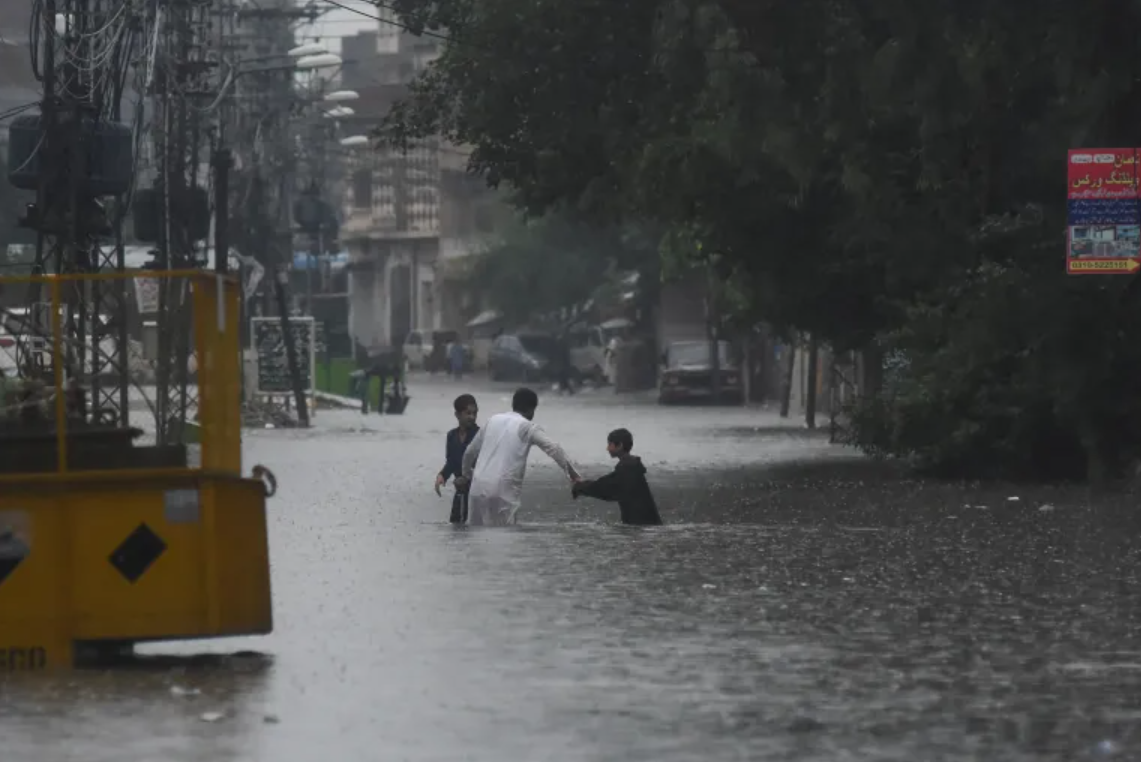

Pakistan continues to suffer under the effects of an intensified monsoon, which has now claimed at least 180 lives nationwide. The intensified monsoon, described by the National Disaster Management Authority (NDMA) as up to 60% stronger than usual, has injured over 500 people since early July. Authorities warn that the intensified monsoon is far from over, with forecasts predicting more rain and potential flooding in several provinces.
The Pakistan Meteorological Department (PMD) has issued alerts about further downpours in Sindh, including Karachi, Hyderabad, Larkana, Sukkur, and other districts. With rivers swelling, the intensified monsoon has led to warnings of urban flooding and rising water levels in key water bodies. The NDMA attributes this intensified monsoon to both climate change and melting glaciers, worsening the scale of destruction.
In Punjab, the Provincial Disaster Management Authority (PDMA) issued warnings ahead of the fourth monsoon spell starting July 20. The intensified monsoon is forecast to bring strong winds and rain to Lahore, Rawalpindi, Faisalabad, Multan, Sargodha, and several other cities. Rivers like the Indus, Chenab, and Sutlej are expected to overflow due to the intensified monsoon and glacial runoff, posing danger to nearby communities.
In Khyber Pakhtunkhwa, authorities are on high alert as the intensified monsoon combines with glacial melt, raising the risk of flash floods. Islamabad and central Punjab also brace for heavy rains due to the intensified monsoon, with flood warnings issued across urban centers. Rising water in Rawal Dam led authorities to open spillways on Sunday, urging nearby residents to remain cautious.
Tragedy struck Attock as three children lost their lives during the intensified monsoon. A girl drowned in a water channel, a boy died in a house collapse, and another child was electrocuted. Over 1,500 people have been rescued in Punjab alone since June 25, with the intensified monsoon causing hundreds of building collapses, electrocutions, and accidents. Lahore recorded the highest death toll, followed by Faisalabad and Sheikhupura.
Chief Minister Maryam Nawaz Sharif has announced a Rs5 million relief package for the families of those who died during the intensified monsoon. She visited Chakwal, which received a record 430mm of rainfall, and ordered immediate road restoration and emergency infrastructure repairs. She also directed the installation of steel bridges and evacuation of residents in vulnerable areas as the intensified monsoon continues to batter the region.
Lt Gen Inam Haider Malik, NDMA Chairman, confirmed that the intensified monsoon began a month earlier than usual and was accurately forecast four months ago. He highlighted coordinated efforts by the armed forces, NGOs, and provincial bodies in managing the response. Malik reiterated that climate change and rapid glacial melt have amplified the impact of the intensified monsoon, requiring sustained national preparedness.
