


Gaza War
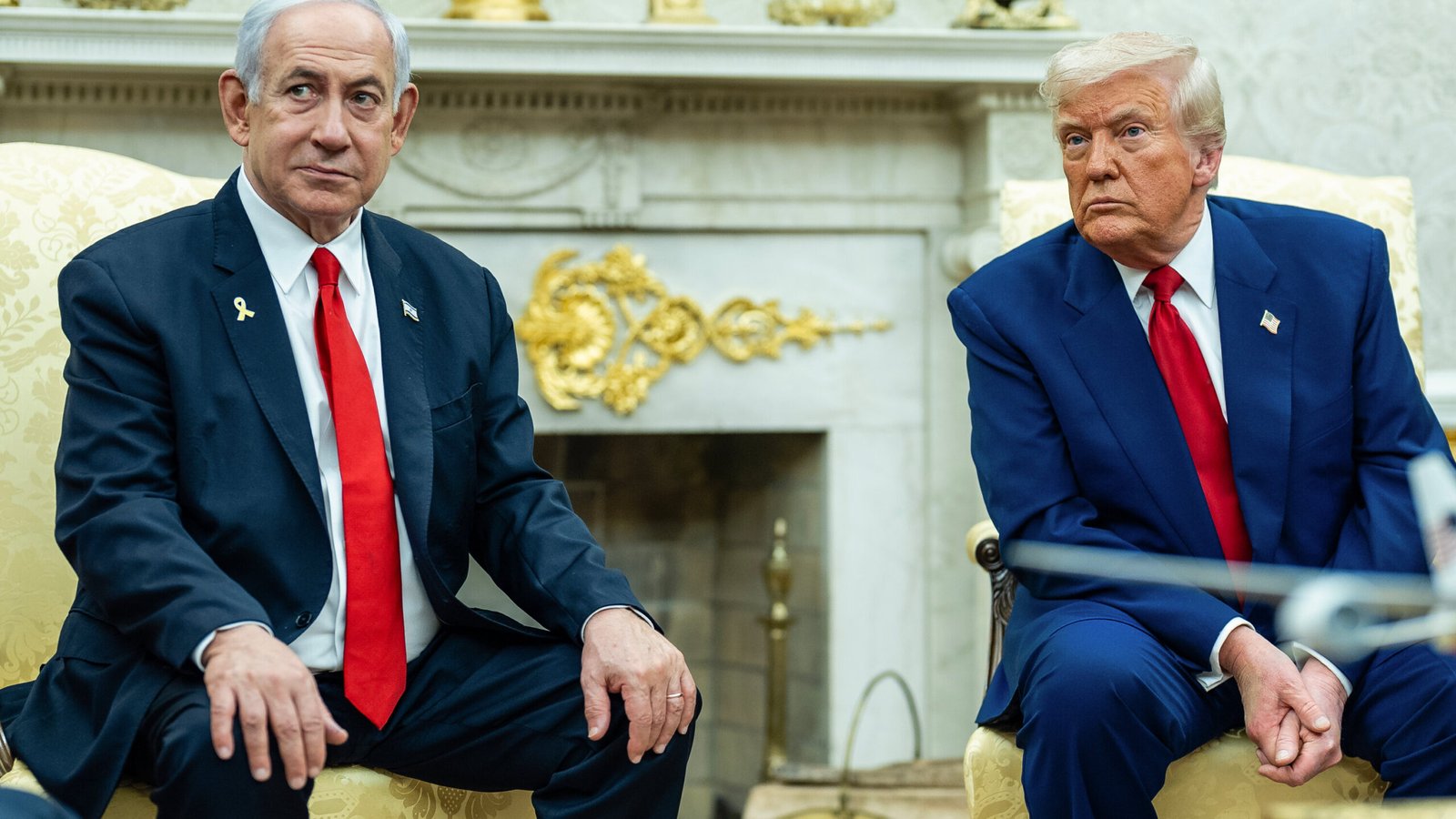
Israeli Prime Minister Benjamin Netanyahu and U.S. President Donald Trump have reportedly reached a preliminary agreement on a two-week plan to end the ongoing war in Gaza, replace Hamas with a coalition of Arab-led governance, and broaden the scope of regional peace under the Abraham Accords framework.
The proposal, as reported by the Israeli daily Israel Hayom, marks a significant and potentially controversial shift in the region’s geopolitical dynamics.
According to the publication, the agreement was forged during a high-level late-night call involving Trump, Netanyahu, U.S. Secretary of State Marco Rubio, and Israel’s Minister of Strategic Affairs Ron Dermer.
The call was described as “euphoric” by sources familiar with the conversation, with the leaders outlining a sweeping roadmap for post-conflict reconstruction and political realignment.
Under the proposed plan, control of the Gaza Strip would be handed over to a coalition of four Arab nations, including the United Arab Emirates and Egypt. Hamas leadership would be exiled from the enclave, and all remaining Israeli hostages held by the group would be released.
Additionally, this blueprint aims to facilitate diplomatic recognition between Israel and several Arab and Muslim-majority nations—including Saudi Arabia and Syria—representing a major expansion of the Abraham Accords.
The initiative reportedly builds on the momentum following recent U.S. strikes on Iranian targets, which Trump and Netanyahu have framed as a major military success. Netanyahu, in a subsequent video address, stated, “We fought valiantly against Iran – and achieved a great victory.
This victory opens up an opportunity for a dramatic expansion of the peace agreements. We are working hard on this.” He urged swift action, declaring, “Not even a single day can be wasted.”
However, the plan faces numerous challenges. Arab states, while open to reconstruction efforts, have consistently insisted on a central role for the Palestinian Authority (PA) in post-war Gaza—an arrangement Netanyahu has repeatedly rejected. Hamas, meanwhile, has dismissed calls for its leadership to accept exile, and the practical enforcement of such a step remains unclear.
In an effort to offer symbolic gestures to regional partners, the deal reportedly includes Israel’s conditional endorsement of a two-state solution—predicated on internal reforms within the PA.
At the same time, the U.S. may move to officially recognize parts of the Israeli-occupied West Bank as sovereign Israeli territory, a move that would likely spark international condemnation and deepen Palestinian mistrust.
Controversially, the reported framework also includes a provision for the voluntary emigration of Gazans to unspecified third countries. Human rights organizations have previously condemned such suggestions as veiled attempts at ethnic displacement.
Amid these sweeping proposals, tensions remain high. The current ceasefire, brokered after intense hostilities between Iran and Israel, has already been strained by alleged violations. In a surprising development, Trump expressed frustration via his Truth Social platform over Netanyahu’s ongoing corruption trial and Israeli threats of retaliation—signaling rare public friction between the two allies.
While the proposed agreement presents a potentially transformative moment for Middle East diplomacy, its implementation depends on overcoming deep-rooted mistrust, regional rivalries, and resistance from both Palestinian factions and Arab governments.
