


Gulf States
DUBAI/RIYADH: Gulf nations were placed on high alert Sunday following a series of powerful U.S. airstrikes on Iran’s nuclear facilities, raising fears of a broader regional conflict that could engulf the Middle East.
The U.S. strikes, confirmed by President Donald Trump, targeted key underground nuclear sites in Iran, including facilities long suspected of enriching uranium. Trump described the attacks as having “obliterated” Iran’s nuclear infrastructure using advanced bunker-busting bombs and warned Tehran of further, more devastating assaults if it refused to engage in peace efforts.
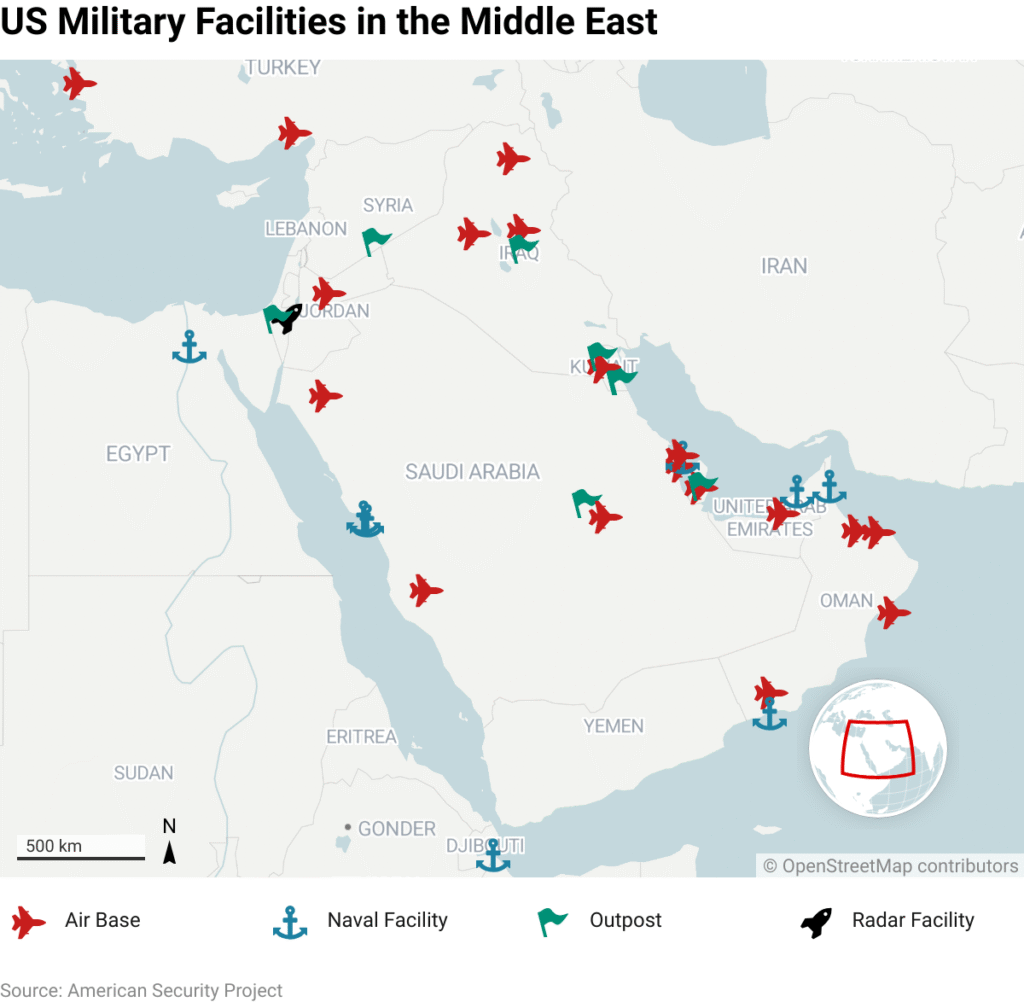
The immediate response across Gulf Cooperation Council (GCC) countries was one of heightened security and strategic readiness, especially given the proximity of U.S. military installations throughout the region.
Saudi Arabia, the world’s largest oil exporter and a critical U.S. ally, raised its alert status, with two sources confirming to Reuters that high-level security protocols had been activated across the kingdom.
In neighbouring Bahrain—home to the U.S. Navy’s Fifth Fleet—authorities issued warnings urging citizens and residents to use main roads only when absolutely necessary. The Ministry of Interior posted on social media platform X that limited use of public roads would help ensure safety and facilitate emergency response.
In a further precautionary move, Bahrain directed 70% of its government employees to work remotely until further notice. Local media also reported the activation of 33 shelters and a full-scale emergency preparedness plan, including the testing of national warning sirens.
Kuwait, which also hosts a major U.S. military base, announced that its Defence Council would remain in permanent session amid escalating tensions. The state news agency reported that shelters were being prepared in key ministry complexes, indicating concerns of possible Iranian retaliation targeting American assets in Gulf countries.
Iran had previously warned that in the event of a U.S. strike, it would target American military facilities across the region—including bases in Saudi Arabia, Bahrain, Kuwait, Qatar, and the UAE.
Amid these developments, nuclear authorities in both Saudi Arabia and the United Arab Emirates reassured the public that no signs of radioactive contamination had been detected following the attacks on Iran’s nuclear infrastructure.
Hasan Al Hasan, a senior fellow at the International Institute for Strategic Studies, warned that the U.S. intervention marked a turning point in the conflict. “The war has so far been limited to hostilities between Israel and Iran,” he said. “But the direct involvement of the United States crosses a critical threshold—one that risks pulling Gulf states, particularly those hosting large American military facilities, into a prolonged and devastating conflict.”
Meanwhile, the rising threat has already impacted regional air travel. Singapore Airlines cancelled scheduled flights to Dubai, while British Airways suspended operations to and from both Dubai and Doha. Many carriers have been rerouting flights to avoid airspace over Iran, Iraq, Syria, and Israel due to the risk of missile fire and airstrikes.
As tensions continue to climb, Gulf countries are bracing for the possibility of a regional war, one that could disrupt energy markets, civilian life, and international air travel, while drastically altering the security dynamics of the Middle East.
