


ICC Women’s World Cup
DUBAI: The International Cricket Council (ICC) has officially unveiled the schedule and venues for the highly anticipated 13th edition of the ICC Women’s Cricket World Cup, set to take place from September 30 to November 2, 2025.
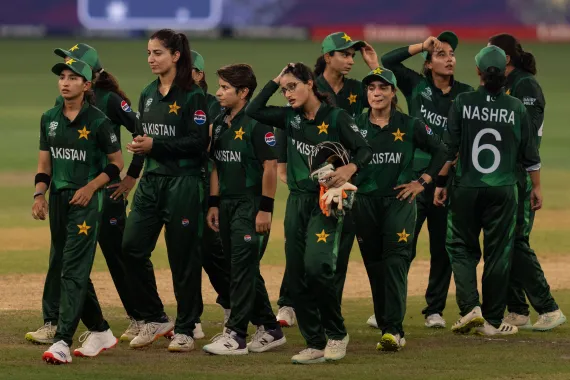
In a significant development, the ICC confirmed that Pakistan will play all their group-stage matches in Sri Lanka, in accordance with the newly adopted “fusion formula” aimed at navigating the ongoing political tensions between India and Pakistan.
The tournament will be co-hosted by India and Sri Lanka across five prominent venues. In India, matches will be held at the M. Chinnaswamy Stadium in Bengaluru, ACA Stadium in Guwahati, Holkar Stadium in Indore, and ACA-VDCA Stadium in Visakhapatnam. In Sri Lanka, the matches will take place at the R. Premadasa Stadium in Colombo.
The “fusion formula,” which was previously agreed upon in preparation for the ICC Men’s Champions Trophy 2025, stipulates that India and Pakistan will not play matches on each other’s soil for the next three years during ICC events.
Instead, matches involving either side will be hosted in neutral venues. In this context, Pakistan’s matches being shifted to Sri Lanka ensures their participation while avoiding travel to India.
This arrangement also impacts the knockout stages. The first semi-final of the Women’s World Cup is scheduled to take place on October 29 and could be held either in Guwahati or Colombo.
The second semi-final is set for October 30 in Bengaluru. However, the location of the final, initially scheduled for November 2 in Bengaluru, is conditional. If Pakistan qualifies for the final, the match will be moved to Colombo in line with the neutral venue policy.
Eight teams will compete in the 2025 Women’s World Cup, including host nations India and Sri Lanka, along with Australia, Pakistan, England, New Zealand, South Africa, and Bangladesh.
Australia will enter the tournament as the reigning champions, having secured victory against England in the final of the 2022 edition. With seven titles under their belt, Australia also holds the record as the most successful team in the tournament’s history.
The ICC’s decision to split the event between India and Sri Lanka marks a strategic move to ensure uninterrupted participation of all teams, while diplomatically managing sensitive geopolitical dynamics.
