

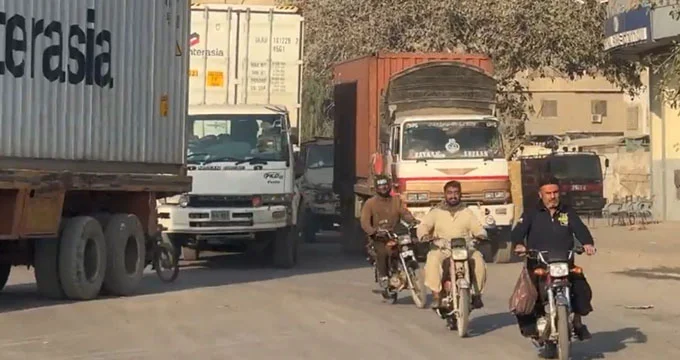

ISLAMABAD: In response to Karachi’s worsening traffic congestion and rising fatal accidents involving heavy vehicles, the Sindh government has introduced strict regulations on the entry of dumpers into the city.
The new directive limits dumpers’ access to Karachi from 11 pm to 6 am, prohibiting their movement during peak hours in an effort to reduce accidents and improve road safety.
This restriction on dumpers is not entirely new, as various notifications have previously aimed to limit heavy traffic during late-night to early-morning hours. However, legal loopholes and ongoing infrastructure projects have allowed dumpers to operate throughout the day under the guise of supporting development.
Despite these restrictions, the number of dumpers on Karachi’s roads has surged, contributing to a rise in traffic accidents. Areas such as Malir, Korangi, and the National Highway, Super Highway, Sohrab Goth, and Hub Road have seen frequent incidents, particularly involving dumpers transporting construction materials like cement, sand, and gravel.
The alarming increase in fatalities has prompted action from authorities. In just the past two months, 96 people have died in traffic accidents, with 72 fatalities in urban areas and 24 in the suburbs. Among these, eight deaths were attributed to dumper-related accidents.
To address these issues, Sindh Chief Secretary Syed Asif Hyder Shah led a high-level meeting focused on traffic safety. It was decided that all vehicles in Karachi must now obtain a QR code certificate from the Transport Department. Heavy vehicles and drivers will undergo physical verification to ensure they meet safety standards. Additionally, the Sindh Solid Waste Management Board has been instructed to move its operations to nighttime within three months. Similarly, the Karachi Water and Sewerage Board’s tankers will undergo safety inspections within a month. To further curb violations, traffic fines will be quadrupled, and reckless drivers will face FIRs and fines for accountability.
Concerns have also been raised about the unrestricted movement of water tankers, which operate 24/7 despite hydrants being unavailable around the clock. There is a pressing need to designate operating hours for these tankers to help reduce congestion and accidents.
Another major contributor to Karachi’s traffic issues is the rapid increase in motorcycles and Qingqi rickshaws. With over 4.3 million motorcycles on the road and more than 100,000 new registrations annually, the lack of a viable public transport system has forced many citizens to rely on motorcycles, leading to congested roads and frequent accidents. Motorcyclists account for 55% of all road accidents in Karachi. The growth of unregulated Qingqi rickshaws has further compounded these problems.
While the Traffic Engineering Bureau under the Karachi Development Authority (KDA) exists, there appears to be limited active enforcement of road planning. Experts point to Lahore’s successful introduction of dedicated motorcycle lanes as a model, while Karachi’s similar attempt lasted only a week. They argue that sustained awareness campaigns, in collaboration with NGOs and the media, are crucial for fostering traffic discipline among residents.
To address these challenges, developing an efficient public transport system is vital to reduce reliance on motorcycles and Qingqi rickshaws. Stringent regulations for heavy vehicles, including a comprehensive database for dumpers and their drivers, must be enforced. Furthermore, continuous traffic awareness campaigns and transparency in road planning and infrastructure development will be essential for improving road safety and easing congestion.
