

Artificial intelligence is advancing rapidly, changing economies, public services and everyday life. However, its growing influence has also raised difficult questions about ethics, accountability and human rights.
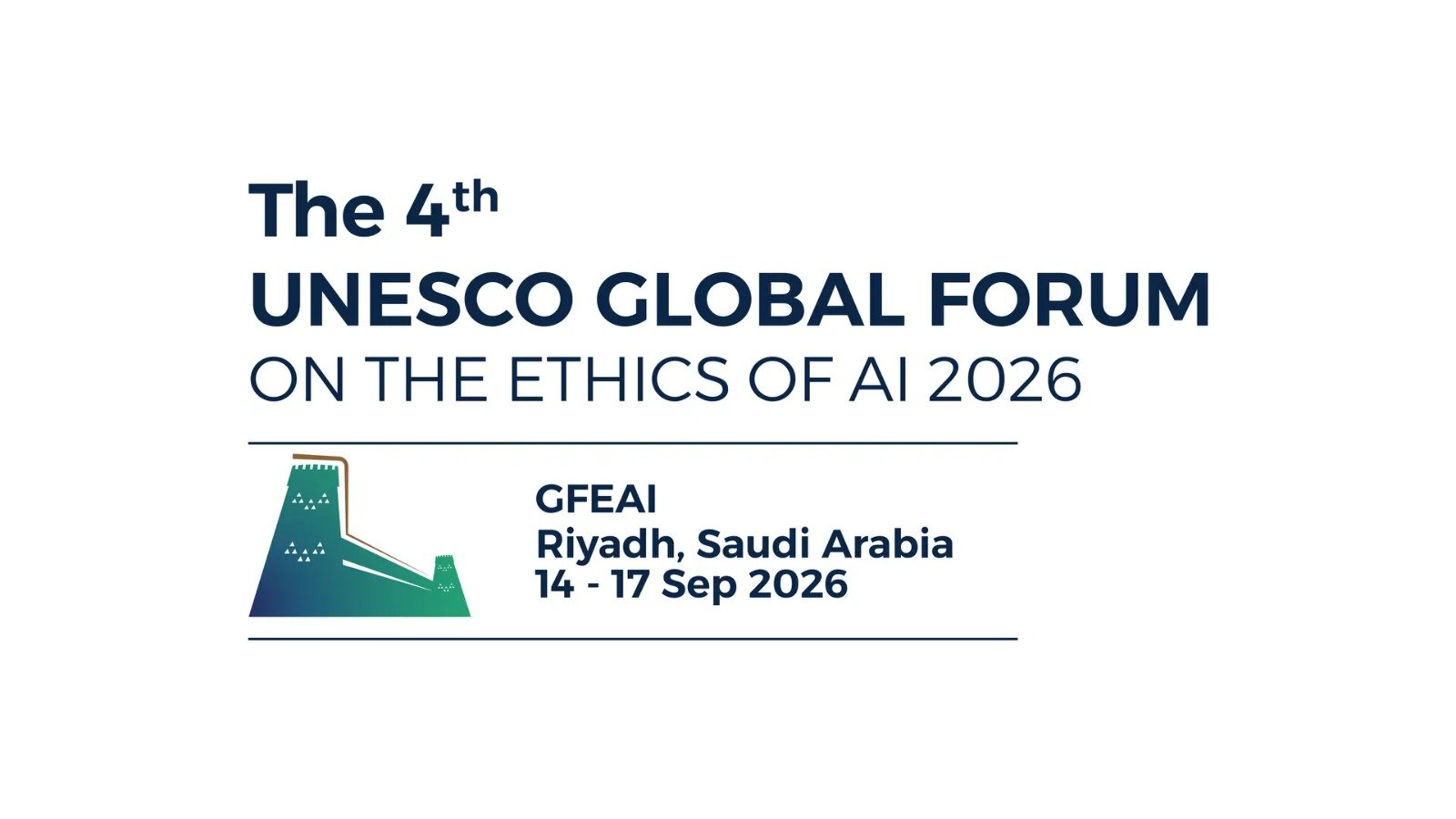
Against this backdrop, UNESCO is intensifying efforts to promote responsible AI development and stronger international cooperation. The organisation will bring countries and technology stakeholders together in Riyadh for its fourth Global Forum on the Ethics of Artificial Intelligence.
The forum will take place from September 14 to 17, 2026. Representatives from around 95 countries are expected to participate in the four-day gathering.
Riyadh Set to Become Global AI Ethics Hub
Saudi Arabia will become the first Arab country to host the UNESCO Global Forum on the Ethics of Artificial Intelligence. The event will bring together policymakers, researchers, technology experts and other stakeholders.
UNESCO is jointly organising the forum with the Saudi Data & AI Authority (SDAIA) and the International Center for AI Research and Ethics (ICAIRE).
The gathering will provide a platform for countries to exchange experiences and discuss practical approaches to responsible AI governance. Moreover, participants will explore ways to ensure technological progress benefits societies fairly.
Building on UNESCO’s Global AI Ethics Framework
The latest initiative builds on UNESCO’s Recommendation on the Ethics of Artificial Intelligence, adopted by its 194 Member States in 2021.
The framework seeks to ensure that AI development remains grounded in human rights and human dignity. It also emphasises fairness, transparency and inclusion.
Therefore, UNESCO’s current efforts focus on turning these principles into practical approaches for governments and technology stakeholders.
The organisation is also seeking to address unequal and potentially harmful effects associated with advanced technologies. At the same time, it aims to encourage safer and more inclusive AI development.
What Will the Riyadh Forum Discuss?
The four-day programme will examine several major areas of AI governance. These will include AI ethics, governance, capacity building and responsible innovation.
Participants will also discuss international policy frameworks and emerging approaches to ethical AI governance. In addition, specialised workshops will showcase national experiences and international initiatives.
High-level sessions will bring together policymakers and experts from different parts of the world. Their discussions will focus on developing effective governance mechanisms without restricting the potential benefits of technological innovation.
The forum will also explore how countries can use AI to support sustainable development and economic opportunity. Furthermore, discussions will consider how technology can contribute to broader societal prosperity.
AI Growth Brings New Ethical Questions
The forum comes as AI continues to transform major areas of society. Its influence now extends across education, healthcare, public services, economies and labour markets.
However, rapid technological progress has created new concerns alongside these opportunities. These include questions surrounding privacy, accountability, discrimination, misinformation and equal access.
As AI systems become more sophisticated, governments face growing pressure to establish safeguards. At the same time, they must ensure that innovation does not leave vulnerable communities behind.
The Riyadh forum aims to encourage countries to address these challenges through greater cooperation. By bringing different perspectives together, UNESCO hopes to support a more coherent international approach to AI governance.
Saudi Arabia Expands Its AI Role
Saudi Arabia’s role as host also highlights the Kingdom’s growing involvement in international discussions on artificial intelligence and emerging technologies.
The country has increasingly positioned itself as a regional and global centre for AI innovation. Its hosting of the UNESCO forum further reflects its efforts to participate in discussions surrounding responsible technological development.
The Riyadh gathering could therefore provide an important meeting point between technological ambition and ethical safeguards.
Ultimately, the forum aims to advance an AI future that remains human-centred, inclusive, responsible and sustainable. By encouraging international dialogue, UNESCO hopes to help countries navigate the opportunities and challenges created by rapidly evolving artificial intelligence.

