

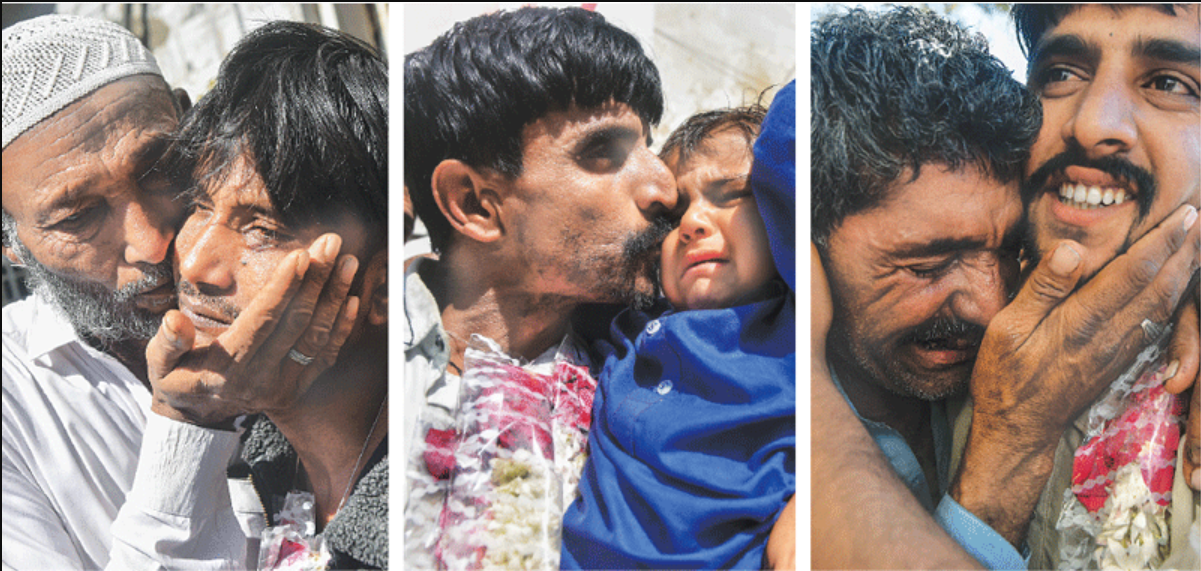

Fifty-four Pakistani fishermen, long imprisoned in India, have finally returned to their homeland. Their arrival at the Wagah Border drew tearful reunions and stories of hardship endured through years of imprisonment.
The scene at the border was emotional. Families waited anxiously, and as the fishermen emerged, many broke into tears. After years of separation, they embraced loved ones while recalling the dark days they survived.
Harsh Conditions and Heartbreaking Stories
One released fisherman shared that guards forced them into hard labour and confined them to dark cells, especially during wartime. He said the most painful part was often psychological — being taunted by jailers who told them their only crime was being Pakistani.
Among the group was Abdul Rehman, who developed paralysis during his fifth year in captivity. Despite his condition, he was reportedly held for an additional three years before finally gaining release.
Another returnee, Ali Muhammad, spent eight years behind bars. Although he has regained freedom, his family remains unsettled — his son Noor Muhammad is still imprisoned in India. The family has made a plea for his early release and hopes his case will be addressed soon.
Supportive Return via Wagah and Karachi
Upon crossing the Wagah Border, the freed fishermen were escorted home with assistance. The Edhi Foundation arranged transport and other logistical support, ensuring their safe passage from the border to Karachi. Families welcomed them with open arms and emotional relief after years of uncertainty.
Significance and Ongoing Appeals
This mass release brings closure to many suffering families, but it leaves unanswered questions and lingering pain. The stories of abuse and neglect inside the jails underscore the human cost of long-standing political tensions.
Meanwhile, the case of Noor Muhammad continues to cast a shadow over the relief. His family’s calls for his release echo the wish that no one remains behind unjustly. Their struggle highlights the broader issue faced by many Pakistani nationals detained abroad under prolonged legal or political constraints.
This event will likely renew public discussion on consular rights, detention conditions, and cross-border diplomacy. The narrative will also feed into larger debates about how states negotiate prisoner releases and protect citizens abroad.
Fifty-four Pakistani fishermen have finally returned home after enduring years in Indian prisons. Their stories of suffering, medical complications, and family separation paint a stark picture of the personal toll of political disputes. While their journeys end today, many unresolved scars and cases remain.
