
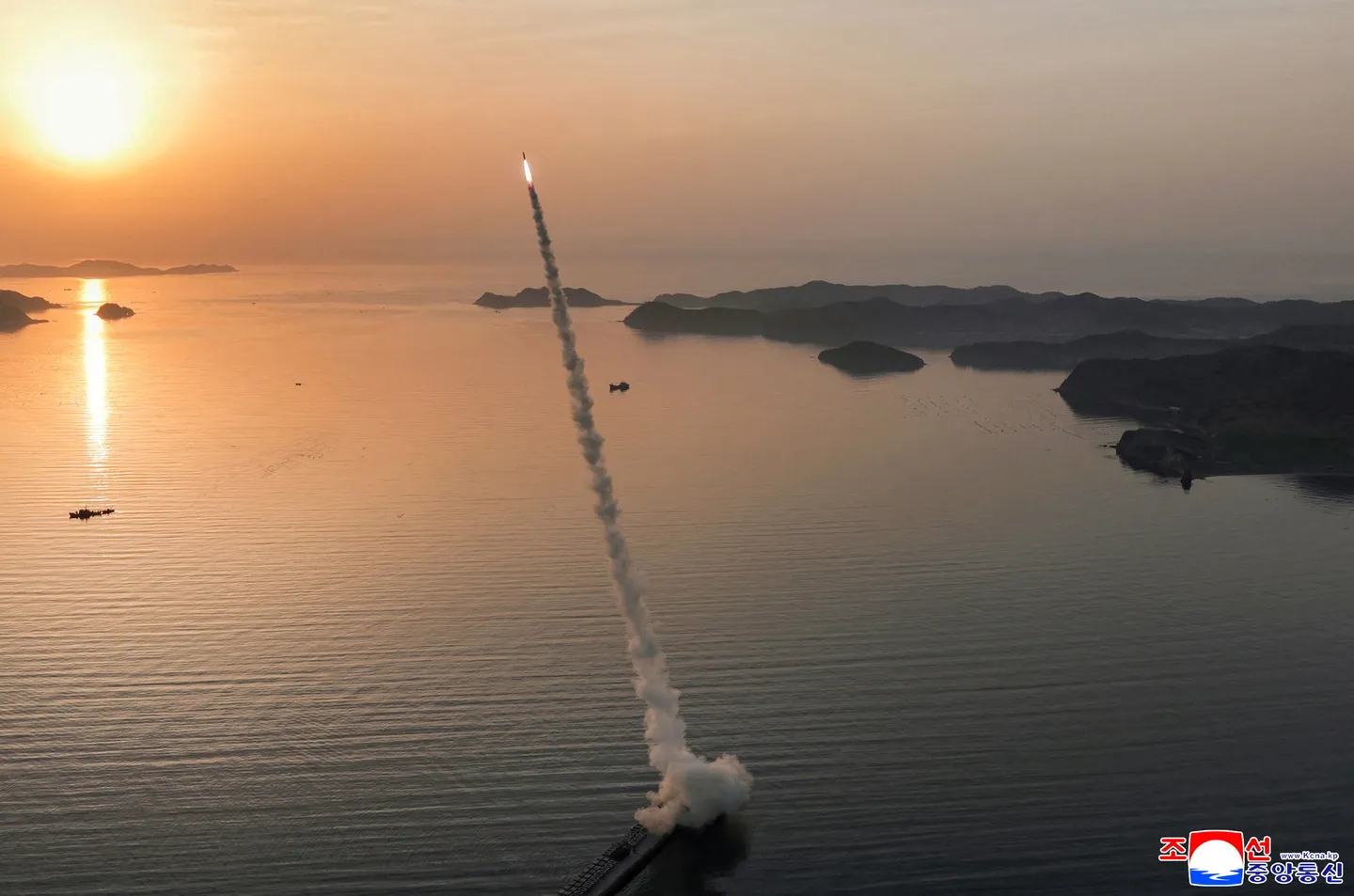

Countries urge nuclear-armed states to provide at least 24 hours’ notice before long-range launches to reduce miscalculation risks
GENEVA: A coalition of 41 countries has called on nuclear-armed states to provide advance notification of long-range ballistic missile tests, warning that unexpected launches could increase tensions and threaten regional and global security.
The countries issued their joint statement at the Conference on Disarmament in Geneva on Wednesday, urging governments to follow transparency measures outlined under the Hague Code of Conduct Against Ballistic Missile Proliferation.
The coalition warned that nuclear-capable missile tests conducted without sufficient information could trigger dangerous misunderstandings, particularly among countries located close to launch zones or projected flight paths.
Coalition Seeks 24-Hour Launch Notifications
The signatories urged states conducting tests involving intercontinental ballistic missiles, submarine-launched ballistic missiles and space launch vehicles to provide notifications at least 24 hours before launch.
Moreover, they called on governments to identify the missile category, planned launch window, launch area and expected trajectory.
Authorities should also issue clear warnings to commercial ships and aircraft operating near potentially affected areas, the coalition said.
The statement followed recent missile activity in the Pacific, including China’s reported launch of a strategic missile from a nuclear submarine after notifying several regional countries.
The coalition argued that standardised procedures would strengthen confidence without restricting legitimate military development or operational requirements.
China Defends Defence Modernisation Programme
However, China rejected criticism surrounding its missile activities.
Chinese Ambassador for Disarmament Affairs Li Chijiang said Beijing’s legitimate defence modernisation should not face questioning. He also defended China’s practice of providing advance notifications and argued that geopolitical considerations should not undermine its efforts.
Meanwhile, the coalition said greater transparency could significantly reduce the possibility that another country mistakenly interprets a missile test as an attack.
The 41 signatories include the United States, Türkiye, Britain, France, Germany, Japan, South Korea, Australia, Canada and Ukraine.
They urged wider adoption of predictable notification mechanisms to strengthen strategic stability and reduce escalation risks.

