
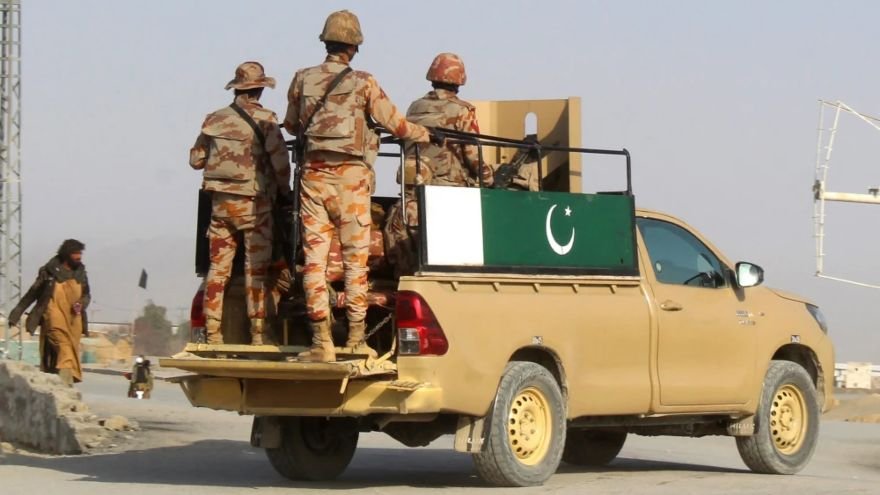

Security forces killed 21 militants in two separate encounters in Balochistan during the night between August 31 and September 1, according to the Inter-Services Public Relations (ISPR).
The military’s media wing said the militants belonged to groups it described as Indian-sponsored militant organisations.
Six security personnel were also killed during the operations. They included two officers and a Customs Department official.
The operations were carried out in Chagai and Pishin districts as security forces responded to separate militant attacks.
11 Militants Killed in Chagai Highway Operation
The first encounter took place in Nokcha, Chagai District, on August 31.
According to ISPR, militants associated with Fitna al-Hindustan attempted to disrupt the movement of commuters on the N-40 Quetta-Taftan Highway.
The militants allegedly established an illegal checkpoint to extort money from people travelling along the highway.
Security forces responded immediately after receiving information about the activity.
An intense exchange of fire followed. ISPR said 11 militants were killed during the operation.
A large quantity of weapons, ammunition and explosives was also recovered from the militants, according to the military.
The operation was aimed at preventing further disruption to traffic and ensuring the security of civilians using the important national highway.
10 Militants Killed in Attack on Customs House
The second encounter took place during the night of August 31 and September 1 at Ziarat Cross in Pishin District.
According to ISPR, militants associated with Fitna al-Khawarij launched a coordinated attack targeting the Customs House.
Security forces responded to the attack and engaged the militants in an intense exchange of fire.
ISPR said 10 militants were killed during the operation. Security forces also engaged militants who attempted to flee from the area, causing further casualties among the attackers.
The military described the incident as an example of what it called a “terror-crime nexus”.
According to ISPR, the attack was intended to prevent Customs officials from carrying out their lawful duties and facilitate criminal activities in the area.
Six personnel were killed during the exchange of fire, including two officers and a Customs Department official.
The military paid tribute to the personnel who lost their lives while performing their duties.
Sanitisation Operations Continue
Following the encounters, security forces launched sanitisation operations in the surrounding areas.
The operations are aimed at locating and eliminating any remaining militants and ensuring the safety of local residents.
Authorities are also working to secure important routes, including national highways that connect different parts of Balochistan.
ISPR said Pakistan’s counter-terrorism campaign would continue with full resolve under Azm-e-Istehkam, which was approved by the Federal Apex Committee under the National Action Plan.
The military said security forces and law enforcement agencies remain committed to eliminating what it described as foreign-sponsored terrorism from the country.
Balochistan Among Pakistan’s Major Violence Hotspots
The latest encounters come amid continued militant violence in Balochistan and Khyber Pakhtunkhwa.
According to the Centre for Research and Security Studies (CRSS), both provinces remained Pakistan’s main hotspots for violence during the second quarter of 2026.
The report identified Khyber Pakhtunkhwa as the most affected province during the period.
Khyber Pakhtunkhwa recorded more than 61% of all violence-related fatalities, with 475 deaths reported.
Balochistan accounted for another 34%, with 265 fatalities.
The two provinces together accounted for nearly 96% of all violence-related deaths recorded across Pakistan during the quarter.
Khyber Pakhtunkhwa also recorded the highest number of violent incidents, with 151 cases, representing 57% of the national total.
Balochistan recorded 94 violent incidents, accounting for 35% of the countrywide figure.
The latest operations underscore the continuing security challenges faced by Balochistan and the ongoing efforts by security forces to counter militant networks in the province.

