



The Copernicus Climate Change Service (C3S) of the European Union has officially declared that the preceding year marked the hottest on record by a considerable margin, likely standing as the warmest in the past 100,000 years.
Carlo Buontempo, the Director of C3S, underscored the extraordinary nature of the year, surpassing even other exceptionally warm years. The confirmation of 2023 as the hottest year in global temperature records dating back to 1850 was accompanied by the assertion, based on paleoclimatic data from sources such as tree rings and air bubbles in glaciers, that it was “very likely” the warmest year in the last 100,000 years.
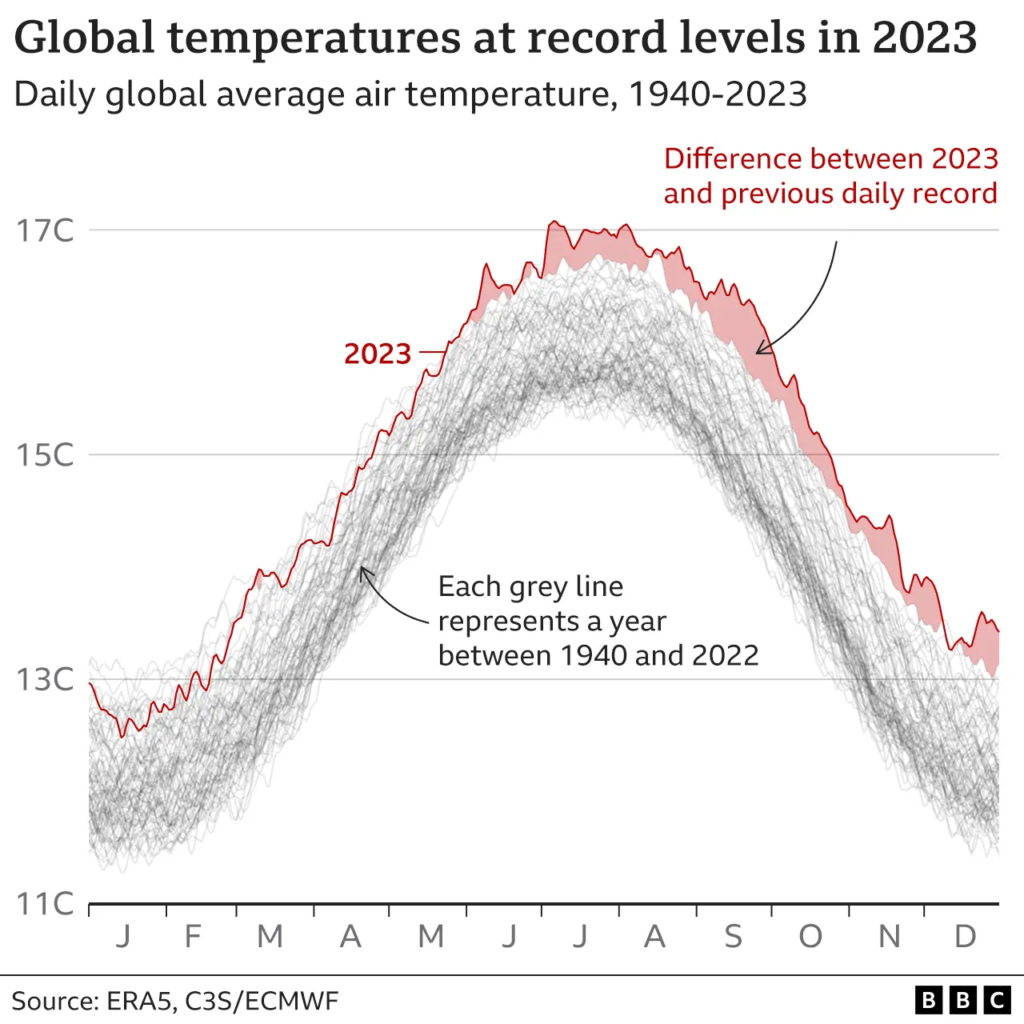
In 2023, the global average temperature was 1.48 degrees Celsius higher than the pre-industrial period of 1850-1900, when large-scale fossil fuel burning began. This exceeds the target set in the 2015 Paris Agreement, which aims to prevent global warming from surpassing 1.5 degrees Celsius to avoid severe consequences.
Despite climate goals, carbon dioxide (CO2) emissions from fossil fuel combustion reached record levels in 2023. The concentration of CO2 in the atmosphere reached a record high of 419 parts per million, marking the first year in which every day was more than 1 degree Celsius hotter than pre-industrial times.
The year 2023 witnessed record temperatures intensified by the El Niño weather phenomenon, contributing to extreme weather events worldwide. The impact of a warmer planet manifested in deadly heatwaves, floods, and severe wildfires.
The economic fallout of climate change also escalated, with the U.S. experiencing numerous climate and weather disasters causing damages exceeding $1 billion. Prolonged droughts affected agricultural crops in various regions, underscoring the tangible and widespread consequences of climate change on ecosystems and human societies.
